
Cosmic Queries – Starquakes with Conny Aerts
Neil deGrasse Tyson hosts this StarTalk Cosmic Queries episode on starquakes with co-host comedian Matt Kirschen and expert guest Connie Aerts, professor of astro-seismology at Radboud University in the Netherlands and KU Leuven in Belgium.


- 01
Stars are 'three-dimensional musical concert halls' with continuous oscillations creating sound waves detectable through brightness variations - Neil deGrasse Tyson
- 02
Astro-seismology reveals stellar interior rotation rates differ dramatically from surface observations, forcing updates to stellar evolution theory
- 03
Solar oscillations occur every five minutes while massive blue supergiants can take months per cycle, requiring frequency shifting for human detection
- 04
Internal stellar rotation affects nuclear fuel mixing, potentially extending massive star lifetimes by 20% or more through enhanced hydrogen transport
- 05
Betelgeuse's recent dimming was caused by expelled material blocking our view, not an imminent supernova explosion
- 06
The PLATO mission will use 24 telescopes on one platform to study Earth-like planets around Sun-like stars with unprecedented precision
Get the latest ideas from StarTalk Radio.
Plus the best new takeaways about energy from other top podcasts — read in minutes, not hours.
By continuing, you agree to podbrain's Terms and Privacy Policy.
These notes may contain occasional inaccuracies. Learn how podbrain notes are made
Neil deGrasse Tyson hosts this StarTalk Cosmic Queries episode on starquakes with co-host comedian Matt Kirschen and expert guest Connie Aerts, professor of astro-seismology at Radboud University in the Netherlands and KU Leuven in Belgium.
The conversation explores how stars continuously oscillate like 'three-dimensional concert halls,' creating sound waves that reveal their internal structure, rotation, and evolution. Aerts explains how these stellar oscillations differ fundamentally from Earth's abrupt earthquakes, occurring as smooth, periodic variations detectable through brightness changes.
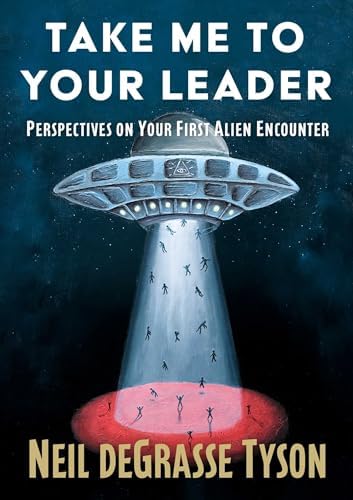
The discussion covers practical applications of astro-seismology, from measuring stellar rotation rates that challenge existing theories to understanding why Betelgeuse recently dimmed. Tyson also promotes his latest work Take Me to Your Leader Perspectives on Your First Alien Encounter, examining how our representations of aliens may reflect human nature more than extraterrestrial reality.
Stars as Musical Concert Halls: The Nature of Stellar Oscillations
Unlike Earth's abrupt quakes from rigid crust failures, stars oscillate continuously as gaseous spheres where pressure waves create sound frequencies throughout their interiors.
"Stars are three-dimensional musical concert halls" with each star having its own symphony based on mass, size, and age - Connie Aerts
Solar oscillations occur every five minutes while massive blue supergiants can take months per cycle, requiring frequency shifting into audible ranges for human detection.
NASA has developed sonification techniques that allow blind people to become astronomers by converting stellar frequencies into audible music.
Revolutionary Discoveries About Stellar Interior Rotation
Astro-seismology reveals stellar interior rotation rates differ dramatically from surface observations, forcing major revisions to stellar evolution theory.
"The stars have many more surprises than us astrophysicists have imagination" - Connie Aerts, describing how rotation measurements challenged existing models.
Internal rotation affects nuclear fuel mixing like stirring coffee with milk, bringing more hydrogen into the fusion core and extending stellar lifetimes by 20% or more.
Over 2,000 stars now have measured internal rotation frequencies, revealing a wide range of mixing patterns that slow stellar evolution, particularly for massive stars.
Betelgeuse's Mysterious Dimming and Supergiant Behavior
Betelgeuse's recent dimming to less than half normal brightness was caused by expelled material blocking our view, not an imminent supernova explosion.
"I nearly freaked out" - Neil deGrasse Tyson describing his reaction to observing Betelgeuse's unprecedented brightness change after a lifetime of consistent appearance.
Red supergiants like Betelgeuse regularly expel material as they near the end of their lives, creating obscuring clouds on timescales of hundreds of thousands of years.
The expelled material makes astro-seismology measurements difficult by blocking stellar oscillation signals, similar to atmospheric twinkling effects on Earth-based observations.
Space Missions and the Future of Astro-Seismology
The PLATO mission will deploy 24 telescopes on one platform to study Earth-like planets around Sun-like stars with unprecedented long-term precision.
"I tend to call it my third child" - Connie Aerts describing her involvement in designing the European Space Agency's PLATO mission.
Frequency precision scales as one over total observation time, requiring years of continuous monitoring to distinguish different oscillation modes reliably.
James Webb Space Telescope is not suitable for astro-seismology despite its capabilities, as the field requires dedicated long-term monitoring rather than deep infrared observations.
Planetary Quakes and Solar System Safety
All celestial bodies experience oscillations, from gaseous giants like Jupiter and Saturn to ice giants like Uranus and Neptune, each with frequencies determined by density.
Solar coronal mass ejections and starquakes pose no significant danger to Earth, as our magnetic field protects against high-energy particles and other stars are too distant.
Binary star systems create tidal oscillations similar to Earth-Moon interactions, with roughly half of Sun-mass stars existing in multiple systems rather than alone.
The largest stellar oscillations can change star radius by 10% but cannot tear stars apart, as they represent smooth periodic variations rather than destructive events.
These notes may contain occasional inaccuracies. Learn how podbrain notes are made
More in Science & Tech

Is Reality Really Real? With Donald Hoffman
Jun 26, 2026
CEO-Led AI Gets 3X the ROI
Jun 25, 2026
Leslie Lamport on the Science of Distributed Systems
Jun 25, 2026
The Chopping Block: Is Strategy the Luna for Suits?, ETH Labs Shakeup & CME vs Perps
Jun 25, 2026
Marc Andreessen on AI, Technology, and the Future of Humanity
Jun 25, 2026.svg)