
Cosmic Queries – Spontaneous Symmetry Breaking with Charles Liu
This StarTalk Special Edition Cosmic Queries features Neil deGrasse Tyson hosting alongside Chuck Nice, Gary O'Reilly (newly minted American citizen and former soccer pro), and Charles Liu, professor of physics and astronomy at College of Staten Island and co-author of the Hayden Planetarium exhibit copy.

Episode


- 01
Observers may be necessary for quantum wave function collapse according to Copenhagen interpretation, but the universe's objective reality remains debated - Charles Liu
- 02
Information differs from matter: giving two newspapers doesn't double information content, unlike physical objects
- 03
Entropy and information are closely linked - a log has much less entropy than its burned remains with scattered smoke and ash
- 04
The early universe at Planck time had less mass than a glass of water, insufficient to create a black hole
- 05
Spectroscopy preserves absorption and emission line patterns regardless of redshift, allowing astronomers to distinguish between velocity effects and intrinsic stellar properties
- 06
The cosmic microwave background discovery came from cleaning pigeon dung from Bell Labs antennas and finding residual noise everywhere in the universe
- 07
Future spacecraft flying in perfect formation could detect gravitational waves 100-1000 times better than ground-based detectors
Get the latest ideas from StarTalk Radio.
Plus the best new takeaways about space from other top podcasts — read in minutes, not hours.
By continuing, you agree to podbrain's Terms and Privacy Policy.
These notes may contain occasional inaccuracies. Learn how podbrain notes are made
This StarTalk Special Edition Cosmic Queries features Neil deGrasse Tyson hosting alongside Chuck Nice, Gary O'Reilly (newly minted American citizen and former soccer pro), and Charles Liu, professor of physics and astronomy at College of Staten Island and co-author of the Hayden Planetarium exhibit copy.
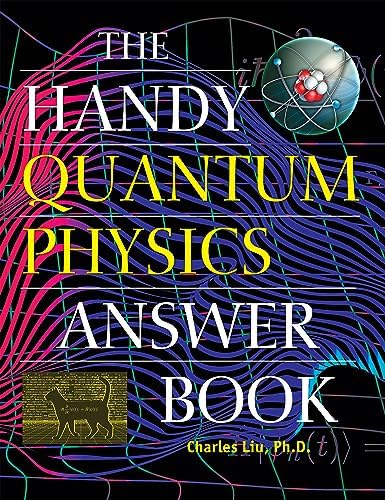
The discussion covers quantum paradoxes and observer effects, information theory and entropy, stellar spectroscopy challenges, Big Bang cosmology, and future telescope technologies. Charles Liu's expertise shines through references to his works The Physics Answer Book and The Handy Quantum Physics Answer Book, while the conversation touches on foundational texts from Galileo's Sidereus Nuncius to Rilke's philosophical Letters to a Young Poet.
Questions from Patreon supporters drive deep explorations into whether observers are necessary for reality, how astronomers distinguish between redshift and stellar composition, why the early universe didn't collapse into a black hole, and what technological breakthroughs will enable next-generation space telescopes.
Do Observers Create Reality or Just Measure It?
The Copenhagen interpretation suggests quantum wave functions collapse only when observed, making observers potentially necessary for reality to manifest, though this remains philosophically debated.
René Descartes argued that reality reaches our brains only through our senses, meaning each person lives in a distinct reality based on their experience and perception.
The dual-slit experiment demonstrates wave-particle duality: particles behave as waves when measured with wave detectors, but as particles when measured with particle detectors, and you can switch detection methods mid-stream.
Neural complexity in human brains may rival the large-scale structure of the universe, with total neural connections comparable to gravitational interactions between all stars.
Information Theory Meets Thermodynamics
Information differs fundamentally from matter - giving someone two newspapers doesn't provide twice the information of one newspaper, unlike physical objects that simply add together.
Information describes what distinguishes one system from another: not whether something is an atom or proton, but whether it's spin up or down, this temperature or that temperature.
Entropy and information are closely linked - flipping 10 coins has 1,024 possible specific outcomes but only 11 possible head-tail totals, with the difference representing hidden entropy.
When water boils at 100°C, the temperature stops rising but energy continues flowing into the transformation, increasing entropy as molecules gain freedom of movement in the gas phase.
Stellar Colors: Velocity vs Composition Dilemma
Spectroscopy solves the challenge of distinguishing between redshift from stellar motion and intrinsic stellar colors by preserving absorption and emission line patterns regardless of velocity effects.
Interstellar dust creates extinction that makes stars appear dimmer and redder, requiring astronomers to map dust density and composition along every line of sight for accurate corrections.
Different types of dust have unique extinction curves, forcing astronomers to measure both the galaxy's observed light and the dust characteristics in that direction before making corrections.
The cosmic microwave background discovery was nearly compromised because dust produces the same wavelength radiation, requiring careful separation of the signal from galactic interference.
Why the Big Bang Didn't Create a Black Hole
At Planck time (10^-43 seconds after the Big Bang), the universe's mass was less than a glass of water - insufficient to form a black hole despite being smaller than a pinhead.
Cosmic inflation injected enormous energy into the early universe through spontaneous symmetry breaking, when the four fundamental forces separated from a single unified force.
The energy release from force separation created such rapid expansion that the universe passed black hole formation thresholds before matter could collapse gravitationally.
Recent DESI (Dark Energy Survey) results show galaxy distribution patterns that preserve imprints from before the cosmic microwave background, potentially revealing Big Bang information.
Future Telescopes and Multi-Messenger Astronomy
Spacecraft flying in perfect formation over millions of miles, not deviating by even a millimeter, could use laser interferometry to detect gravitational waves 100-1000 times better than ground-based detectors.
Multi-messenger astronomy expands beyond electromagnetic radiation to include gravitational waves, neutrinos, and potentially dark matter particles as cosmic information carriers.
Galileo's 1609 work Sidereus Nuncius (Starry Messenger) established stars as messengers, and now we're developing telescopes for entirely new categories of cosmic messengers.
Quantum Effects and the Scharnhorst Phenomenon
The Handy Quantum Physics Answer Book explores concepts like the Scharnhorst effect, where perfectly smooth metal plates brought within millionths of an inch could theoretically allow light to exceed vacuum speed by tiny amounts.
The Scharnhorst effect relates to the Casimir effect, where quantum forces attract parallel metal plates through zero-point energy that appears in seemingly empty space.
While these quantum effects exist at microscopic scales, they cannot currently be scaled up to create macro-level energy distribution networks or causality bubbles.
Learning Resources and Scientific Philosophy
The Physics Answer Book serves as a comprehensive resource broken into digestible chunks, allowing readers to explore complex topics at their own pace rather than requiring linear reading.
OpenStax provides free online textbooks for deeper mathematical understanding of physics concepts, offering legitimate academic-level resources without cost barriers.
As Rilke wrote in Letters to a Young Poet: 'Learn to love the questions themselves' - emphasizing that questions matter more than immediate answers in scientific discovery.
The history of science shows that presuming something is unknowable often precedes major breakthroughs, as when 19th-century philosophers claimed stellar composition would forever remain mysterious just before spectroscopy was invented.



These notes may contain occasional inaccuracies. Learn how podbrain notes are made
More in Science & Tech

The 5-Minute AI Weekly Recap: Realignment Week
Jun 20, 2026
Why Kalshi's John Wang Says Perps Are 'the Most Pure Trading Instrument'
Jun 19, 2026Your Company Doesn’t Need an AI Strategy
Jun 19, 2026
The data black hole at the center of AI
Jun 19, 2026
The New Rules of Media | Marc Andreessen & Ben Horowitz
Jun 19, 2026
.svg)