
Cosmic Queries – Origins of the Universe, with Janna Levin
Neil deGrasse Tyson hosts this StarTalk Cosmic Queries episode with comedian Chuck Nice and cosmologist Janna Levin, professor of astronomy and physics at Barnard College. Levin is the author of Black Hole Blues and...

Episode


- 01
The Cosmic Queries book celebrates the second StarTalk publication, featuring 10 chapters of deep cosmic questions that barely get addressed in regular episodes
- 02
Dark matter and dark energy comprise 95% of the universe, making ordinary matter less than 5% of everything that exists
- 03
The Large Hadron Collider recreates conditions from the early universe - higher energies take you further back in cosmic time
- 04
String theory proposes all fundamental particles are the same tiny loops playing different harmonics, like notes on a cosmic instrument
- 05
Quantum mechanics prevents true emptiness - even the most complete vacuum contains frothy quantum possibilities with measurable energy
- 06
The universe's expansion will eventually make all galaxies invisible, returning future astronomers to pre-1920s ignorance about the cosmos
- 07
Black Hole Survivor's Guide explains that stepping into a black hole's event horizon is like entering a tree's shadow - nothing dramatic initially happens
Get the latest ideas from StarTalk Radio.
Plus the best new takeaways from other top podcasts — read in minutes, not hours.
By continuing, you agree to podbrain's Terms and Privacy Policy.
These notes may contain occasional inaccuracies. Learn how podbrain notes are made
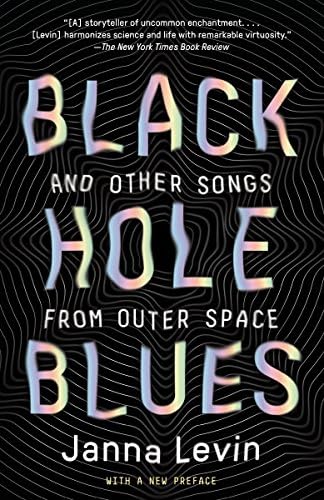
Neil deGrasse Tyson hosts this StarTalk Cosmic Queries episode with comedian Chuck Nice and cosmologist Janna Levin, professor of astronomy and physics at Barnard College. Levin is the author of Black Hole Blues and Black Hole Survivor's Guide, and served as on-camera host for the PBS Nova special 'Black Hole Apocalypse.'
The episode serves as a celebration and promotional showcase for the newly released Cosmic Queries book, the second StarTalk publication from National Geographic Books following the original StarTalk book. The discussion focuses on chapters three through five, exploring fundamental questions about how the universe formed, its age, and composition.
Levin joins from Pioneer Works, a cultural center in Brooklyn where she serves as director of sciences, bringing together art and science in a donation-based community space. The conversation covers dark matter, dark energy, particle physics, string theory, and the future fate of cosmic observation.
The Cosmic Queries Book Launch and StarTalk Legacy
The Cosmic Queries book represents the second StarTalk publication from National Geographic Books, inspired by the popular spin-off format that addresses deep cosmic questions typically too complex for regular episodes.
The original StarTalk book established the franchise, with this new volume featuring 10 chapters covering fundamental questions about universe formation, age, and composition.
Janna Levin brings expertise from her books Black Hole Blues and Black Hole Survivor's Guide, plus her role hosting PBS Nova's 'Black Hole Apocalypse' special.
Dark Matter and Dark Energy Dominate Reality
"Everything anybody has ever seen or ever will see makes up less than 5% of the universe" - Janna, explaining how ordinary matter is vastly outnumbered by invisible components.
Dark matter interacts gravitationally but passes through regular matter completely, creating the possibility of dark matter aliens coexisting in the same space undetected.
Dark energy doesn't dilute as the universe expands - instead, more vacuum space creates more dark energy, systematically winning over gravity's weakening influence.
The universe's composition has shifted over time: early dense matter dominated, but expanding space allows dark energy to take control of cosmic evolution.
Particle Physics as Cosmic Archaeology
The Large Hadron Collider functions as a "cosmic kitchen" - higher energy collisions recreate conditions from earlier moments in the Big Bang timeline.
"The universe is a better hadron collider than our Large Hadron Collider" - Neil, noting that cosmic events reach energy scales impossible for human engineering.
The Higgs particle, originally called "The Goddamn Particle" by Leon Lederman in The God Particle book, was predicted to fill a gap in the Standard Model before being discovered.
Particles created in the first trillionth of a trillionth of a second lived for "a trillion of their own lifetimes" before decaying, never to be made again in cosmic history.
String Theory and the Music of Reality
String theory proposes that all fundamental particles - quarks, electrons, photons, even dark matter - are identical tiny loops playing different harmonics like notes on a cosmic instrument.
"An electron is simply ringing at a different note than a quark" - Janna, explaining how particle diversity emerges from a single underlying string phenomenon.
The theory extends beyond strings to include membranes and higher-dimensional objects, with our observable particles potentially being endpoints of strings attached to our three-dimensional membrane.
Quantum Vacuum and the Impossibility of Nothing
Heisenberg's uncertainty principle prevents true emptiness - even the most complete vacuum contains "frothy quantum possibilities" with measurable energy.
"You cannot have zero uncertainty that there's nothing" - Janna, explaining why absolute vacuum violates quantum mechanics fundamentals.
Dark energy might be the energy of quantum vacuum, though calculations either yield zero or enormous values - never the observed small but non-zero amount.
Quantum mechanics may create space-time itself, rather than operating within pre-existing space-time, making black holes emergent phenomena from quantum threads.
The Future of Cosmic Observation
"We have to do astronomy now because eventually, in the very far future, there will be no galaxies in view anymore" - Janna, warning of coming observational dark age.
Dark energy's acceleration will eventually make all external galaxies invisible, returning future astronomers to pre-1920s ignorance about the universe beyond our galaxy.
Until 1920, the entire known universe consisted only of the solar system and stars in the night sky - no understanding of galaxies, Big Bang, or cosmic expansion existed.
Future civilizations will lose most evidence of the Big Bang, trying to understand the universe with incomplete data just as we might be missing entire chapters today.




These notes may contain occasional inaccuracies. Learn how podbrain notes are made
More in Science & Tech

The 5-Minute AI Weekly Recap: Realignment Week
Jun 20, 2026
Why Kalshi's John Wang Says Perps Are 'the Most Pure Trading Instrument'
Jun 19, 2026Your Company Doesn’t Need an AI Strategy
Jun 19, 2026
The data black hole at the center of AI
Jun 19, 2026
The New Rules of Media | Marc Andreessen & Ben Horowitz
Jun 19, 2026
.svg)