
100 Years of Military History That Explain Everything About Anduril
Kyle Harrison, who leads research at Contrary Capital, joins to discuss his comprehensive 300-page analysis of Anduril Industries. Harrison spent several years researching 100 years of military history to understand how Anduril positions itself against traditional defense procurement. Contrary has been an early...

Episode


- 01
Ukraine's $1 million drone operation destroyed $7 billion in Russian assets, demonstrating modern warfare's cost-effectiveness revolution
- 02
The US would run out of munitions in 11 days during large-scale conflict with China, highlighting critical supply chain vulnerabilities
- 03
Anduril called their shot in their first pitch deck: 'make billions by saving the government tens of billions' - Palmer Lucky
- 04
Military superiority is front-run by industrial superiority - we did it in WWII, China is doing it today
- 05
DoD represents less than 1% of global R&D today, down from 36% during the Cold War peak
- 06
Pacifism is a privilege of the protected - there must be someone willing to build deterrent capabilities - Trey Stevens
- 07
Fixed-cost contracting versus cost-plus incentivizes efficiency over expense padding in defense procurement
- 08
Anduril's Lattice AI serves as the central brain connecting autonomous assets across every domain and force level
Get the latest ideas from Sourcery with Molly O'Shea.
Plus the best new takeaways about military & strategy from other top podcasts — read in minutes, not hours.
By continuing, you agree to podbrain's Terms and Privacy Policy.
These notes may contain occasional inaccuracies. Learn how podbrain notes are made
Kyle Harrison, who leads research at Contrary Capital, joins to discuss his comprehensive 300-page analysis of Anduril Industries. Harrison spent several years researching 100 years of military history to understand how Anduril positions itself against traditional defense procurement. Contrary has been an early investor in Anduril, and their research team has written about 500 companies with over 100,000 subscribers.
The conversation explores how post-Cold War hubris led to decades of military-industrial decline, from Robert McNamara's bureaucratic reforms in the 1960s to today's broken cost-plus contracting system. Harrison details how traditional defense primes became incentivized to maximize costs rather than outcomes, creating projects like the F-35 that run decades behind schedule and hundreds of billions over budget.
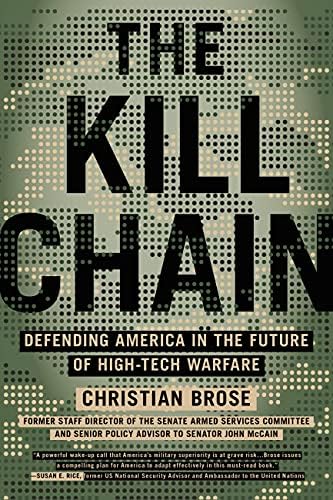
Harrison examines Anduril's founding story, from Palmer Luckey's high school work on VR for PTSD treatment to the 2017 Chick-fil-A meeting where five co-founders outlined their vision for a 'real-life Stark Industries.' The discussion covers their product evolution from Sentry Towers to autonomous fighter jets, emphasizing how The Kill Chain by Christian Brose provided foundational context for understanding modern warfare's transformation.
The Century-Long Decline of American Military Innovation
Post-WWII America represented 40% of global manufacturing capacity and the DoD alone funded 36% of worldwide R&D, creating an industrial powerhouse that 'outbuilt the enemy' through sheer volume rather than technological superiority.
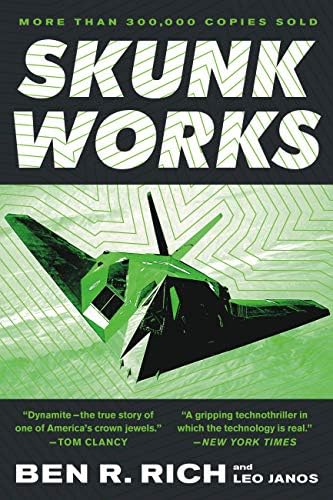
Robert McNamara's 1960s PPBE system introduced 'a plague of auditors and bean counters' that strangled the golden goose of industrial capacity through excessive bureaucracy - Ben Rich, Skunk Works.
The broken cost-plus contracting system incentivizes traditional primes to maximize expenses since '10% of three billion is much bigger than 10% of 150 million,' leading contractors to reinvent everything from scratch.
Modern conflict exemplified by Ukraine shows high-volume, low-cost 'attritable' assets dominating expensive exquisite platforms, but 'we as a nation are not good at that' type of warfare.
Anduril's Counterposition Strategy Against Defense Bureaucracy
Anduril systematically counterpositons against every aspect of traditional defense procurement: fixed-cost versus cost-plus contracting, built-to-mission versus built-to-spec requirements, and self-funded R&D versus government-funded development.
Palmer Luckey's philosophy: 'We absolutely want to listen to our customers because they understand their problem. We don't necessarily listen to them about what the solution should be because they don't have a good framework for what the possible solutions are.'
The company puts its own capital at risk to build solutions that 'so effectively satisfy the mission that you will want to pay for it without you having funded the R&D yourself.'
Anduril can serve as 'an API into the Department of War' for smaller companies, providing established government relationships that individual contractors could never achieve independently.
From Sentry Towers to Autonomous Fighter Jets
The founding team's 2017 Chick-fil-A pitch deck outlined five capabilities including 'perimeter security on a stick' (Sentry Towers) and 'VR for warfighters' (now the $22 billion IVAS Eagle-Eye contract).
Lattice AI serves as the central 'military internet of things' brain, enabling 'mosaic warfare' by connecting sensors, drones, and autonomous systems across every domain and force level.
Product evolution follows hub-and-spoke model: starting with sensors (Sentry), expanding to UAVs (Ghost drones), counter-drone systems (Altius), munitions (Roadrunner), and undersea vehicles (Dive line).
Fury represents their 'crowning product' - an autonomous fighter jet that can extend pilot capabilities without putting human lives at risk, addressing the dangerous reality that fighter pilots are 'literally dodging missiles in active war zones.'
The Critical Importance of Undersea Warfare
The ocean represents the largest addressable domain outside of space, with massive undersea data cables carrying 'ten trillion dollars a day' in global transactions that are vulnerable to disruption.
Seabed Sentry sensors operate in environments 'harder to build for than space because space has neutralizing effects while the ocean is relentless' in its harsh conditions.
Australia's Ghost Sharks contract represents multi-billion dollar production capability positioned as 'tip of the spear' for AUKUS alliance, with factory setup specifically for Pacific theater proximity to China.
Anduril's anime-style product videos tease future capabilities, with Copperhead torpedoes and autonomous surface vehicles completing their multi-domain warfare ecosystem.
The Philosophy of Conflict Deterrence
The mission revolves around conflict deterrence through credible capability: 'The only way to effectively prevent conflict is to have the force capable of engaging in that conflict to begin with.'
Trey Stevens emphasizes that 'pacifism is a privilege of the protected' - someone must be willing to build deterrent capabilities to protect those who choose not to participate.
The Thucydides Trap shows that 12 of 16 historical cases where rising powers threaten established powers result in large-scale conflict - Anduril aims to prevent this outcome.
Company name Anduril references 'the flame of the west' from Lord of the Rings, embodying Faramir's quote: 'I love only that which they defend' - protecting Western democratic values rather than loving warfare itself.
Funding Evolution and Market Transformation
Early defense investing was 'very unpopular' in 2017, with Palmer Luckey facing death threats and university security requirements, while early investors like Elad Gil received angry messages from friends.
The 2022 'vibe shift' following Ukraine invasion coincided with market collapse, creating a 'dip before real takeoff' where some investors pulled out despite growing conflict awareness.
Palmer's 'I told you so tour' throughout 2022 vindicated early positioning, as the company moved from rumored $30 billion to potential $60 billion valuation.
Boom by Byrne Hobart explains how 'bubbles are necessary to fund innovation' - the current defense bubble enables crucial military technology development despite inevitable capital destruction.


These notes may contain occasional inaccuracies. Learn how podbrain notes are made
More in Finance & Business

The Biggest Pivot In AI History Is Happening Right Now | Jordi Visser
Jun 20, 2026
How Substack Creators Are Covering This Strange Markets Era
Jun 20, 2026
#422 Joseph Pulitzer
Jun 20, 2026
World's First Trillionaire, Anthropic Fable Banned, The New Oligarchs, Iran Peace Deal
Jun 19, 2026Anthropic's Co-Founder and Top Economist on Doing Research at the AI Frontier
Jun 19, 2026
.svg)