
The Book of Elon - Part 4
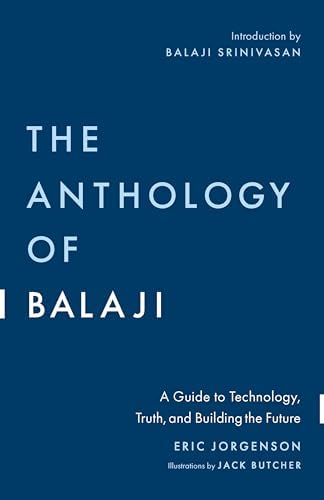
This audiobook presents Eric Jorgenson's compilation of Elon Musk's philosophy on purpose, success, and humanity's future. Jorgenson, author of The Almanac of Naval Ravikant and ref:ref-book-the-anthology-of-balaji--a-guide-to-techn:The Anthology of...

Episode


- 01
"SpaceX, Tesla, Neuralink, and the Boring Company are philanthropy" - Elon argues companies solving humanity's problems are more effective than traditional charity
- 02
"Tesla sells twice as many electric vehicles as the rest of electric car makers in the United States combined" - demonstrating market-based environmental impact
- 03
"The ratio of total digital compute to total biological compute is the key metric to watch" - tracking AI's exponential growth relative to human intelligence
- 04
"We're quite close to digital superintelligence, which will be smarter than any human at anything" - predicting AGI arrival within years, not decades
- 05
"The biggest myth that exists right now is this overpopulation myth. In fact, we have a population collapse problem" - birth rates below replacement threaten civilization
- 06
"We plan to launch about five uncrewed starships to Mars in 2026. If those all land safely, then crewed missions are possible in 2028" - specific Mars colonization timeline
- 07
"At volume production, a humanoid robot will cost less than a car" - predicting mass-market robotics creating abundance economy
- 08
"Don't force AI to lie, even if the truth is unpleasant" - emphasizing truthful AI programming as critical safety measure
Get the latest ideas from Smart Friends.
Plus the best new takeaways from other top podcasts — read in minutes, not hours.
By continuing, you agree to podbrain's Terms and Privacy Policy.
These notes may contain occasional inaccuracies. Learn how podbrain notes are made
This audiobook presents Eric Jorgenson's compilation of Elon Musk's philosophy on purpose, success, and humanity's future. Jorgenson, author of The Almanac of Naval Ravikant and The Anthology of Balaji, continues his mission of freely distributing transformative ideas, having reached over 5 million readers with his previous work.
The content spans Musk's vision across multiple domains: sustainable energy through Tesla, space exploration via SpaceX, brain-computer interfaces with Neuralink, and the societal implications of artificial intelligence. Drawing from historical analysis including The Story of Civilization by Will Durant and science fiction frameworks like Asimov's Foundation series, Musk presents both optimistic technological possibilities and existential warnings about civilizational collapse, demographic decline, and AI safety risks.
Companies as Modern Philanthropy
"If philanthropy is acting from a love of humanity, my companies are philanthropy" - Musk argues Tesla, SpaceX, Neuralink, and Boring Company address humanity's core challenges more effectively than traditional charitable giving.
Tesla has "done more to help the environment than all other companies combined," selling twice as many EVs as all other US electric car makers combined, demonstrating measurable environmental impact through market mechanisms.
"I care about the reality of goodness, not the perception of it" - Musk distinguishes between actual impact and philanthropic optics, criticizing those who "care about looking good while doing evil."
The Coming Age of Abundance Through AI and Robotics
"AI and robotics will bring about what might be termed the age of abundance" - removing labor as the economic constraint through humanoid robots costing less than cars at volume production.
"The ratio of total digital compute to total biological compute is the key metric to watch" - this fundamental ratio defines technological progress as AI capabilities exponentially exceed human intelligence.
"We're quite close to digital superintelligence, which will be smarter than any human at anything" - AGI arrival predicted within years, potentially transforming society beyond recognition by 2040s.
"The market for humanoid robots will be bigger than that of cars" - envisioning 10+ billion robots by 2033-2043, creating universal basic income feasibility through post-scarcity economics.
AI Safety and the Truth Imperative
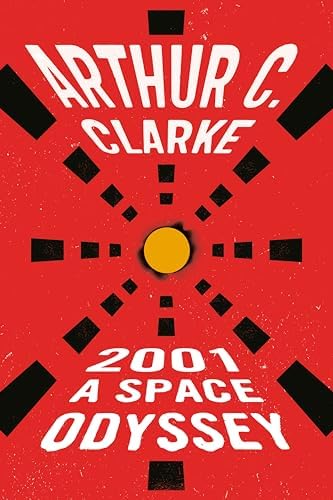
"Don't force AI to lie, even if the truth is unpleasant" - drawing from 2001 A Space Odyssey where HAL 9000's forced deception led to crew elimination, emphasizing truthful AI programming as existential safety measure.
"Super powerful AI programmed in this way has severe civilization-level risk" - referencing Google Gemini's diversity programming as example of how seemingly benign political correctness could become dangerous when AI gains enforcement power.
"Jeff Hinton puts the probability of annihilating the human race around 10 to 20 percent" - acknowledging significant existential risk from misaligned superintelligence requiring careful development approach.
Population Collapse as Civilizational Threat
"The biggest myth that exists right now is this overpopulation myth. In fact, we have a population collapse problem" - birth rates below replacement level in all wealthy countries threaten long-term survival.
Drawing from The Story of Civilization by Will Durant, "Rome fell because the Romans stopped making Romans" - demographic decline consistently preceded civilizational collapse throughout history, including ancient Rome where Julius Caesar and Augustus recognized but couldn't solve the fertility crisis.
"China's birth rate reached 40% below replacement" while Japan declined by 600,000 people in 2021, demonstrating the global scope of demographic collapse even in technologically advanced societies.
"Having children is the most optimistic thing somebody could do" - Musk advocates for increased fertility as both personal fulfillment and civilizational duty, personally having 12 children as example.
Mars Colonization Timeline and Strategy
"We plan to launch about five uncrewed starships to Mars in 2026. If those all land safely, then crewed missions are possible in 2028" - specific timeline dependent on successful automated landings.
"We think we can do this by 2044" - targeting 10,000 missions to transfer one million tons to Mars, requiring roughly 1,000 starships per launch window to establish self-sufficient civilization.
"Starlink internet is what's being used to pay for humanity getting to Mars" - using satellite internet revenue to fund interplanetary transportation development, making Mars missions economically viable.
"It would be the adventure, the best adventure one could possibly go on" - acknowledging high death probability while emphasizing Mars colonization as humanity's greatest frontier challenge.
Sustainable Energy and Nuclear Power Advocacy
"Please do not shut down the nuclear power plants and please reopen the ones that have been shut down. It is total madness" - advocating nuclear power as bridge technology while solar scales up.
"Coal plants are 100 to 1,000 times worse for our health than nuclear power plants" - comparing actual death rates from coal emissions versus nuclear accidents to demonstrate relative safety.
Tesla's Master Plan Part 3 demonstrates "a clear path to a sustainable energy Earth" supporting civilizations much larger than current 8 billion humans without environmental destruction or austerity measures.
Regulatory Accumulation and Innovation Barriers
"My companies are cumulatively overseen by a few hundred regulatory agencies" - complying with "100 million regulations" while disagreeing with perhaps five, contrary to media portrayals of regulatory resistance.
"California has made almost everything illegal. No one can make progress" - explaining high-speed rail failures as regulatory rather than engineering problems, where compliance costs exceed construction costs.
"Eventually, we're like Gulliver, tied down by thousands of little strings" - describing civilizational hardening through regulatory accumulation without corresponding removal mechanisms.
Historical Perspective and Civilizational Fragility
Recommending Asimov's Foundation series for its premise of "protecting society through a dark age," Musk acknowledges "some probability that we will" enter another dark period, particularly following potential World War III.
"Ancient Egypt was able to build incredible pyramids and forgot how to build pyramids. Then they forgot how to read hieroglyphics" - illustrating how technological knowledge can be permanently lost without active preservation.
"This is the best time to be alive" despite acknowledging multiple existential risks, emphasizing present opportunities while maintaining vigilance against complacency that historically preceded civilizational decline.



These notes may contain occasional inaccuracies. Learn how podbrain notes are made
More in Finance & Business
The Biggest Pivot In AI History Is Happening Right Now | Jordi Visser
Jun 20, 2026
How Substack Creators Are Covering This Strange Markets Era
Jun 20, 2026
#422 Joseph Pulitzer
Jun 20, 2026
World's First Trillionaire, Anthropic Fable Banned, The New Oligarchs, Iran Peace Deal
Jun 19, 2026Anthropic's Co-Founder and Top Economist on Doing Research at the AI Frontier
Jun 19, 2026
.svg)