
The Book of Elon - Part 2
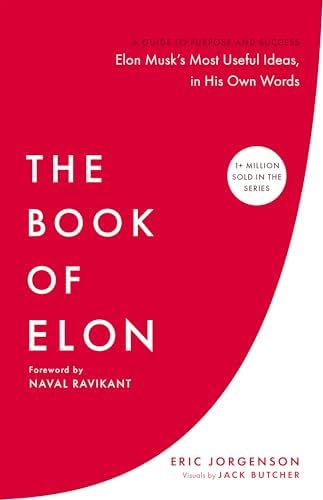
This transcript features Eric Jorgenson, author of The Book of Elon A Guide to Purpose and Success, presenting a free audiobook compilation of Elon Musk's insights on leadership, manufacturing, and building exceptional companies. Jorgenson, who previously...

Episode


- 01
"The most important thing is to attract great people" - building exceptional teams is the foundation of company success
- 02
"The best part is no part. The best process is no process" - simplicity creates both reliability and reduces costs
- 03
"You can't just legislate money to solve things. If you don't make stuff, there is no stuff" - manufacturing is underrated but essential
- 04
"The production line will move as fast as the slowest and least lucky part" - constraints determine overall system performance
- 05
"Speed of innovation is what matters. If your rate of innovation is high, you don't need to worry about protecting IP"
- 06
"A maniacal sense of urgency is our operating principle" - time is the only true currency in business
- 07
"There is 1,000%, maybe 10,000% more work that goes into the production system than the product itself"
- 08
"Physics does not care about hurt feelings. It cares about whether you got the rocket right" - feedback over feelings
Get the latest ideas from Smart Friends.
Plus the best new takeaways about leadership from other top podcasts — read in minutes, not hours.
By continuing, you agree to podbrain's Terms and Privacy Policy.
These notes may contain occasional inaccuracies. Learn how podbrain notes are made
This transcript features Eric Jorgenson, author of The Book of Elon A Guide to Purpose and Success, presenting a free audiobook compilation of Elon Musk's insights on leadership, manufacturing, and building exceptional companies. Jorgenson, who previously authored The Almanac of Naval Ravikant (read by over 5 million people), continues his philosophy of making valuable information freely accessible to benefit humanity.
The content covers Musk's approach to ultra-hardcore work ethic, including his experiences sleeping on factory floors during Tesla's production crises, working 100-hour weeks, and leading from the front lines. Key topics include building exceptional teams, implementing the five-step engineering algorithm, prioritizing manufacturing over design, and maintaining maniacal urgency in execution.
Musk's insights span his leadership roles as CEO of Tesla and SpaceX, where he serves as head engineer, chief designer, and CEO simultaneously. The discussion emphasizes first-principles thinking, the importance of simplicity in design and processes, and the critical role of manufacturing competitiveness through economies of scale and technology.
Ultra-Hardcore Work Ethic and Frontline Leadership
"I've done many, many stretches of 100-hour weeks, true 100-hour weeks, sleeping roughly six hours per day. I would not recommend that. That's for emergencies, not all the time" - Musk on extreme work demands during company crises.
"I slept on the floor in the factory. Otherwise, how would people know? Seeing is believing" - demonstrating commitment by being visible during the hardest moments builds team motivation.
"Never ask your troops to do something you're not willing to do. Whatever the people at the front lines are doing, try to do it at least a few times myself" - leadership requires shared sacrifice and hands-on experience.
All technical managers must spend at least 20% of their time doing hands-on work - software managers coding, solar roof managers doing installations - to maintain credibility and understanding.
Building Exceptional Teams and Company Culture
"A company is just a bunch of people coming together to create a product or service. The output of any company is the vector sum of the people within it" - success depends entirely on talent quality and alignment.
"When hiring, I look for evidence of exceptional ability, or at least exceptional aspiration" - recruiting requires identifying people who have overcome difficult problems and can explain the details.
"A small group of technically strong people will always beat a large group of moderately strong people" - Tesla operates with a special forces approach where excellent performance is the minimum passing grade.
"Physics does not care about hurt feelings. It cares about whether you got the rocket right" - feedback must focus on substance over emotions, with criticism directed at actions, not people.
"I think it's a real weakness to want to be liked, a real weakness. And I do not have that" - effective leadership requires prioritizing mission success over personal popularity.
The Five-Step Engineering Algorithm
Step 1: "Make your requirements less dumb. Your requirements are definitely dumb. It does not matter who gave them to you" - every requirement must come from a named person who takes responsibility.
Step 2: "Try very hard to delete the part or process. If you're not adding deleted things back in 10% of the time, you're clearly not deleting enough" - overcorrect for the bias toward adding unnecessary components.
Step 3: "Simplify or optimize. The most common mistake of smart engineers is to optimize a thing that should not exist" - only optimize after questioning requirements and deleting unnecessary parts.
Step 4: "Accelerate cycle time. You can always make things go faster. But do not go faster until you have worked on the other three things first" - speed without direction is wasteful.
Step 5: "Automate. Always wait until the end of designing a process, after you've questioned all the requirements and deleted unnecessary parts, before you introduce automation" - Tesla had to remove hundreds of expensive robots that automated processes that shouldn't have existed.
Manufacturing as Competitive Advantage
"The biggest epiphany I had building Tesla is what really matters is the machine that builds the machines. The factory" - manufacturing technology offers more innovation potential than product design.
"If we don't make stuff, there's no stuff. Some people have become detached from reality" - manufacturing is underrated while finance and law are over-allocated with talent in the United States.
"The production line will move as fast as the slowest and least lucky part of the entire production line" - with 10,000 things that must go right, any single failure sets the production rate.
"There is 1,000%, maybe 10,000% more work that goes into the production system than the product itself, especially for a product with new technology" - design is overrated compared to manufacturing complexity.
Tesla's Texas plant processes raw materials from rail cars through battery cells, motors, and single-piece casting for front and rear car sections - inspired by toy car manufacturing methods.
Speed and Urgency as Competitive Weapons
"A maniacal sense of urgency is our operating principle. The only true currency is time" - speed provides both offensive and defensive advantages in competition.
"The SR-71 Blackbird is a military plane with almost no defense except acceleration. Over 3,000 missiles were shot at the SR-71 Blackbird and none hit. All it did was go faster" - speed as the ultimate protection strategy.
"Speed of innovation is what matters. If your rate of innovation is high, you don't need to worry about protecting IP because other companies will be copying something you did years ago" - rapid innovation beats intellectual property protection.
For XAI's training supercluster, suppliers estimated 18-24 months but Musk's team completed it in 122 days by breaking down the impossible into constituent elements and solving them in parallel.
"Tesla is getting to point where every high-quality minute of thinking has a million-dollar impact. There are many instances where a half-hour meeting improved the company's financial outcome by $100 million."

These notes may contain occasional inaccuracies. Learn how podbrain notes are made
More in Finance & Business
The Biggest Pivot In AI History Is Happening Right Now | Jordi Visser
Jun 20, 2026
How Substack Creators Are Covering This Strange Markets Era
Jun 20, 2026
#422 Joseph Pulitzer
Jun 20, 2026
World's First Trillionaire, Anthropic Fable Banned, The New Oligarchs, Iran Peace Deal
Jun 19, 2026Anthropic's Co-Founder and Top Economist on Doing Research at the AI Frontier
Jun 19, 2026
.svg)