
My Conversation with Naval Megasode
Naval Ravikant and Eric Jorgenson recorded over four hours of conversation to celebrate the five-year anniversary of The Almanac of Naval Ravikant, updating and expanding the key ideas from the book that has reached millions of people worldwide in 40 languages.

Episode


- 01
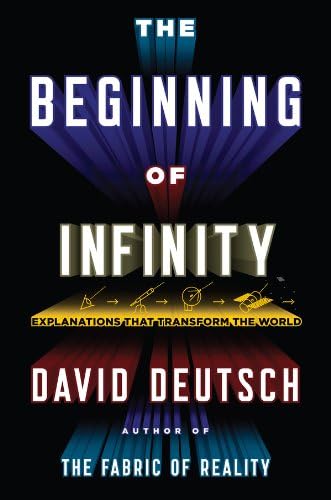
David Deutsch's definition of wealth as 'the set of physical transformations that you can effect' scales from civilization to individual level
- 02
Knowledge, not capital, is the real multiplier of wealth - if you removed Elon Musk from SpaceX, the knowledge disappears and value drops
- 03
Good products are hard to vary, just like good explanations - you can't change details without breaking what makes them great
- 04
The only true test of intelligence is if you get what you want out of life - both choosing what to want and getting it
- 05
Virtues are values that if adopted individually lead to win-win outcomes for society while being long-term selfish
- 06
Most people will want wealth, health, and happiness - we pursue them in that order but their importance is reversed
- 07
Either create wealth or passive income, become a monk, or do what you love more than money - then focus on truth, love, and beauty
- 08
The closer you get to truth, the more silent you become inside because you spend less time ruminating about falsehoods
Get the latest ideas from Smart Friends.
Plus the best new takeaways about wealth building from other top podcasts — read in minutes, not hours.
By continuing, you agree to podbrain's Terms and Privacy Policy.
These notes may contain occasional inaccuracies. Learn how podbrain notes are made
Naval Ravikant and Eric Jorgenson recorded over four hours of conversation to celebrate the five-year anniversary of The Almanac of Naval Ravikant, updating and expanding the key ideas from the book that has reached millions of people worldwide in 40 languages.
The conversation explores how David Deutsch's ideas from The Beginning of Infinity have deepened Naval's understanding of wealth, knowledge, and human progress. They discuss Deutsch's definition of wealth as 'the set of physical transformations you can effect' and how knowledge, not capital, drives true wealth creation.
Naval shares insights on building judgment through experience, the relationship between wealth and happiness, and practical philosophy for living well. The discussion weaves together concepts from Skin in the Game, Zero to One, and various philosophical works, examining how ancient wisdom applies to modern entrepreneurship and personal development.
David Deutsch's Revolutionary Definition of Wealth
Deutsch's definition of wealth as 'the set of physical transformations that you can effect' is deeper and more philosophical than Naval's original 'assets that earn while you sleep' definition, scaling from civilization down to individuals.
Knowledge is the primary multiplier of wealth, not capital - 'If you removed Elon Musk from SpaceX, you can't capture his wealth. It disappears because the knowledge disappears' - Naval
This connects to ethical wealth creation because knowledge-based wealth creation inherently serves others, unlike zero-sum wealth extraction that Marx incorrectly focused on.
Good Explanations and Hard-to-Vary Products
Drawing from The Beginning of Infinity, good products are hard to vary - you can't change details without breaking what makes them great, just like good explanations.
The iPhone exemplifies this principle: 'It's hard to change the characteristics of the iPhone without breaking what makes it great' - Naval notes the form factor from 2007 remains largely unchanged.
Good products have surprising reach, solving problems their creators never anticipated, like how the iPhone displaced BlackBerry in enterprise despite lacking a keyboard.
Technology has winner-take-all network effects - 'You can't spend a million dollars to buy a better car, you can just spend a million dollars to buy a goofier car' - Naval on how the best products become accessible to everyone.
Building Judgment Through Iterations, Not Hours
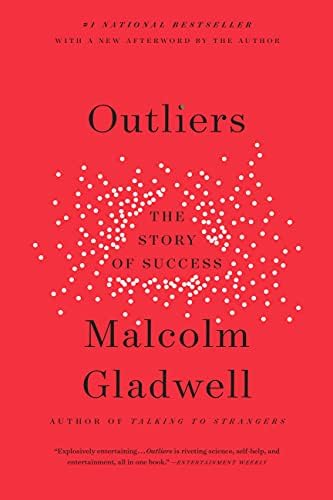
Contradicting Outliers, Naval argues it's not 10,000 hours but 10,000 iterations - 'you do something, honestly reflect upon the outcome, make a change, and try again.'
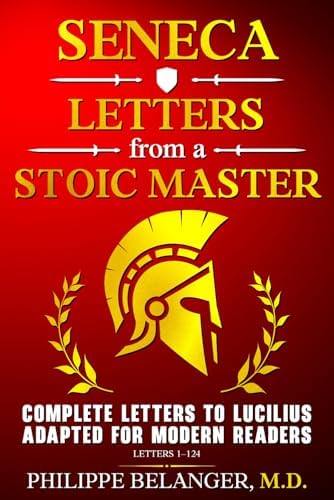
Following Letters from a Stoic, learning should go from specific to general: 'You do things in reality, you encounter reality, you test it, you learn from it, and then you generalize' - Naval on Seneca's method.
Eventually judgment becomes taste - when you can no longer articulate why you make certain decisions but they consistently work, like Rick Rubin's music production instincts.
Hard work remains essential for breakthroughs: Naval recalls 24-36 hour coding sessions in college because 'it would take me hours just to load the problem into my head' after breaks.
The Pursuit Order: Wealth, Health, Happiness
Naval's framework: 'The three big ones in life are wealth, health, and happiness. We pursue them in that order, but their importance is reversed.'
Wealth is best pursued when young due to higher energy and flexibility, while happiness becomes critical later: 'You better figure out how to get happy when you're at a certain point because you don't want to be that grumpy old person.'
Many successful people fail at happiness because they can't hack their personal lives the same way they hack their careers - they remain low agency outside of work.
Truth, Love, and Beauty as Life's Ultimate Pursuits
Naval's refined life philosophy: 'Stay healthy, get wealthy, seek truth, give love, and create beauty. That's it. That's what I want to do.'
Truth and love are unique because 'even if it makes your life worse, you would still take them' - unlike other pursuits that are conditionally valuable.
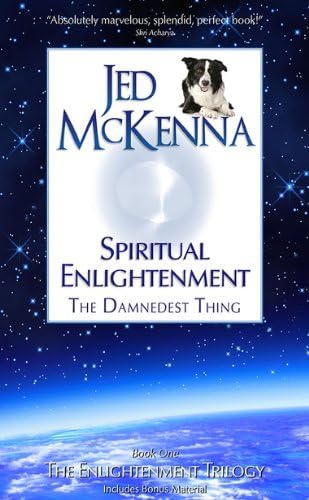
Drawing from Spiritual Enlightenment The Damnedest Thing, Naval notes that truth has the widest reach: 'Truth would have to have the widest and deepest reach... it would have to be this all-encompassing theory.'
It's better to be in love than to be loved: 'When you feel in love with somebody, that's when you're high. That's when you're elated' - Naval on the counterintuitive nature of love.
The Enlightenment Question and Practical Spirituality
Naval has met dozens of enlightened people through the internet who have 'a persistent experience of no self' and remain unperturbed by major life events.
Enlightenment is binary, not a path: 'Either you believe that you are a separate self or not. It's that simple' - there's no gradual progress, only a fundamental shift in perspective.
These individuals remain fully functional with relationships and careers but operate without ego-driven emotions: 'They'll take the actions that you and I would take, but they'll take them much more calmly.'
Naval's current approach: 'I don't necessarily want happiness. I kind of want just... being okay with things the way they are' - seeking peace over conventional happiness.
Heresies, Truth-Telling, and Social Consensus
Echoing Zero to One, Naval notes that 'the real truths are heresies. They cannot be spoken, only discovered, whispered, and perhaps read.'
Society requires shared falsehoods for cohesion: 'Groups have to have consensus. And to have consensus, you have to have a shared set of beliefs that are false, but make it easier to get along.'
Most news is fake news by definition: 'Conventional wisdom doesn't need to be spread because it's already out there. And heresies don't spread because they're not spreadable... So the only thing that makes it through the environment is fake news.'
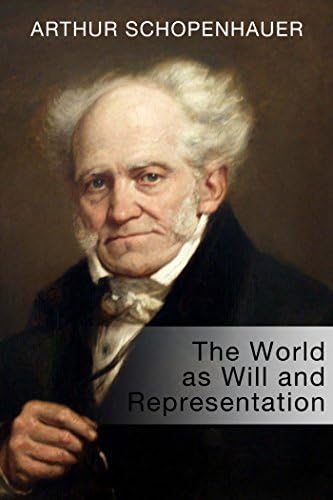
Great philosophers establish credibility by telling harsh truths, like The World as Will and Representation author Schopenhauer, who 'wrote so much harsh truth while he was alive, and nobody liked him, but he knew he was telling the truth.'







These notes may contain occasional inaccuracies. Learn how podbrain notes are made
More in Finance & Business

The Biggest Pivot In AI History Is Happening Right Now | Jordi Visser
Jun 20, 2026
How Substack Creators Are Covering This Strange Markets Era
Jun 20, 2026
#422 Joseph Pulitzer
Jun 20, 2026
World's First Trillionaire, Anthropic Fable Banned, The New Oligarchs, Iran Peace Deal
Jun 19, 2026Anthropic's Co-Founder and Top Economist on Doing Research at the AI Frontier
Jun 19, 2026
.svg)