
How to Destroy Bad Ideas Without Killing Relationships [The Dionysus Program with Sean Devine]
Sean Devine, founder and CEO of XB and author of The Dionysus Program, joins Eric Jorgenson to discuss his framework for organizational learning and adaptation. Devine has built and scaled a bootstrapped software company serving heavy civil contractors, giving him a laboratory for...


![Smart Friends episode thumbnail: How to Destroy Bad Ideas Without Killing Relationships [The Dionysus Program with Sean Devine]](https://Podbrain.gumlet.io/storage/v1/object/public/thumbnails/taddy-57db31ea-cd1a-4f6f-9d90-e2da6fb9d44e.webp?w=1200&h=630&mode=fill&q=85&format=auto)
- 01
Sean Devine's The Dionysus Program presents a framework where organizations toggle between 'runtime' (leveraging existing assets) and 'ritual time' (finding and correcting errors)
- 02
Trust (Ren) acts as the 'philosopher's stone' enabling groups to transmute error into new knowledge - without trust, people cannot be candid about mistakes
- 03
The anti-scapegoat principle requires putting ideas or artifacts on trial, never people, to maintain the error-correction loop without destroying relationships
- 04
Religion serves as the original 'cable bundle' - a proven system for helping humans deal with uncertainty and mortality that modern approaches struggle to replicate
- 05
Drawing from Antifragile, the goal is organizing systems to benefit from chaos: 'I don't pray that God is on my side, I pray that I'm on his'
- 06
AI agents excel at metabolizing their own error without identity attachment, creating competitive pressure for human organizations to improve their learning rates
- 07
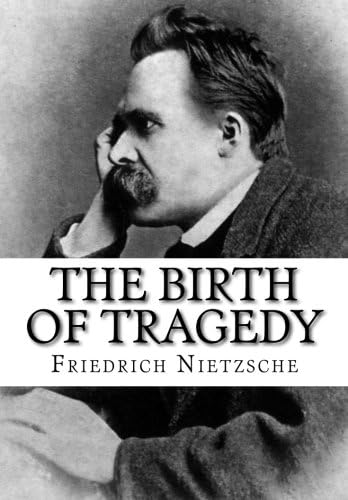
The Birth of Tragedy reveals the Apollo-Dionysus tension: pure rationality (Apollo) versus embracing uncertainty and mortality (Dionysus) as complementary forces
- 08
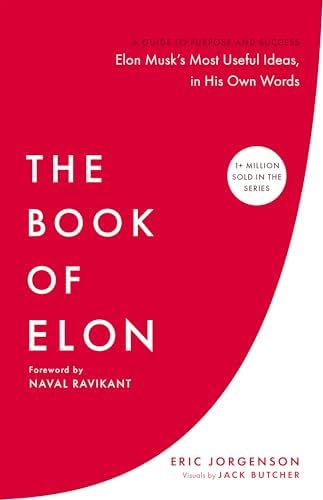
Elon Musk's secret from Book of Elon is selecting intrinsically motivating problems that pull people through difficult error-correction cycles, not just engineering brilliance
Get the latest ideas from Smart Friends.
Plus the best new takeaways from other top podcasts — read in minutes, not hours.
By continuing, you agree to Podbrain's Terms and Privacy Policy.
These notes may contain occasional inaccuracies. Learn how Podbrain notes are made
Sean Devine, founder and CEO of XB and author of The Dionysus Program, joins Eric Jorgenson to discuss his framework for organizational learning and adaptation. Devine has built and scaled a bootstrapped software company serving heavy civil contractors, giving him a laboratory for testing ideas about how groups process new information and correct errors.
The conversation explores how the bottleneck in organizational growth has shifted from technical competence to the ability to handle constant change and uncertainty. Drawing insights from religion, philosophy, and alchemy, The Dionysus Program presents tools for destroying bad ideas without destroying relationships, using concepts like runtime versus ritual time, trust as the philosopher's stone, and the anti-scapegoat principle.
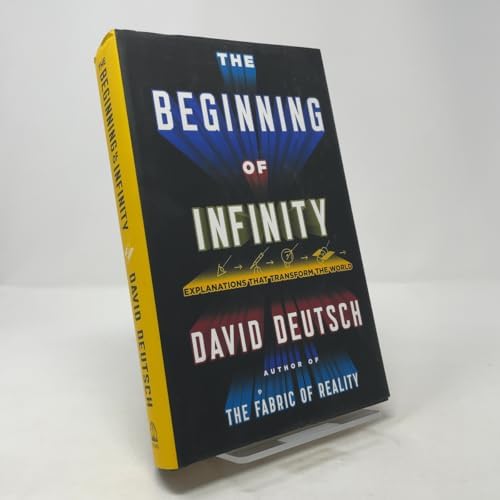
Devine's work synthesizes ideas from Antifragile, The Beginning of Infinity, and The Birth of Tragedy into practical frameworks for increasing what he calls 'metabolic rate' - an organization's ability to convert error into better explanations. The discussion covers applications from corporate strategy to personal transitions, with particular focus on how AI is changing the competitive landscape for human learning.
The Shifting Bottleneck: From Technical to Adaptive Capacity
Devine observed the bottleneck shifting from technical competence to handling constant change: 'I could feel the acceleration in myself and my organization and the world around us. And then I can feel the limit... the limit was usually not technical, but was some, it had to do something with like, how do we contend with this change, this constant change?'
The collapse of expertise half-life created identity crises as people who identified with specific skills found those skills becoming commoditized within months rather than years.
Young professionals lost clear career trajectories: 'they not only weren't sure like what unique about them now... but they also weren't sure where to go' as traditional mimetic goals disappeared.
This created an 'anti-mimetic' force where instead of fighting for shared goals, people fight over status because they're unsure what's valuable to pursue.
Religion as the Original Error-Correction System
Devine had an epiphany that 'God is the random seed' - that uncertainty itself, not something to be eliminated, is the divine force that religion helps us navigate.
Religion functions as the 'original cable bundle' - a proven system for dealing with uncertainty that we've tried to unbundle, only to find ourselves 'paying more and it's not as coherent.'
Prayer exemplifies the anti-fragile principle from Antifragile: 'I don't pray that God is on my side. I pray that I'm on his' - organizing to benefit from uncertainty rather than fighting it.
The Trinity represents user interface innovation, offering multiple ways to access the same core insight about uncertainty depending on individual needs and preferences.
Runtime vs Ritual Time: The Core Toggle
Organizations must explicitly toggle between runtime (leveraging existing assets) and ritual time (finding and correcting errors), with good behavior completely inverting between these modes.
During runtime, criticism is harmful: 'if you're the guy that's criticizing the existing sales materials when you need to be out closing deals, you are actively harming the organization.'
Ritual time inverts everything: 'You are accountable to finding the error and unmaking it and finding better explanations to replace it.'
The Sabbath provides the template with approximately 6:1 ratios, but within the ritual time itself, most should be rest with focused error-correction comprising a smaller portion.
Trust as the Philosopher's Stone
Trust (Ren) enables the transmutation of error into knowledge: 'The trust between people is the thing that allows us to transmute error, old knowledge into new knowledge.'
Without trust, people cannot be candid about mistakes because 'when you're candid, you have to make yourself vulnerable because you're admitting both your own mistakes and that you see someone else's mistake.'
This insight transformed their sales process: they were 'asking prospective customers to reveal their error before we had built a density of trust with them.'
Trust must be built systematically through commitment-making and demonstrated reliability before attempting difficult conversations about organizational errors.
The Anti-Scapegoat Principle
Never make a person the subject of ritual time criticism to avoid ending future error-correction cycles: 'anything that ends it is extremely costly, like max costly because in an era of compounding, basically anything that shuts off the compounding loop is a game over event.'
Put ideas, processes, or artifacts on trial instead of people, following the principle of 'hate the sin, love the sinner.'
Anti-scapegoats invert traditional scapegoating: no one believes they're guilty (they were previously thought correct) but they actually are guilty (the idea needs updating).
Target ideas with maximum explanatory reach if corrected - the 'big if true' opportunities that could fundamentally reshape understanding.
Ritual Design and Binding Commitments
Effective rituals require 'otherness' - they must feel received rather than invented to avoid the 'can't tickle yourself' problem where people dismiss structures they created.
Rituals should feel like gifts through generous hospitality and beautiful settings to create reciprocity that encourages candor despite its risks.
Beauty serves as a 'metabolic aid' because 'looking at your own error is ugly' and aesthetic experiences help people process difficult truths.
XB conducted a mock trial in India where developers put 'the old job of the software developer' on trial, ending with folding the guilty verdict into a paper boat and releasing it into the ocean.
AI and the Competitive Advantage of Error Metabolism
AI agents excel at error correction because they 'have no identity' and can run self-improvement rituals automatically: 'it runs a ritual on itself because it has no identity, or rather, we can just inject the identity into it that it has at any moment.'
This creates competitive pressure: 'we metabolize our own error so much less efficiently than the robot does' even when cost advantages are eliminated.
The scaling limit becomes 'the size of a group of people where you could still metabolize error reasonably' compared to AI systems.
Organizations with high metabolic rates will have investment advantages because they can adapt faster to changing conditions than those stuck in old patterns.
Investment Applications and Elon's Secret
Investment edge comes from spotting high metabolic rates that conventional wisdom sees as chaos or problems rather than systematic improvement capabilities.
From Book of Elon, Musk's secret isn't engineering brilliance but 'he just picked goals that are so intrinsically motivating to people that they created the flywheel of continuous improvement.'
For less inherently motivating goals, leaders can create meaning through quality beyond requirements: 'every ounce that we do that is a benefit to the team because doing good work is itself intrinsically motivating.'
Metabolic rate becomes visible through public information when viewed through the right lens: 'most companies make their epimetabolic rate pretty visible. You just have to be looking for it.'


These notes may contain occasional inaccuracies. Learn how Podbrain notes are made
More in Finance & Business

Jamie Dimon succession race narrows
Jun 26, 2026
HIGHLIGHTS: Miljan Gutovic - CEO of Holcim
Jun 26, 2026
Will The K-Shaped Economy Destroy America? | Darius Dale
Jun 25, 2026
Is DePIN Entering Its Next Growth Phase?
Jun 25, 2026
Gretchen Rubin - How Curiosity Becomes a Calling (Ep. 320)
Jun 25, 2026
.svg)