
Inside the Booming Market for Dinosaur Fossils
Tracy Alloway and Joe Wiesenthal host this episode exploring the booming dinosaur fossil market with Salomon Aaron, director at David Aaron, a London-based antiquities and dinosaur fossil gallery.

Episode


- 01
Ken Griffin purchased a Stegosaurus skeleton for $45 million, setting the record for most expensive fossil ever sold
- 02
Stan the T-Rex sold for $31 million in 2020-2021, exploding prices from the previous record of $8 million
- 03
American dinosaur fossils are the only legally clear market - 'If you find a dinosaur fossil on private land, you can legally sell it' - Salomon
- 04
Complete dinosaur skeletons are virtually never discovered intact and require assembly with resin parts and 3D printed bones
- 05
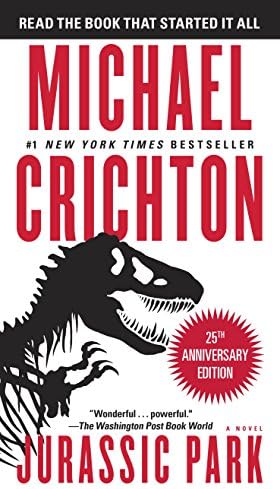
The fossil market attracts younger, tech-heavy demographics compared to traditional antiquities, heavily influenced by Jurassic Park
- 06
GPS coordinates, land deeds, and video documentation of excavation are now required for proper provenance verification
- 07
Private trade enables more discoveries: 'So many dinosaurs would not ordinarily be discovered if it were not for the private trade' - Salomon
- 08
Carnivore fossils command premium prices over herbivores, with T-Rex skulls having queues of 5-6 buyers waiting
Get the latest ideas from Odd Lots.
Plus the best new takeaways about technology from other top podcasts — read in minutes, not hours.
By continuing, you agree to podbrain's Terms and Privacy Policy.
These notes may contain occasional inaccuracies. Learn how podbrain notes are made
Tracy Alloway and Joe Wiesenthal host this episode exploring the booming dinosaur fossil market with Salomon Aaron, director at David Aaron, a London-based antiquities and dinosaur fossil gallery.
The conversation covers the dramatic price explosion in fossil auctions, from Stan the T-Rex's record $31 million sale to Ken Griffin's $45 million Stegosaurus purchase. Aaron explains how the market has evolved from a niche collecting area to attracting tech entrepreneurs and sovereign wealth funds.
Key topics include the complex provenance requirements for legal fossil sales, the assembly process for incomplete skeletons, and the ongoing debate about private ownership versus museum access. The discussion also touches on how Jurassic Park influenced the current generation of collectors entering this emerging asset class.
Fossil Market Structure Mirrors Art World But Lacks Maturity
The dinosaur fossil market resembles other art markets but remains underdeveloped, lacking depth of research, pricing comparisons, and established dealing rules for condition, authenticity, and provenance.
Market has been booming for ten years but is changing as it matures, with 'a flight to quality and much more differentiation between the great dinosaur fossils that deserve recognition, and others which shouldn't be' - Salomon.
Rising prices are increasing supply as excavation becomes more financially feasible, with hunters now willing to complete digs that previously weren't economically viable.
American Fossils Dominate Due to Clear Legal Framework
David Aaron only deals in American dinosaur fossils because 'the rules are very clear. If you find a dinosaur fossil on private land, you can legally sell it as long as you have the permission of all parties' - Salomon.
Excavation concentrates in Wyoming, Montana, and South Dakota due to favorable climate conditions, accessible terrain, and weather patterns that churn earth making digging easier.
Commercial operations involve landowners splitting profits with dinosaur hunters, dealers acquiring ranches specifically for fossil hunting, or purchasing from private collectors with decades-old provenance.
Provenance Requirements Have Dramatically Tightened
Modern fossil sales require GPS coordinates, land deeds proving legal title, copies of sale arrangements between hunters and landowners, and ideally video documentation of bones being discovered in situ.
Aaron's gallery applies antiquities market due diligence standards to fossils, requiring 'complete certainty over when, where, how, and in whose property the fossil was discovered.'
Fifteen to twenty years ago, fossils exchanged hands with just 'a signed statement from someone saying I found this on my property,' but rising values demand much stricter documentation.
Pricing Explosion Driven by Auction House Visibility
Stan the T-Rex sale at $31 million in 2020-2021 shattered the previous record of $8 million from Sue in the early 2000s, with 'no logic to why they were so cheap prior to that sale' - Salomon.
A complete Triceratops skeleton sold for around $8 million in 2022-2023, while the prior record was under $1 million, with Christie's having one go unsold at $500,000 ten years earlier.
David Aaron was 'the first commercial art gallery to actually start exhibiting dinosaur fossils as an art form at an art fair,' introducing visibility that led to tech entrepreneurs and private collectors entering the market.
Assembly and Authenticity Challenges in Incomplete Specimens
Dinosaur fossils are 'virtually never discovered completely intact' and require assembly with resin parts and 3D printed bones to complete specimens.
Traditional bone maps can be misleading because 'you might actually have five percent of that particular bone' even though it appears complete on documentation.
David Aaron creates detailed bone maps showing 'what percentage of each bone is there' and uses conservators to verify that assembled bones accurately reflect the documentation.
Buyer Demographics Skew Young and Tech-Heavy
Fossil clients are 'much younger than the antiquities or Islamic art clients in general' and 'really skew towards tech and science' - many grew up with Jurassic Park.
Carnivore fossils command premium prices, with buyers wanting 'teeth, something scary, something that I can put in my home' that gives visitors 'the fright of your life' - Salomon.
For top specimens like T-Rex skulls in great condition, 'there's a queue of five six people waiting for it, ready to acquire it from an email photo, to send money in advance.'
Private Market Benefits Science Through Museum Partnerships
Aaron argues 'on the balance, the public is better off for the private trade' because 'so many dinosaurs would not ordinarily be discovered if it were not for the private trade.'
The gallery arranges private buyers to acquire specimens for museums, recently finding a collector who 'agreed to acquire it for the museum and also make funds available for research.'
Ken Griffin's $45 million APEX purchase immediately went 'on public display in New York' with speculation he may eventually donate it to a museum permanently.
These notes may contain occasional inaccuracies. Learn how podbrain notes are made
More in Finance & Business
The Biggest Pivot In AI History Is Happening Right Now | Jordi Visser
Jun 20, 2026
How Substack Creators Are Covering This Strange Markets Era
Jun 20, 2026
#422 Joseph Pulitzer
Jun 20, 2026
World's First Trillionaire, Anthropic Fable Banned, The New Oligarchs, Iran Peace Deal
Jun 19, 2026Anthropic's Co-Founder and Top Economist on Doing Research at the AI Frontier
Jun 19, 2026
.svg)