
How the Speed of a Trade Got Down to Nearly the Speed of Light
Joe Wiesenthal and Tracy Alloway host Donald MacKenzie, professor of sociology at the University of Edinburgh and author of multiple books examining technology's impact on financial markets. MacKenzie has written extensively about quantitative finance, high frequency trading, and digital advertising, bringing a...

Episode


- 01
Island's matching engine executed trades in 2 milliseconds versus Instinet's 2 seconds - a 1000x improvement that opened the door for high frequency trading
- 02
At the speed of light, it takes one nanosecond to travel 30 centimeters - the scale at which HFT speed races now operate
- 03
HFT firms can buy servers with personal credit cards and install them within days, while banks need six months for similar upgrades
- 04
The Chicago-New Jersey microwave link became crucial because light travels at only 2/3 speed in fiber optic cables versus near light-speed through atmosphere
- 05
Thomas Philippon found financial intermediation costs unchanged from 1880s to 2015 despite technological advances - efficiency gains captured as higher finance sector pay
- 06
Eric Budish estimates single-digit billions in profits available from exploiting structural market features, creating economic limits on speed investment
- 07
Market making firms populate order books with liquidity while taking firms race to execute against 'stale' orders in nanosecond timeframes
- 08
Sam Altman's logarithmic intelligence scaling law implies diminishing returns - each AI improvement costs exponentially more in resources and carbon emissions
Get the latest ideas from Odd Lots.
Plus the best new takeaways from other top podcasts — read in minutes, not hours.
By continuing, you agree to podbrain's Terms and Privacy Policy.
These notes may contain occasional inaccuracies. Learn how podbrain notes are made
Joe Wiesenthal and Tracy Alloway host Donald MacKenzie, professor of sociology at the University of Edinburgh and author of multiple books examining technology's impact on financial markets. MacKenzie has written extensively about quantitative finance, high frequency trading, and digital advertising, bringing a sociological perspective to highly technical domains.
The conversation explores the hidden infrastructure of electronic trading, from the millisecond speeds that enabled HFT's emergence to today's nanosecond arms races. MacKenzie draws from his book Trading at the Speed of Light, which involved extensive fieldwork interviewing HFT executives and visiting data centers to understand how market structure creates technological competition.
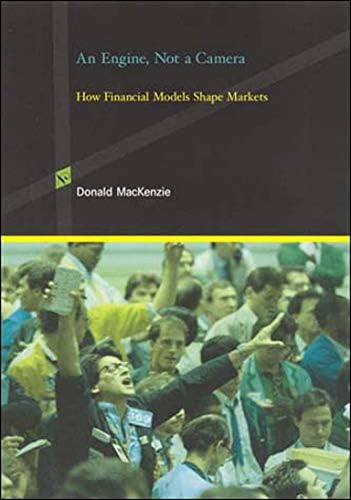
The discussion traces the evolution from Island's pioneering electronic order book in the late 1990s through today's microwave-powered speed wars between Chicago and New Jersey. MacKenzie explains how his earlier work An Engine Not a Camera examined how financial models create feedback loops that reshape markets themselves, while referencing A Tenth of a Second A History to explain the transition from human to machine-centered trading.
Island's Revolutionary Matching Engine Sparked HFT Revolution
Island's electronic order book used a matching engine that executed trades in 2 milliseconds versus Instinet's 2 seconds, creating a 1000-fold speed improvement that opened the door for automated high frequency trading in the late 1990s.
The system worked by maintaining a list of bids and offers, with the matching engine automatically finding price matches and executing trades electronically without human negotiation - 'a marriage made in heaven' with automated trading systems.
Island brought significant liquidity to NASDAQ tech stock trading during the dot-com bubble, creating a feedback loop where automated trading attracted more liquidity to exchanges with HFT-friendly technical features.
The Physics of Nanosecond Trading and Human Perception Limits
A Tenth of a Second A History by Jimena Canales identifies the tenth of a second as 'the generally accepted lower threshold of human perceptibility of time' - the point where trading shifted from human-centered to machine-centered execution.
At light speed in vacuum, it takes one nanosecond to travel 30 centimeters (one foot), providing perspective on how HFT evolved from milliseconds in 2011 to microseconds by 2014 to nanoseconds by 2018-2020.
The speed race exploits structural market relationships, like when Chicago stock index futures price changes create 'stale' orders in New Jersey equity markets that taking firms race to execute against in nanosecond timeframes.
Organizational Agility Gives HFT Firms Advantage Over Banks
HFT firms typically employ 50-150 people with flat organizational structures where 'you could just use your personal credit card to buy the server, get it delivered to your office' and install it within a week.
Banks struggle with separated IT departments requiring management sign-off for new systems, making the same server upgrade take 'pretty well if you could achieve that within six months' versus HFT firms' days.
Many HFT firms were founded by successful Chicago floor traders who had enough personal capital (tens of millions) to start small automated trading operations without external funding.
The Chicago-New Jersey Microwave Wars and Cable Length Equality
The crucial link between Chicago Mercantile Exchange and New Jersey equity data centers evolved through three phases: GetCo's 'Gold Line' stitching existing cables, Spread Networks digging new fiber in 2010, then microwave links trumping fiber.
Microwave became superior because light travels at only two-thirds speed in fiber optic glass versus near light-speed through atmosphere, creating the final technological advantage in the speed race.
Exchange data centers now enforce 'equal cable length' rules where fiber optic cables are coiled to ensure identical distances for all trading firms, ending the 'wild West' era of drilling holes in walls for shorter connections.
Market Making vs Taking Creates Perpetual Arms Race
Market making firms provide liquidity by placing orders that populate the order book at prices that can't immediately execute, while taking firms monitor for profitable opportunities and execute against existing orders.
The core arms race occurs when Chicago futures prices change, making New Jersey equity orders 'stale' - making firms rush to cancel while taking firms race to execute against them in nanosecond timeframes.
Eric Budish's research shows single-digit billions in profits available from exploiting structural market features, creating economic limits on speed investment since 'investing fifty billion dollars in speed technology would be a dumb thing to do.'
Financial Efficiency Paradox and AI's Diminishing Returns
Thomas Philippon found that financial intermediation unit costs showed no clear decline from the 1880s to 2015 despite technological advances, with efficiency gains captured as higher pay in the financial sector rather than lower costs.
In the 1940s finance professionals earned roughly the same as equivalent educational qualifications in other fields, but from the 1970s onwards 'the gap has got bigger and bigger and bigger.'
Sam Altman's February 2023 statement that AI intelligence scales as 'roughly the log of the resources devoted to training it' describes a diminishing returns function where 'each increment costs you more in terms of the resources deployed.'
The AI scaling question becomes 'how far do you go along a diminishing returns curve' when the horizontal axis represents 'trillions of dollars of financial input or hundreds of megatons of carbon dioxide emitted.'


These notes may contain occasional inaccuracies. Learn how podbrain notes are made
More in Finance & Business

The Biggest Pivot In AI History Is Happening Right Now | Jordi Visser
Jun 20, 2026
How Substack Creators Are Covering This Strange Markets Era
Jun 20, 2026
#422 Joseph Pulitzer
Jun 20, 2026
World's First Trillionaire, Anthropic Fable Banned, The New Oligarchs, Iran Peace Deal
Jun 19, 2026Anthropic's Co-Founder and Top Economist on Doing Research at the AI Frontier
Jun 19, 2026
.svg)