
Daniel Yergin Sees a 'Different World' Emerging After the Hormuz Crisis
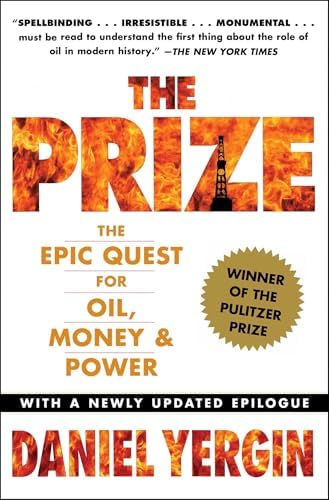
Joe Weisenthal and Tracy Alloway speak with Daniel Yergin, Vice Chairman of S&P Global and author of The Prize The Epic Quest for Oil, Money and Power and...

Episode


- 01
The Strait of Hormuz closure was 'the mother of all supply chain shocks' - a nightmare scenario that energy planners thought would never actually happen - Daniel Yergin
- 02
Physical oil markets showed extreme stress while futures prices remained relatively calm, creating an unprecedented dislocation between dated Brent and futures pricing
- 03
AI data centers now represent about half of US GDP growth, with tech companies scrambling to secure electricity supplies for the first time in their history
- 04
Over 90% of new global electric capacity installed last year was wind and solar, driven more by energy security than climate concerns
- 05
US LNG exports now represent 75% of the value of all semiconductor exports - twice the value of Hollywood entertainment exports
- 06
The crisis introduces 'a sense of risks that wasn't there before' and will permanently change how the world thinks about energy security - Daniel Yergin
- 07
Recovery from the Gulf crisis could take up to two-thirds of a year before petrochemical and refining disruptions are fully cleared
- 08
Drone technology has fundamentally altered warfare dynamics, enabling smaller powers to challenge major military forces and control critical chokepoints
Get the latest ideas from Odd Lots.
Plus the best new takeaways about energy from other top podcasts — read in minutes, not hours.
By continuing, you agree to podbrain's Terms and Privacy Policy.
These notes may contain occasional inaccuracies. Learn how podbrain notes are made
Joe Weisenthal and Tracy Alloway speak with Daniel Yergin, Vice Chairman of S&P Global and author of The Prize The Epic Quest for Oil, Money and Power and The New Map Energy, Climate and the Clash of Nations. The conversation takes place on April 17th during the acute phase of the Iran-Israel conflict and the closure of the Strait of Hormuz.
The discussion explores how recent events have fundamentally altered global energy markets, from the unprecedented dislocation between physical and futures oil prices to the scramble by tech companies to secure electricity for AI data centers. Yergin provides historical context from his seminal works while analyzing how drone technology has changed the strategic calculus around critical energy chokepoints.
Key topics include the structural shifts in global energy flows, the intersection of AI and electricity demand, the evolution of energy security thinking, and why this crisis represents a permanent departure from the pre-2020 energy landscape.
The Mother of All Supply Chain Shocks Becomes Reality
The Strait of Hormuz closure represented 'the mother of all supply chain shocks' - a scenario energy planners had modeled for decades but never expected to actually occur, according to Yergin.
An unprecedented split emerged between futures prices (reflecting expectations of quick resolution) and physical dated Brent prices (showing severe near-term supply stress), creating 'two different visions of the world almost' - Daniel Yergin.
The crisis extended far beyond oil to natural gas, fertilizer, petrochemicals, sulfur, and helium - revealing how integrated Gulf countries had become in the global economy beyond just energy exports.
Asia bore the brunt of supply disruptions with flight cancellations and restaurant closures due to LPG shortages, while the US remained largely insulated due to domestic production capacity.
Tech Giants Scramble for Electricity as AI Drives Demand
AI data centers now represent approximately half of US GDP growth, creating unprecedented electricity demand that has caught tech companies unprepared for energy planning.
Tech executives at CERAWeek admitted they 'didn't talk about electricity' when building their first data centers in 2008, but now face 7-10 year lead times for energy projects versus months for software development.
Major tech companies are investing directly in nuclear technology, with Amazon backing X Energy's small modular reactors and others hiring energy industry veterans to build internal capabilities.
Utility executives report electricity demand growth of 5-8% annually after years of flat growth, constrained by shortages of electricians and transformers in the supply chain.
Drone Technology Reshapes Strategic Balance of Power
Iran's ability to control the Strait of Hormuz despite facing 'the mightiest military' demonstrates how drone technology has enabled smaller powers to challenge major forces, as described in The New Map.
Ukraine served as 'the beta test for the new world of warfare' with drones, now applied by Iran in the Gulf to establish control over global energy chokepoints.
Ukraine has emerged as the world's most experienced drone warfare nation, leading to arms deals with Gulf countries seeking protection against similar threats.
The crisis reveals that 'risk is being underpriced in the market' as financial markets underestimated the physical disruption capabilities of modern drone warfare - industry CEO.
Energy Security Trumps Climate in Investment Decisions
Over 90% of new global electric capacity installed last year was wind and solar, but the motivation has shifted from climate concerns to energy security and diversification.
ESG investing has largely disappeared from energy discussions, potentially to be rebranded as 'infrastructure' investment to avoid political complications while maintaining environmental objectives.
US LNG exports now represent 75% of the value of all semiconductor exports and twice the value of Hollywood entertainment exports, highlighting America's energy export dominance.
The global LNG market could grow 50% larger by 2040, with increased European interest in long-term supply contracts following the Gulf crisis.
Historical Parallels and the Continuity of Iranian Influence
As documented in The Prize, Iran has been central to global oil dynamics since 1908 when oil was first discovered there, leading Winston Churchill to convert the Royal Navy from coal to oil.
Churchill's principle that 'variety is the source of safety' - diversification as the foundation of energy security - remains relevant 118 years later amid current Gulf tensions.
The current conflict represents a continuation of tensions that began with Iranian oil workers' strikes in 1978, marking 'a war that has been brewing for forty-seven years' - Daniel Yergin.
Despite no longer being OPEC's largest producer, Iran retains 'a form of mastery' over global energy markets through its ability to shut down Gulf shipping lanes with drones and missiles.
The New Inflationary Reality of Energy Security
The shift from efficiency-focused supply chains to security-focused ones is 'reversing a trend that had been decades in the making' and is inherently inflationary - Daniel Yergin.
Countries will spend more on defense, localize production, and build strategic reserves - all adding costs that weren't previously factored into global supply chains.
Recovery from the Gulf crisis will take 'a couple of months' for oil markets to rebalance and potentially 'two-thirds of a year' for full petrochemical and refining normalization.
Trust has been eroded in global energy cooperation, making transactions more bilateral and reducing the multilateral coordination that the International Energy Agency was designed to facilitate.

These notes may contain occasional inaccuracies. Learn how podbrain notes are made
More in Finance & Business

The Biggest Pivot In AI History Is Happening Right Now | Jordi Visser
Jun 20, 2026
How Substack Creators Are Covering This Strange Markets Era
Jun 20, 2026
#422 Joseph Pulitzer
Jun 20, 2026
World's First Trillionaire, Anthropic Fable Banned, The New Oligarchs, Iran Peace Deal
Jun 19, 2026Anthropic's Co-Founder and Top Economist on Doing Research at the AI Frontier
Jun 19, 2026
.svg)