
We decoded the business behind this influencer’s perfect life
This episode features two hosts in a wide-ranging conversation covering brand building, lifestyle content strategy, personal reinvention, and the psychology of wealth and fulfillment. The discussion draws on figures including Hannah Neelman (Ballerina Farms founder), Tony Robbins, Warren Buffett, Palmer Luckey...

Episode


- 01
Tony Robbins on self-creation: 'I created this Tony Robbins motherfucker. I decided that that's who I needed to be. And then I created him.' - Tony Robbins
- 02
The 48 Laws of Power Law 25 states: 'Recreate yourself by forging a new identity, one that commands attention and never bores the audience.' - Robert Greene
- 03
Ballerina Farms (Hannah Neelman) generates an estimated $70-80 million in annual revenue with 20 million followers across platforms, built on a 'tradwife' lifestyle aesthetic
- 04
Status and Culture argues that inauthenticity is the lowest-status behavior — the most admired people, from Warren Buffett to Palmer Luckey, are genuinely authentic
- 05
Anti-mimetic living means wanting things from internal volition, not because others want them — Warren Buffett closed his fund at $100M rather than play by rules he didn't believe in
- 06
The 'Game of More' framework: everyone is playing some version of it, but most people never define what they actually want more of — validation, impact, joy, or challenge
- 07
MrBeast's fitness strategy: hired a trainer to follow him everywhere, then told his friend group to get fit with him or expect less hangout time — total environmental redesign
- 08
Ghost Town Living YouTube channel gets 1 million views per video documenting the purchase and renovation of a 500-acre abandoned California mine town bought for $2 million
Get the latest ideas from My First Million.
Plus the best new takeaways from other top podcasts — read in minutes, not hours.
By continuing, you agree to podbrain's Terms and Privacy Policy.
These notes may contain occasional inaccuracies. Learn how podbrain notes are made
This episode features two hosts in a wide-ranging conversation covering brand building, lifestyle content strategy, personal reinvention, and the psychology of wealth and fulfillment. The discussion draws on figures including Hannah Neelman (Ballerina Farms founder), Tony Robbins, Warren Buffett, Palmer Luckey, MrBeast, and Jesse Itzler as case studies.
The conversation opens with the Ballerina Farms phenomenon — a Juilliard-trained ballerina turned Utah farmer with 20 million followers and an estimated $70-80M business — and uses it to explore how 'lifestyle-first' brand building creates powerful consumer loyalty. Robert Greene's The 48 Laws of Power is quoted directly to frame the episode's central thesis: that deliberate self-reinvention is both a personal and commercial superpower.
The hosts then move into deeper territory: the mimetic nature of human desire (via René Girard and Peter Thiel), the rare trait of anti-mimetic living, what happens to people after sudden wealth events, and how to design a life around what you actually want. Books including Your Word Is Your Wand, Status and Culture, and Ilf and Petrov's American Road Trip all surface as reference points throughout.
Ballerina Farms and the Lifestyle-First Brand Playbook
Hannah Neelman — a Juilliard-trained ballerina turned Utah farmer and mother of 9 — has built Ballerina Farms to an estimated $70-80 million in annual revenue with 20 million followers across social platforms.
Products include sourdough mix, electrolyte mix, meat, and formerly milk
Has both a physical store in Midway, Utah and an online store; teen girls were reportedly lining up as if it were Disney World
The hosts identify the core mechanism as an 'escape aesthetic' — positioning products within a fantasy lifestyle that consumers want to inhabit, not just purchase from.
Compared to how apparel brands like golf or Hamptons summer wear sell to non-participants
Proposed extension: applying this to unexpected categories like dental care, supplements, colostrum, or everyday consumables like milk
'The making of the product needs to be the content' — the hosts argue this only works when the creation process itself is visible and compelling, not when it starts with typing on a computer.
Other examples of lifestyle-first content brands: Ghost Town Living (abandoned California mine town turned hotel, 1M+ views per video), American Pickers (Mike Wolfe's camcorder picking videos that became the second most-watched show on TV with 6-7 million weekly viewers), and Maui Nui venison jerky (cited as underutilizing its hunting story).
'World Cup Dad' Zach Duke went viral on TikTok by declaring at age 34-35 that he would make the 2026 World Cup despite never playing soccer — landed brand deals with Adidas and transformed his physique, illustrating 'man on a mission' content.
Deliberate Self-Reinvention: Becoming the Character You Need to Be
The 48 Laws of Power by Robert Greene, Law 25 — Recreate Yourself: 'Do not accept the roles that society foists on you. Recreate yourself by forging a new identity, one that commands attention and never bores the audience. Be the master of your own image rather than letting others define it for you.'
Tony Robbins, born Anthony Mihaljevic, told the audience at his live event: 'You think I just woke up like this? I created this Tony Robbins motherfucker. I decided that that's who I needed to be. And then I created him.' - Tony Robbins
Ralph Lauren's philosophy: dress like the person you want to become, even if it looks like cosplay at first — he eventually bought a ranch and became the thing he was performing.
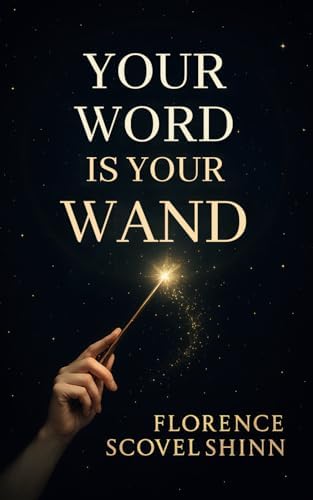
Your Word Is Your Wand by Florence Scovel Shinn argues that spoken words function like spells cast on yourself and others — the language you use about yourself shapes your actions and ultimately your results.
The word 'yet' is highlighted as particularly powerful — it implies inevitability
One host named his LLC 'Inevitable Outcomes' before making his first million, as a deliberate linguistic commitment
Practical self-labeling: 'I'm an athlete' or 'I'm a fitness influencer' said with conviction — not 'I'm working toward this' — is described as a genuine mechanism for behavioral change, not just affirmation theater.
Anti-Mimetic Living: Wanting What You Actually Want
René Girard and Peter Thiel's concept of mimetic desire — we want things because other people want them — is presented as the default human operating mode that most people never escape.
Status and Culture argues that inauthenticity is the lowest-status behavior, and that all truly admired people — whether born that way or deliberately constructed — appear genuinely authentic.
Nick Gray is cited as a prime example of anti-mimetic living: surrounded by entrepreneurs and investors, he prioritizes hosting cocktail parties, writing his blog, and living in Indian villages — 'he wants what he wants because he wants it.'
Palmer Luckey: built VR goggles at 19 while living in a trailer park, kept wearing Hawaiian shirts and jorts after becoming wealthy, then moved into defense tech when it was deeply unpopular in Silicon Valley — 'every project he's picked is incredibly unpopular when he picked it.'
Warren Buffett as the canonical anti-mimetic case: stayed in the same Omaha house, drove the same car, ate McDonald's breakfast, played bridge, and closed his fund at $100 million in the 1960s-70s because he couldn't understand what the market was doing.
Mathematician Grigori Perelman turned down the Nobel Prize equivalent in mathematics, and when called to be notified, his response was: 'You're disturbing me from picking mushrooms' — then hung up and never collected.
The Game of More: What Sudden Wealth Actually Does to People
A viral blog post titled 'To All the Folks Who Are About to Be Rich' by Julie (written the day before the SpaceX IPO, drawing on her Facebook IPO experience) identifies three groups: the Fish (who leave tech to become chefs, artists, teachers), the Leisure Class (Michelin restaurants, travel, designer goods), and those who continue chasing the next high in tech.
The Leisure path is described as genuinely worse: 'The diminishing returns are very real and very dramatic in that path. People sort of lose themselves... it's like searching for your keys but this is not where you dropped them.'
True financial independence is redefined: not the ability to buy whatever you want, but making decisions that are not based on money — 'freedom from, not freedom to.'
The 'Game of More' framework: 'There is a game and that game is called more. Once the money lands, a question will be waiting for you: Am I still playing?' — the hosts argue the powerful question is not whether you're playing, but what kind of more you're actually seeking.
Options named: more leisure, more travel, more challenge, more impact, more authenticity, more joy, more kids
Most people, when they examine their actions honestly, find they're playing a game of more validation or status
Jesse Itzler example: turned down a potential $20M/year business opportunity because, when asked what he really wanted, his answer was: 'I think I just like to ride my bike.' - Jesse Itzler
Outsider Eyes on America: World Cup Tourists and Rediscovering the Familiar
World Cup tourists going viral on social media by documenting mundane American experiences — Bass Pro Shops, Buc-ee's, Waffle House, free chip refills at Mexican restaurants — mirrors the experience of seeing the world through a child's eyes again.
Ilf and Petrov's American Road Trip, written in 1935 by two Soviet Russians touring America, is cited as a personal favorite — currently out of print with only 40 Amazon reviews and a $400 paperback price — because their outsider observations about America's scale and abundance are nearly identical to what foreign visitors say today.
A viral satirical post from a 'Japanese tourist' describes the philosophical weight of free chip refills: 'In my land, hospitality is a debt. Every gift creates an obligation... Here the gift arrives before you have even proven you could pay for dinner. It is not an appetizer. It is a declaration. We trust you. Eat.'
The Japanese national team's behavior at the World Cup — using trash bags as cheering instruments then cleaning their section, leaving locker rooms pristine with all items folded — is highlighted as a remarkable cultural contrast.
Environmental Design for Becoming Who You Want to Be
The fitness analogy for anti-mimetic living: just as getting fit requires removing bad food from the house entirely, living authentically requires removing the 'vending machine of other people's lives' — meaning heavy social media consumption of aspirational content you don't actually want.
'Whenever I wanted to become something in life, if I unfollow everyone on Instagram and only follow the people I aspire to become, you 100% get closer to being that person.' — total immersion through curated feed.
MrBeast's approach to getting fit: hired a trainer to follow him everywhere, then told his longtime friends they needed to commit to the same lifestyle change or expect significantly less time together — 'I'm not going to be hanging out with you as much because I just can't do that.'
The Twitch CEO Emmett's Socratic word-precision habit — stopping meetings to define terms like 'editorial' — is presented as an initially annoying but ultimately powerful forcing function that made teams think more clearly and come in better prepared.



These notes may contain occasional inaccuracies. Learn how podbrain notes are made
More in Finance & Business

The Biggest Pivot In AI History Is Happening Right Now | Jordi Visser
Jun 20, 2026
How Substack Creators Are Covering This Strange Markets Era
Jun 20, 2026
#422 Joseph Pulitzer
Jun 20, 2026
World's First Trillionaire, Anthropic Fable Banned, The New Oligarchs, Iran Peace Deal
Jun 19, 2026Anthropic's Co-Founder and Top Economist on Doing Research at the AI Frontier
Jun 19, 2026
.svg)