
FFmpeg: The Incredible Technology Behind Video on the Internet
This conversation features Jean-Baptiste Kempf, president of VideoLAN and key figure behind VLC and FFmpeg, and Kieran Kunhya, longtime codec engineer and FFmpeg contributor who runs the influential FFmpeg Twitter account. Both are European-based engineers who have dedicated their careers to open source multimedia...

Episode


- 01
FFmpeg processes over 90% of video workflows online and offline, running on billions of devices simultaneously as the invisible backbone of YouTube, Netflix, and Chrome
- 02
VLC has been downloaded over 6.5 billion times and can play virtually any media format, with JB refusing tens of millions in advertising revenue to keep it free
- 03
David decoder contains 240,000 lines of handwritten assembly code, achieving 62x performance improvements over C through SIMD optimization and custom calling conventions
- 04
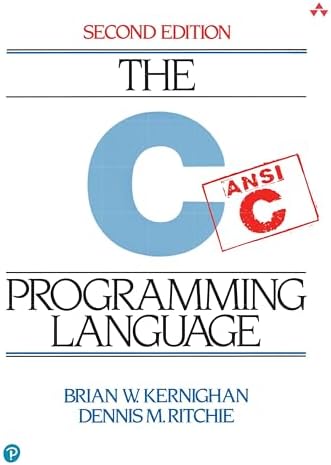
Open source multimedia projects like The C Programming Language book teaches are maintained by 10-15 core developers serving billions of users worldwide
- 05
Google's AI-generated security reports created controversy when volunteers had to handle obscure 1990s game codec vulnerabilities with 90-day deadlines
- 06
X264 revolutionized video encoding by focusing on psychovisual quality rather than mathematical metrics, optimizing for human perception instead of PSNR scores
- 07
Kyber aims for 4-millisecond glass-to-glass latency for real-time robot control, currently achieving 7 milliseconds for ultra-low latency streaming applications
Get the latest ideas from Lex Fridman.
Plus the best new takeaways from other top podcasts — read in minutes, not hours.
By continuing, you agree to podbrain's Terms and Privacy Policy.
These notes may contain occasional inaccuracies. Learn how podbrain notes are made
This conversation features Jean-Baptiste Kempf, president of VideoLAN and key figure behind VLC and FFmpeg, and Kieran Kunhya, longtime codec engineer and FFmpeg contributor who runs the influential FFmpeg Twitter account. Both are European-based engineers who have dedicated their careers to open source multimedia technology.
The discussion explores FFmpeg, the open source software system that powers over 90% of video processing workflows including YouTube, Netflix, Chrome, and VLC. With VLC downloaded over 6.5 billion times, these projects represent some of the most widely used software in human history, built entirely by volunteers.
The conversation covers the technical depths of video codecs, the philosophy of open source development, assembly language optimization, and the challenges of maintaining critical infrastructure used by billions. Key topics include the evolution from H.264 to AV1, the legendary X264 encoder, and emerging ultra-low latency applications for robotics and remote control.
VLC's Universal Playback and Legendary Orange Cone
VLC can open virtually any media format including VHS capture cards, DVD audio, and even animated subtitle files where each frame is black with moving subtitles on top.
The orange traffic cone logo has become so iconic that 25% of website traffic comes from people searching 'cone player' rather than VLC, with the logo recognized globally.
VLC's philosophy from its streaming origins was to never trust input data, engineering everything to work with broken files from UDP network streams.
The Technical Journey from File to Screen
Video playback involves multiple stages: getting byte streams from URLs, demultiplexing containers to separate audio/video tracks, and codec-specific decoding with GPU detection for hardware acceleration.
Video compression achieves 100-200x reduction by exploiting human perception, converting RGB to YUV color space and using frequency domain transforms like discrete cosine transforms.
Modern codecs use temporal prediction with I-frames (complete images), P-frames (predicted from previous), and B-frames (bi-directional prediction from past and future frames).
Each new codec generation provides approximately 30% better compression than the previous, requiring exponentially more computational power for encoding while maintaining real-time decoding.
Open Source Philosophy and Community Dynamics
FFmpeg and VLC operate as 'binary star systems' - VLC uses FFmpeg libraries while X264 (a VideoLAN project) powers most FFmpeg encoding pipelines in a symbiotic relationship.
The core communities consist of 5-10 maintainers for VLC and 10-15 for FFmpeg, with thousands of contributors over time but only 1% staying long-term.
JB refused tens of millions in advertising revenue to keep VLC free, stating 'I need to go to bed at night and be happy about what I've done' and believing in winning money ethically.
Contributors range from teenagers to professionals worldwide, with merit-based code review being the only criteria - 'We don't care who you are, we care about the quality of your code.'
Assembly Language as a Lost Art
David decoder contains 240,000 lines of handwritten assembly (79.9% assembly, 19.6% C) achieving 62x performance improvements over C through SIMD optimization.
Assembly optimization involves runtime CPU detection, custom calling conventions that bypass OS standards, and abuse of instructions like using cryptography operations for video processing.
Learning assembly requires only high school mathematics and understanding C pointers, with The C Programming Language book providing the foundation for contributing to world-class technologies.
Assembly experts like Henrik Gramner know Intel x86 instruction cycles better than Intel engineers, while Martin Storsio codes ARM assembly on his phone while watching his kids play.
Security Drama and Corporate Responsibility
Google's AI-generated security reports on obscure 1990s game codecs created controversy when volunteers faced 90-day deadlines without adequate funding or patches provided.
Microsoft Teams posted high-priority bug reports expecting free urgent support from volunteers, offering only 'a few thousand dollars' for long-term maintenance of trillion-dollar dependencies.
The security industry uses aggressive language like 'you will get popped' and marks minor issues as high-severity, creating denial-of-service through AI-generated bug reports.
Spicy tweets and social media drama proved effective for raising awareness and increasing donations, though still insufficient to fund even one full-time developer.
Codec Evolution and Patent Warfare
X264 revolutionized encoding by focusing on psychovisual quality rather than mathematical PSNR metrics, using samples like the Swedish television 'Parkjoy' sequence to optimize for human perception.
Patent licensing for HEVC became so expensive that major companies like HP removed support, with costs reaching hundreds of millions annually for platforms like YouTube and Netflix.
AV1 and AV2 codecs from the Alliance for Open Media aim for royalty-free alternatives, with AV2 providing 30% better compression than AV1 while avoiding patent restrictions.
Each codec generation requires exponentially more encoding complexity - AV1 encoding takes two orders of magnitude more CPU cycles than H.264 for 40-60% bandwidth savings.
Future of Multimedia and Ultra-Low Latency
Kyber targets 4-millisecond glass-to-glass latency for robot control, currently achieving 7 milliseconds with NVIDIA encoding taking 3.5ms and Intel decoding 2ms of the total budget.
Future multimedia will expand beyond audio/video to include haptic feedback, spatial audio, volumetric video, point clouds, and eventually brain-computer interface codecs.
The archiving community values FFmpeg as a 'Rosetta Stone' for preserving multimedia heritage, funding development of lossless FFV1 codec for thousand-year preservation goals.
FFmpeg runs on Mars rovers for image compression and powers Formula 1 monitoring, CERN particle accelerator surveillance, and SpaceX launch monitoring systems worldwide.
These notes may contain occasional inaccuracies. Learn how podbrain notes are made
More in Science & Tech

The 5-Minute AI Weekly Recap: Realignment Week
Jun 20, 2026
Why Kalshi's John Wang Says Perps Are 'the Most Pure Trading Instrument'
Jun 19, 2026Your Company Doesn’t Need an AI Strategy
Jun 19, 2026
The data black hole at the center of AI
Jun 19, 2026
The New Rules of Media | Marc Andreessen & Ben Horowitz
Jun 19, 2026
.svg)