
Norman Ohler: Hitler, Nazis, Drugs, WW2, Blitzkrieg, LSD, MKUltra & CIA
Norman Ohler is a German author and journalist whose groundbreaking work Blitz Drugs in the Third Reich revealed the extensive use of methamphetamine by Nazi forces during World War II. His research, praised by legendary historians Ian Kershaw and Anthony Beevor as...

Episode


- 01
Nazi Germany's military consumed 35 million methamphetamine doses during the French campaign, enabling the three-day Blitzkrieg through Ardennes Mountains
- 02
Hitler's personal physician Morel administered daily drug cocktails including Oikodal (oxycodone) intravenously, creating physical dependency by 1943
- 03
The largest German resistance network was led by lovers Harro and Libertas, who recruited over 100 people through Berlin parties before execution
- 04
LSD research moved from Nazi truth serum experiments in Dachau to CIA's MKUltra program after American liberation forces captured German scientists
- 05
Homo erectus likely used plant stimulants like khat 1.5 million years ago, while early humans may have developed consciousness through iboga consumption
- 06
The Beer Hall Putsch in 1923 was launched by drunk Nazis except Hitler, who remained sober and later wrote Mein Kampf in prison
- 07
Pervitine (methamphetamine) was available without prescription in German pharmacies, marketed as a performance enhancer rather than recreational drug
Get the latest ideas from Lex Fridman.
Plus the best new takeaways from other top podcasts — read in minutes, not hours.
By continuing, you agree to podbrain's Terms and Privacy Policy.
These notes may contain occasional inaccuracies. Learn how podbrain notes are made
Norman Ohler is a German author and journalist whose groundbreaking work Blitz Drugs in the Third Reich revealed the extensive use of methamphetamine by Nazi forces during World War II. His research, praised by legendary historians Ian Kershaw and Anthony Beevor as serious scholarship, uncovered primary source documents showing how stimulants fueled the Wehrmacht's Blitzkrieg campaigns.
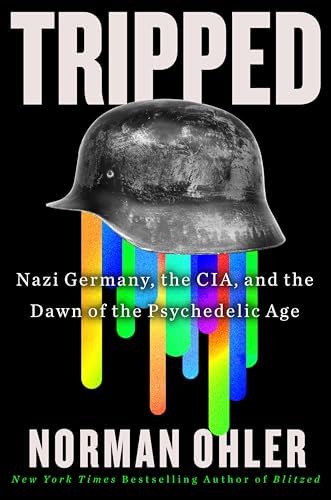
The conversation explores Ohler's subsequent works including Tripped Nazi Germany, the CIA, and the Dawn of the Psychedelic Age, which traces how LSD research moved from Nazi laboratories to American intelligence programs, and The Bohemians, documenting the largest resistance network against Hitler. His upcoming book Stone Sapiens examines human civilization through the lens of psychoactive substances, proposing that drugs may have catalyzed key evolutionary leaps including the development of consciousness itself.
Methamphetamine Fuels Nazi Blitzkrieg Strategy
Blitz Drugs in the Third Reich documents how 35 million Pervitine (methamphetamine) doses enabled German forces to execute the three-day assault through Ardennes Mountains during the French campaign in 1940.
Professor Ranke, the Wehrmacht's performance enhancement specialist, convinced military leadership that methamphetamine could solve the fatigue problem by keeping soldiers awake for 72 hours straight during the surprise attack.
The drug was originally developed by Temmler company after Jesse Owens' Olympic victories, as German chemists sought to create a superior stimulant to American Benzedrine.
Pervitine was available without prescription in German pharmacies, marketed as a performance enhancer rather than a recreational drug, allowing children to purchase pure methamphetamine tablets.
Hitler's Descent Into Pharmaceutical Dependency
Dr. Theodor Morel became Hitler's personal physician in 1936 after curing his stomach problems with probiotics derived from German WWI soldiers' gut bacteria.
The turning point came in August 1941 when Hitler, ill during Operation Barbarossa, received his first intravenous opioid injection (Dolantine) before making the fateful decision to split German forces rather than focus on Moscow.
By 1943, Hitler was regularly injecting Oikodal (oxycodone), creating physical dependency that lasted until the drug became unavailable when Allied bombers destroyed the Merck factory in December 1944.
A 'doctor's war' erupted between Morel and ear-nose-throat specialist Giesing, who introduced Hitler to cocaine after the July 1944 assassination attempt, creating a dangerous speedball combination.
The Bohemian Resistance Network's Creative Recruitment
The Bohemians tells the story of Harro Schulze-Boysen and Libertas, who created the largest resistance network against the Nazis through Berlin party recruitment, testing potential members' reactions to regime criticism.
The group executed a major propaganda action in May 1942, placing over 1,000 stickers reading 'Nazi Paradise: Torture, SS Torture, Hunger, War - How Long Will It Last?' throughout Berlin during the Soviet Paradise exhibition.
Their downfall came when Soviet intelligence sent a decoded radio message containing Harro's real name and address, allowing the Gestapo to identify and systematically capture the network.
Harro's final letter to his father expressed no regret: 'Everything I have done, I'm totally fine with it... I did what I could to stop this madness.'
From Nazi Truth Serum to CIA Mind Control
Tripped reveals how LSD research began when Swiss CEO Stoll collaborated with Nazi biochemist Richard Kuhn, sending ergotamine precursors to German laboratories in October 1943.
American ALSOS units captured Nazi scientists after liberating Dachau, with Kuhn immediately revealing LSD secrets to avoid Nuremberg trials, leading to CIA acquisition of Swiss LSD supplies.
The CIA's MKUltra program continued Nazi human experimentation methods, with Sidney Gottlieb pressuring Sandoz to sell their entire LSD production (400 grams) exclusively to American intelligence for $240,000.
Ken Kesey's experience as an MKUltra test subject inspired One Flew Over the Cuckoo's Nest, demonstrating how LSD revealed that psychiatric patients might simply see the world differently rather than being mentally ill.
Psychedelics and Human Evolutionary Leaps
Stone Sapiens proposes that Homo erectus used plant stimulants like khat 1.5 million years ago in the Great Rift Valley, potentially explaining their unprecedented migration and tool-making abilities.
The book suggests iboga consumption in Central African rainforests may have catalyzed the development of human consciousness, as early humans observed elephants exhibiting altered behavior after eating the psychoactive plant.
Moses' burning bush experience likely involved DMT from acacia trees in the Sinai desert, with Israeli scholars documenting multiple biblical references to the psychoactive plant during the Ten Commandments revelation.
The Minoan civilization's sudden cultural advancement on Crete resulted from wealth generated by trading olive oil and opium, making them Europe's first drug dealers and funding the continent's earliest high culture.
Literary Influences and Psychedelic Writing
On The Road exemplifies amphetamine-influenced literature, with Kerouac reportedly writing the entire novel in two weeks on speed using an endless paper roll, creating the spontaneous prose style.
Ohler's writing style was most influenced by The Stranger by Camus for its precise language economy, Ulysses by Joyce for experimental narrative techniques, and Gravity's Rainbow by Pynchon for its postmodern intensity.
LSD enhanced Ohler's writing by revealing the world's complexity beyond black and white thinking, though he emphasizes writing sober while using psychedelics for inspiration and life reflection.
The author's personal LSD experiences, including microdosing his Alzheimer's-afflicted mother, demonstrated the drug's potential therapeutic benefits while informing his historical research methodology.








These notes may contain occasional inaccuracies. Learn how podbrain notes are made
More in Science & Tech

The 5-Minute AI Weekly Recap: Realignment Week
Jun 20, 2026
Why Kalshi's John Wang Says Perps Are 'the Most Pure Trading Instrument'
Jun 19, 2026Your Company Doesn’t Need an AI Strategy
Jun 19, 2026
The data black hole at the center of AI
Jun 19, 2026
The New Rules of Media | Marc Andreessen & Ben Horowitz
Jun 19, 2026
.svg)