
Vlad Barbalat - Investing $120 Billion in Permanent Capital - [Invest Like the Best, EP.479]
In this episode, host Patrick O'Shaughnessy interviews Vlad Barbalat, the Chief Investment Officer of Liberty Mutual Investments, which manages a $120 billion investment platform. Vlad shares his journey from Soviet Moldova to becoming a top capital allocator, explaining how Liberty's mutual insurance structure...

![Invest Like the Best with Patrick O'Shaughnessy episode thumbnail: Vlad Barbalat - Investing $120 Billion in Permanent Capital - [Invest Like the Best, EP.479]](https://megaphone.imgix.net/podcasts/2152d90e-6ea2-11f1-bf4e-975e0e419694/image/fcbbe05dc456cfb6040005d3f6424c41.jpg?ixlib=rails-4.3.1&max-w=3000&max-h=3000&fit=crop&auto=format,compress)
- 01
Liberty Mutual Investments manages a $120 billion balance sheet, dividing capital into a $75 billion tightly managed reserve and growth credit/equity portfolios.
- 02
"We're not in the business of predicting the future. We're in the business of being prepared for all its eventualities." - Vlad
- 03
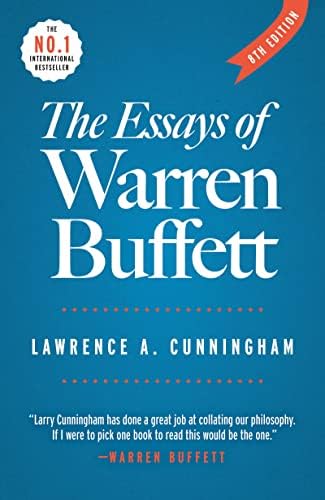
As outlined in The Essays of Warren Buffett Lessons for Corporate America, investing insurance float provides a powerful, permanent capital base to fund economic growth.
- 04
Drawing from the patient philosophy of The Science of Hitting, elite underwriters like Ajit Jain wait for "fat pitches" before deploying capital.
- 05
Vlad argues that rapid technological change makes the future increasingly invisible, which should structurally lower asset valuation multiples and steepen credit curves.
- 06
"Transparency is what allows you to have autonomy. No transparency, no autonomy," explains Vlad on managing permanent capital.
- 07
Unlike public insurers pressured for immediate buybacks, Liberty's mutual structure allows the firm to prioritize long-term investment hygiene over expedient short-term decisions.
Get the latest ideas from Invest Like the Best with Patrick O'Shaughnessy.
Plus the best new takeaways about investing from other top podcasts — read in minutes, not hours.
By continuing, you agree to podbrain's Terms and Privacy Policy.
These notes may contain occasional inaccuracies. Learn how podbrain notes are made
In this episode, host Patrick O'Shaughnessy interviews Vlad Barbalat, the Chief Investment Officer of Liberty Mutual Investments, which manages a $120 billion investment platform. Vlad shares his journey from Soviet Moldova to becoming a top capital allocator, explaining how Liberty's mutual insurance structure enables a highly distinctive, long-term approach to investing.
The conversation explores the mechanics of investing insurance float, drawing parallels to the permanent capital concepts found in The Essays of Warren Buffett Lessons for Corporate America. Vlad details how Liberty splits its $120 billion portfolio between tightly managed reserves and growth credit and equity, utilizing a vast toolkit to acquire direct and indirect market exposures. He also discusses the disciplined underwriting mindset of waiting for high-conviction opportunities, a strategy reminiscent of Ted Williams's classic framework in The Science of Hitting.
Finally, Vlad discusses the macroeconomic implications of rapid AI adoption on asset valuations, the structural advantages of private markets, and the cultural drive for excellence. He reflects on his childhood in the Soviet Union, offering a powerful testament to American exceptionalism, agency, and the compounding benefits of legal immigration.
The Mechanics of Liberty's $120 Billion Portfolio
Liberty Mutual Investments manages a $120 billion balance sheet, with roughly $70 to $75 billion held in tightly managed reserves and the remainder split between growth credit and growth equity.
"We are focused not on any form of third-party capital... and that allows us to think about investing from a long-term perspective, and that allows us to do the right thing, not the expedient thing." - Vlad
Liberty's growth credit business integrates public credit, high yield, leverage loans, capital solutions, and direct lending into one unified platform to maximize cross-functional expertise.
The Power of Float and the Mutual Advantage
As detailed in The Essays of Warren Buffett Lessons for Corporate America, investing insurance float allows firms to support economic infrastructure and fund entrepreneurs using low-cost, permanent capital.
Unlike public insurers whose shareholders demand immediate dividends and buybacks, Liberty's mutual structure allows it to reinvest profits into building a fortress balance sheet.
"Our tails are fatter. Our balance sheet requirements are very different," says Vlad, contrasting Liberty's long-tailed commercial and specialty risks with shorter-tailed personal lines.
Sourcing Deals and Waiting for Fat Pitches
Inspired by the patient discipline of The Science of Hitting, elite insurance allocators wait for "fat pitches" and highly priced, esoteric risks to come to them via referrals.
"What possesses a professional sitting at a stable, large insurance asset manager to take entrepreneurial risk? That's a cultural dynamic and one that shouldn't be taken for granted." - Vlad
Liberty positions itself as a provider of "branded capital," competing not on check size alone, but on speed, structuring creativity, and a willingness to take complex risks.
How AI and Invisible Futures Impact Valuations
Vlad argues that rapid technological disruption makes the long-term future increasingly invisible, which should logically drive down asset valuation multiples across all industries.
"The future is so unpredictable that how could I possibly place some higher multiple on something?" - Vlad
The unpredictability of long-term corporate survival is expected to steepen credit curves, making 30-year debt on historically stable software giants far riskier than 4-year paper.
AI acts as a "superpower" for individual knowledge workers, but Vlad warns of its isolating potential: "The more I spend of my day with AI, I'm actually not spending it with my colleagues." - Vlad
Immigration, Agency, and American Exceptionalism
Having emigrated from Soviet Moldova in 1990, Vlad emphasizes that the level of personal agency and upward mobility in the United States remains unmatched globally.
"At the highest level, you're not given permission to dream. You're born to survive," says Vlad, describing his early childhood under overt persecution in the Soviet Union.
Vlad uses the metaphor of a croissant to illustrate market innovation, noting that the freedom to iterate and perfect simple goods is a uniquely American economic driver.
"Transparency is what allows you to have autonomy. No transparency, no autonomy," says Vlad on the necessity of clear communication with stakeholders to maintain investment flexibility.


These notes may contain occasional inaccuracies. Learn how podbrain notes are made
More in Finance & Business
Jamie Dimon succession race narrows
Jun 26, 2026
HIGHLIGHTS: Miljan Gutovic - CEO of Holcim
Jun 26, 2026
Will The K-Shaped Economy Destroy America? | Darius Dale
Jun 25, 2026
Is DePIN Entering Its Next Growth Phase?
Jun 25, 2026
Gretchen Rubin - How Curiosity Becomes a Calling (Ep. 320)
Jun 25, 2026
.svg)