
Tom Digan & Greg Stewart - Building the World’s Best Fitness App - [Invest Like the Best, EP.454]
Patrick O'Shaughnessy hosts Tom Deegan (co-founder and president) and Greg Stewart (CEO) of Ladder, the number one strength training app. Tom left a lucrative hedge fund career to co-found the business, while Greg joined as CEO after building startups in real estate private equity. Ladder was Patrick's first angel...

Episode
![Invest Like the Best with Patrick O'Shaughnessy episode thumbnail: Tom Digan & Greg Stewart - Building the World’s Best Fitness App - [Invest Like the Best, EP.454]](https://podbrain.gumlet.io/storage/v1/object/public/thumbnails/taddy-ab507adc-ad2c-47cf-b5b8-c7a33b183923.webp?w=1200&h=630&mode=fill&q=85&format=auto)
- 01
Ladder grew from 9,000 paying members in early 2023 to over 300,000 today, approaching $100 million ARR
- 02
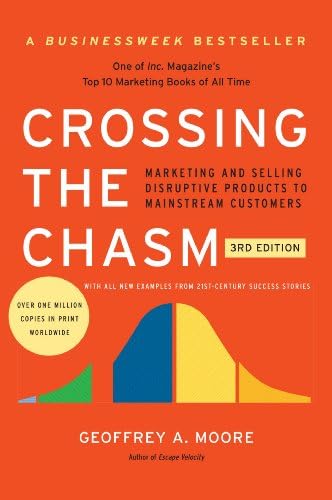
Greg Stewart's cave process studying Crossing the Chasm helped identify their specific target customer for TikTok growth
- 03
The company built their own AI customer support tool handling 90% of tickets with just one human support person
- 04
TikTok organic content took one account from zero to 250,000 followers in 45 days before adding paid marketing
- 05
Ladder's nutrition feature launched with 4 million meals logged in just six weeks after beta testing
- 06
The team operates with 30 people excluding coaches and has zero managers despite the scale
- 07
General Catalyst's customer value fund finances their growth investment, solving the consumer CAC funding problem
Get the latest ideas from Invest Like the Best with Patrick O'Shaughnessy.
Plus the best new takeaways from other top podcasts — read in minutes, not hours.
By continuing, you agree to podbrain's Terms and Privacy Policy.
These notes may contain occasional inaccuracies. Learn how podbrain notes are made
Patrick O'Shaughnessy hosts Tom Deegan (co-founder and president) and Greg Stewart (CEO) of Ladder, the number one strength training app. Tom left a lucrative hedge fund career to co-found the business, while Greg joined as CEO after building startups in real estate private equity. Ladder was Patrick's first angel investment, made entirely on trust when he had no venture capital experience.
The conversation covers Ladder's dramatic journey from near-death in 2017-2020 to becoming a dominant fitness platform with over 300,000 paying members and approaching $100 million ARR. The early years involved debt collectors, creditor negotiations, and constant fundraising struggles before the team cracked TikTok's algorithm and built a product customers love.
Today's discussion explores their empirical approach to product development, the cave process Greg used to study Crossing the Chasm for customer focus, their TikTok growth strategy, AI integration across the business, and their long-term vision to become the system of record for health and fitness.
From Near-Death to Product-Market Fit
Ladder 1.0 was a managed marketplace for personal training that proved operationally complex and unscalable - "as you scale that business, it starts to look more like a call center" - Tom
The pivot came from studying their existing coaches and discovering that personalization was largely fake - coaches were using "big bucket personas" like "Sally Pilates" while charging premium prices for customization
A successful coach named Lauren was making $4,000 monthly by filling her downtime with online clients from her Instagram audience, but hit a ceiling due to human time constraints
The breakthrough experiment in February 2020 had Lauren program for a group of 100 women at $100/month each, creating community through shared workouts and chat functionality with 90%+ renewal rates
The Survival Years and Creditor Negotiations
Tom moved his family to Austin and raised money from friends and family, creating enormous personal pressure: "Not sure I would do it again or recommend other people take that path"
The team learned to negotiate with "hardcore creditors like American Express" at 20 cents on the dollar by making them believe "there's a chance you get zero"
Daily routine split between morning "messy stuff" (debt collectors, untangling situations) and afternoon product building, celebrating small wins like $10,000 checks with steaks and cigars in the office
Tom's fundraising strategy involved selling conviction over product, often pitching both the dying business and the not-yet-built new product to different investor preferences
Cracking the TikTok Algorithm Through Deep Customer Knowledge
Greg entered a cave process reading Crossing the Chasm during winter 2021, producing a 100-page slide deck that identified their specific target customer instead of trying to be "all things to all people"
The TikTok strategy started organically, taking one account from zero to 250,000 followers in 45 days by treating it "like TV" for entertainment rather than social media
Success came from deep customer insight rather than TikTok expertise: "our edge was we knew our customer inside and out" from dissecting App Store reviews and understanding their language
Greg made budget changes "seven to 10 times a day" on TikTok ads, ignoring Facebook-derived rules that other marketers applied, leading to TikTok executives noting his approach was "opposite of what we're telling our clients"
Empirical Product Development and AI Integration
The team's North Star is workout completions, with ruthless prioritization requiring proof that any feature will increase this metric before development
Nutrition launch involved surveying 5,000 members for 50+ minutes each, discovering one-third track macros, 90% use apps, and most hate MyFitnessPal while wanting to manage fitness and nutrition in one place
Beta testing with 2,000 members tracked likelihood to switch from existing apps, growing from 20% to 85% before full launch, resulting in 4 million meals logged in six weeks
AI powers 90% of customer support through their custom-built "Maeve AI" tool, with only one person handling support for 300,000+ members, plus tools for coach efficiency and content creation
Scaling Without Traditional Management Structure
The company operates with 30 people excluding coaches and maintains zero managers despite the scale, with half the team focused on workout completions and half on growth from TikTok
General Catalyst's customer value fund solved the consumer CAC funding problem by financing growth investment with payback over time rather than requiring upfront cash
The team hired "full-time TikTok creators" in 2023 when such roles didn't exist, maintaining complete creative control rather than outsourcing to agencies
Current growth strategy expands beyond TikTok to celebrity partnerships, out-of-home, and TV advertising to solve their awareness problem despite being top 100 in US app rankings
Long-term Vision as Health and Fitness System of Record
The goal is becoming "the system of record for health and fitness" like Uber for transportation or Spotify for music, with no clear category winner currently existing
Product expansion opportunities include supplements, biomarkers, and commerce based on existing member conversations about creatine, protein, and equipment recommendations
User expansion involves creating a freemium tier to compete with YouTube fitness content, since "YouTube's not built for fitness, but the content lives there"
The business model focuses on progressive programming rather than content libraries - members "don't want 10,000 workouts" but want to know exactly what to do each day

These notes may contain occasional inaccuracies. Learn how podbrain notes are made
More in Finance & Business
The Biggest Pivot In AI History Is Happening Right Now | Jordi Visser
Jun 20, 2026
How Substack Creators Are Covering This Strange Markets Era
Jun 20, 2026
#422 Joseph Pulitzer
Jun 20, 2026
World's First Trillionaire, Anthropic Fable Banned, The New Oligarchs, Iran Peace Deal
Jun 19, 2026Anthropic's Co-Founder and Top Economist on Doing Research at the AI Frontier
Jun 19, 2026
.svg)