
Brian Chesky - AI Founder Mode - [Invest Like the Best, EP.470]
Brian Chesky is the co-founder and CEO of Airbnb, leading a company that processes nearly $100 billion in annual gross sales. His background includes industrial design training at Rhode Island School of Design (RISD), where he studied the work of legendary designers like Raymond Loewy and developed skills in user...

Episode
![Invest Like the Best with Patrick O'Shaughnessy episode thumbnail: Brian Chesky - AI Founder Mode - [Invest Like the Best, EP.470]](https://podbrain.gumlet.io/storage/v1/object/public/thumbnails/taddy-aa1fd50d-60ec-4b8c-9ed0-2bc5c5679d1f.webp?w=1200&h=630&mode=fill&q=85&format=auto)
- 01
Chesky spent 100 hours per week for 2-3 years reviewing every detail of Airbnb during his transition to 'founder mode' after the pandemic crisis
- 02
Project Hawaii delivered over $600 million in annual revenue impact by applying small elite teams to specific problems using crawl-walk-run-fly methodology
- 03
AI founder mode will require even more attention to details with fewer management layers - 'every engineer needs to code, even the managers'
- 04
The 11-star experience exercise forces teams to imagine absurd customer experiences to make 6-7 star experiences seem achievable
- 05
Pipeline recruiting beats search-based hiring: 'constantly meet the best people, start with results and work backwards to find who created them'
- 06
Chesky believes pure people managers who don't touch the actual work will not survive the AI transformation
- 07
Industrial design training at RISD taught user empathy and problem-solving across technical boundaries, preparing him for founder challenges
Get the latest ideas from Invest Like the Best with Patrick O'Shaughnessy.
Plus the best new takeaways about leadership from other top podcasts — read in minutes, not hours.
By continuing, you agree to podbrain's Terms and Privacy Policy.
These notes may contain occasional inaccuracies. Learn how podbrain notes are made
Brian Chesky is the co-founder and CEO of Airbnb, leading a company that processes nearly $100 billion in annual gross sales. His background includes industrial design training at Rhode Island School of Design (RISD), where he studied the work of legendary designers like Raymond Loewy and developed skills in user empathy and technical problem-solving.
The conversation explores Chesky's evolution from founder to CEO, particularly his transformation during the pandemic when Airbnb lost 80% of its business in eight weeks. This crisis forced him into what Paul Graham later coined 'founder mode' - a hands-on leadership approach focused on details and direct involvement rather than delegation to professional managers.
Chesky discusses his vision for 'AI founder mode,' the next evolution of company leadership that will require even deeper involvement in details while leveraging AI tools. He shares insights from his industrial design background, the principles he learned from Apple's Hiroki Asai about Steve Jobs' leadership style, and his philosophy drawn from The Score Takes Care of Itself and The Creative Act about focusing on craft over outcomes.
From Industrial Design to Founder Mode Leadership
Industrial design at RISD taught Chesky to think across technical boundaries from 'toothbrush to spaceship' and put himself in users' shoes, designing everything from children's ventilators to considering the emotional impact on scared parents and nurse technicians.
Unlike other design fields, industrial design success is measured by commercial viability - 'a design is only successful if it sells' - requiring designers to think about marketing, manufacturing, and distribution, not just winning awards.
The pandemic crisis forced Chesky into founder mode when Airbnb lost 80% of business in eight weeks: 'I went from peacetime to wartime and just totally took control of the entire company and never let go.'
AI Founder Mode and the Future of Management
AI founder mode will be 'even more intense than founder mode' with fewer management layers and asynchronous rather than meeting-based culture, potentially managing thousands of people more directly.
Pure people managers will not survive AI transformation: 'Everyone's going to have to be a hybrid people manager - they have to have contact with reality, they have to be touching something a customer ends up seeing.'
Two types of people won't make the AI shift: 'pure people managers who think it's all about leadership' and 'people that are rigid and don't want to change and evolve.'
The next wave will be consumer AI companies, as current AI is primarily enterprise-focused with 159 of 175 Y Combinator companies being enterprise, leaving consumer AI as 'the big prize.'
Project Hawaii and Elite Team Performance
Project Hawaii used 10-12 person elite teams focused on single problems, delivering $200-300 million in first year revenue impact and now over $600 million annual run rate from conversion optimization.
The methodology follows 'crawl, walk, run, fly': fix bugs first, develop features, rethink entire flow, then completely reimagine - treating each initiative like a startup within the company.
New business launches shifted from 100-city global scale to 'one to 10 to many' approach: perfect one market first, expand to 10, then industrialize - taking 16 years to get second and third businesses working.
Peter Thiel's principle guides the approach: 'it's better to have a monopoly of a tiny market than a small share of a big market' - make the problem as small as possible to dominate a niche.
The 11-Star Experience Design Philosophy
The exercise pushes beyond five-star reviews to imagine absurd experiences: six-star includes favorite wine and handwritten cards, seven-star adds limousines and surfboards, eight-star features elephants and parades.
Ten-star experience involves 'Elon Musk greets me and takes me to space' - the absurdity makes six or seven-star experiences seem achievable and scalable for product-market fit.
The methodology forces teams to 'go beyond the edge of reality and work backwards' to find the difference between competitors - the gap between five and six stars often determines market success.
Lessons from Apple and Steve Jobs' Leadership
Hiroki Asai, Steve Jobs' creative director, taught Chesky two key principles: simplicity through distillation to essence, and obsessive attention to craft where 'how you do anything is how you do everything.'
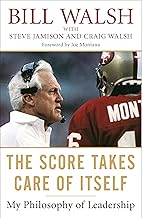
Drawing from The Score Takes Care of Itself, Chesky adopted Bill Walsh's philosophy: 'you don't focus on winning, focus on getting all the inputs perfect' - perfecting processes rather than obsessing over outcomes.
John Wooden's UCLA basketball approach exemplified this: spending the first hour teaching players how to put socks on properly, believing 'everything was that rigorous' and all details determine winning.
Initial founder mode implementation created 'giant revolts' as everyone thought he was micromanaging, but 'by the end, everyone loved it' as they realized control isn't zero-sum.
Pipeline Recruiting and Talent Philosophy
Chesky spends 2-3 hours daily on recruiting as co-hiring manager for top 200 people: 'the more time you spend on recruiting, the less time you spend on management because really good people are self-managing.'
Pipeline recruiting beats search-based hiring: constantly meet talent, build referral networks, and 'start with results, work backwards to people' rather than starting with resumes or company brands.
Build 'little mafias' of talent from successful companies - 'every company's got like a little mafia of talent' like Uber's ops mafia or Apple's design mafia.
Executives should hire people so good 'they would never work for them without my help' - always reach for talent that requires the CEO's involvement to attract.
From Seeking Validation to Creating for Love
Chesky's transformation came after going public with $100 billion valuation: 'it was like one of the best days of my life, and the next day I wake up... it became like the saddest day because I realized what now?'
He learned that 'adulation is like a cup with a hole at the bottom' - seeking external validation becomes a drug requiring greater hits until it stops working entirely.
Drawing from The Creative Act, he adopted Rick Rubin's philosophy: 'an artist is an artist when they make it for themselves and they don't try to make something successful.'
Obama's advice shaped his perspective: focus on what you want to do rather than who you want to be - 'if I focused on being president and wasn't, my life would have been a failure.'


These notes may contain occasional inaccuracies. Learn how podbrain notes are made
More in Finance & Business
The Biggest Pivot In AI History Is Happening Right Now | Jordi Visser
Jun 20, 2026
How Substack Creators Are Covering This Strange Markets Era
Jun 20, 2026
#422 Joseph Pulitzer
Jun 20, 2026
World's First Trillionaire, Anthropic Fable Banned, The New Oligarchs, Iran Peace Deal
Jun 19, 2026Anthropic's Co-Founder and Top Economist on Doing Research at the AI Frontier
Jun 19, 2026
.svg)