
Todd Rose — Escaping the Trap of the Standard Path (EP.290)
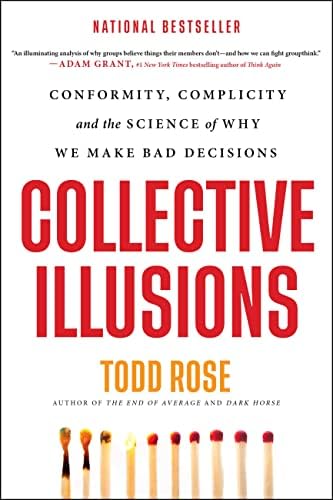
Jim O'Shaughnessy hosts Todd Rose, author of Collective Illusions, The End of Average, and Dark Horse, founder of Populous think tank, and former Harvard professor. Rose shares his remarkable journey from a 0.9 GPA...

Episode


- 01
There is literally no average person - every human responds uniquely to everything from nutrition to education, making standardized systems fundamentally flawed
- 02
Dark horses succeed by knowing their micro-motives, making strategic choices aligned with fulfillment, swapping strategies when stuck, and ignoring predetermined destinations
- 03
Frederick Taylor's scientific management inverted the relationship between people and institutions, making systems first and robbing individuals of autonomy and dignity
- 04
AI will either advance human freedom by empowering individual strengths or cement paternalistic control - the choice depends on our values, not the technology
- 05
Social trust in America is at historically low levels because institutions don't trust citizens, creating a destructive cycle of mutual distrust
- 06
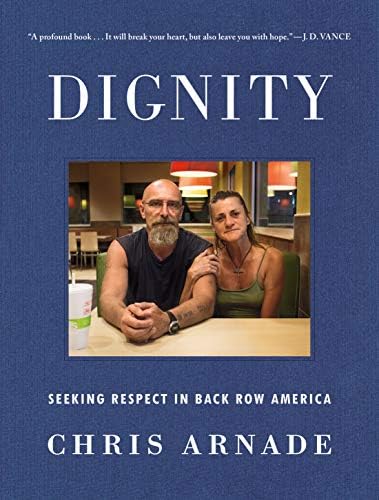
Human dignity as self-determination is eroding - only one-third of Americans still believe everyone has inherent dignity that cannot be lost
Get the latest ideas from Infinite Loops.
Plus the best new takeaways about science from other top podcasts — read in minutes, not hours.
By continuing, you agree to podbrain's Terms and Privacy Policy.
These notes may contain occasional inaccuracies. Learn how podbrain notes are made
Jim O'Shaughnessy hosts Todd Rose, author of Collective Illusions, The End of Average, and Dark Horse, founder of Populous think tank, and former Harvard professor. Rose shares his remarkable journey from a 0.9 GPA high school dropout working minimum-wage jobs to becoming a Harvard professor studying the science of human individuality.
The conversation explores Rose's personal transformation through discovering educational fit in Weber State's honors program, his groundbreaking research proving there is no average person, and his work with 'dark horses' - people who achieved success through non-traditional paths. Drawing from works like Man's Search for Meaning and The Wealth of Nations, they discuss how Frederick Taylor's scientific management created our standardized society that ignores human uniqueness.
Rose outlines his vision for a paradigm shift combining classical liberalism with humanism, emphasizing human dignity, subjective value, and individual choice. The discussion covers how AI could either empower human flourishing or cement paternalistic control, depending on whether society embraces principles of trust, individuality, and bottom-up problem-solving versus top-down standardization.
From 0.9 GPA to Harvard: The Power of Educational Fit
Rose failed out of high school with a 0.9 GPA, had two children by age 19, and worked ten minimum-wage jobs including giving enemas as a home health aide before discovering Weber State University's open enrollment.
Secretary Marilyn Diamond's intervention - 'Don't take no for an answer' - changed Rose's life when he was rejected from the honors program, leading him to wait on a couch until the director reconsidered.
Rose graduated pre-med and psychology with a 3.97 GPA and became honor student of the year, proving that fit matters more than standardized measures of intelligence or ability.
The honors program's format - small discussions, essays instead of tests, no right answers - perfectly matched Rose's learning style, demonstrating how educational environments must align with individual strengths.
The Science of Individuality: Why There's No Average Person
Harvard neuroscience research revealed that no individual brain scan matched the average of all scans, proving the fundamental flaw in aggregate-based science for understanding individuals.
Rose's personal nutrition example: following glycemic index recommendations, he ate grapefruit daily for years, only to discover through precision testing that grapefruit was his worst blood sugar spike trigger.
Israeli research on hundreds of thousands of people found zero individuals who responded to food as the glycemic index predicted, yet personalized predictions using gut biome and blood work achieved high accuracy.
The End of Average became a bestseller by demonstrating how understanding uniqueness doesn't create chaos but enables better population-level outcomes through personalized approaches.
Dark Horse Success: Four Principles for Non-Traditional Achievement
Dark horses know their 'micro-motives' - highly specific internal drivers like one engineer whose biggest motivator was 'aligning physical objects with his hands.'
They never hoard choices but use a simple filter: 'In your range of choices, bias toward what's most aligned with fulfillment, but can you live with the worst-case scenario?'
Strategy swapping is crucial - when stuck, dark horses cycle through different approaches rather than assuming there's one right way, like Rose discovering visual graphing for GRE analytical reasoning.
Susan Rogers exemplifies Dark Horse principles: escaped abusive marriage to become Prince's sound engineer for Purple Rain, then pivoted to become a neuroscience professor studying music and the brain.
Frederick Taylor's Toxic Legacy: How Scientific Management Destroyed Human Dignity
Taylor explicitly stated 'In the US in the past, people were first. In the future, the system has to be first,' inverting the relationship between individuals and institutions.
Scientific management created the manager class, removed worker autonomy, and used stopwatches to dictate every movement, treating humans as interchangeable parts in a machine.
Taylorism infected education with factory bells, rotating classes, and one-size-fits-all approaches, then spread to household management and all aspects of society.
The system's fundamental flaw: it assumes averages can predict individuals and that there's always one right answer, which complex systems science proves catastrophically wrong.
AI and the Great Paradigm Choice: Empowerment vs Control
Historical technology adoption shows the mechanical clock took 200 years to dominate over hourglasses because society lacked the concept of precise time - values determine technology adoption, not capability.
AI represents the biggest lever since Archimedes - it can either advance human freedom by empowering individual strengths or cement paternalistic control through surveillance and standardization.
Current AI regulation efforts are really incumbent protection schemes - 'put a firewall around me because I've already won and make it impossible for anybody to compete.'
The paradigm shift requires embracing human dignity as self-determination, subjective value theory, and bottom-up problem-solving rather than top-down expert control.
Trust Crisis and the Path Forward: Rebuilding Social Cohesion
Social trust in America is at the lowest levels ever recorded, with each generation since Taylor showing declining trust because institutions demonstrate they don't trust citizens.
Human dignity data shows alarming erosion: only one-third believe everyone has inherent dignity, one-third believe you can lose it for wrong views, one-third don't believe in inherent dignity at all.
The Catholic principle of subsidiarity offers a solution: 'The smallest unit capable of solving a problem should have the power to solve it. Anything above that is a power grab.'
Rose's emperor-of-the-world prescription: rebuild trust in each other (not government) and recognize uncertainty as information about change rather than fear requiring scapegoats and zero-sum thinking.



These notes may contain occasional inaccuracies. Learn how podbrain notes are made
More in Finance & Business

The Biggest Pivot In AI History Is Happening Right Now | Jordi Visser
Jun 20, 2026
How Substack Creators Are Covering This Strange Markets Era
Jun 20, 2026
#422 Joseph Pulitzer
Jun 20, 2026
World's First Trillionaire, Anthropic Fable Banned, The New Oligarchs, Iran Peace Deal
Jun 19, 2026Anthropic's Co-Founder and Top Economist on Doing Research at the AI Frontier
Jun 19, 2026

.svg)