
Polina Pompliano - What Truly Drives Successful People (Ep. 307)
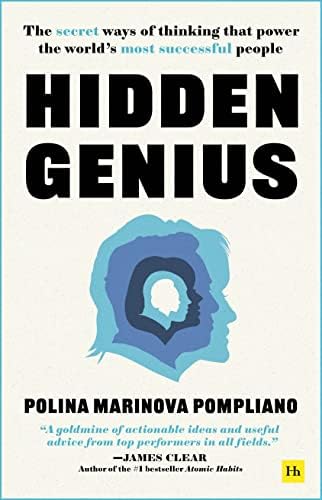
Paulina Pompliano, author of Hidden Genius, joins host Jim O'Shaughnessy for an in-person conversation about her journey from Bulgarian immigrant to business journalist to independent Substack writer. Pompliano, who was the first legacy media reporter to go full-time on Substack after...

Episode


- 01
Hidden Genius identifies 10 mental models used by high achievers, with creativity through observation being the most universally applicable across professions
- 02
"We are not who we say we are, we are how we move through the world" - Paulina's core philosophy for understanding people's true character
- 03
Grant Achatz sees the world "through a kaleidoscope of food," finding restaurant inspiration in unexpected places like red earrings and Rage Against the Machine songs
- 04
Ed Catmull's Pixar philosophy: "If you can explain your idea in 30 seconds or less, it's not all that original"
- 05
Paulina was the first legacy media reporter to go full-time on Substack, quitting Fortune in March 2020 after building The Profile newsletter since 2017
- 06
"Freedom is when you go out to have a coffee with a friend and you criticize the government and then you forget about it" - Ivan Marari on true freedom
- 07
Ryan Serhant's success is driven by "revenge and adrenaline" - a dark motivation behind his golden retriever public persona
- 08
Paulina's family won a 0.1% chance green card lottery to escape post-communist Bulgaria, shaping her fierce commitment to free speech
Get the latest ideas from Infinite Loops.
Plus the best new takeaways from other top podcasts — read in minutes, not hours.
By continuing, you agree to podbrain's Terms and Privacy Policy.
These notes may contain occasional inaccuracies. Learn how podbrain notes are made
Paulina Pompliano, author of Hidden Genius, joins host Jim O'Shaughnessy for an in-person conversation about her journey from Bulgarian immigrant to business journalist to independent Substack writer. Pompliano, who was the first legacy media reporter to go full-time on Substack after leaving Fortune in 2020, has built The Profile newsletter into a major platform for curating and creating long-form profiles of high achievers.
The discussion centers on her book Hidden Genius, which examines the 10 most common mental models used by highly successful people, from Grant Achatz's creative process to Ed Catmull's Pixar philosophy detailed in Creativity, Inc. The conversation explores how she identifies patterns across diverse achievers, her transition from curation to original profile writing, and the importance of in-person journalism for seeing past public personas.
Pompliano also shares her immigration story from communist Bulgaria at age eight, her fierce defense of free speech during a college newspaper walkout, and insights from recent profiles including Anthony Scaramucci and Ryan Serhant. The discussion touches on media bias, ideological capture, and references Tim Urban's work in The What If Factor on echo chambers and rational thinking.
The Mental Models That Define High Achievers
Hidden Genius breaks down 10 mental models used by successful people, with three being most universally applicable: creativity through observation, emotional rationality, and willingness to reinvent oneself.
Grant Achatz exemplifies creative observation by seeing the world "through a kaleidoscope of food," finding restaurant inspiration in red earrings, Rage Against the Machine songs, and unexpected sources.
The rationality model involves "attacking ideas instead of attacking people" - a principle Ed Catmull describes in Creativity, Inc. where Pixar teams critique concepts without personal attacks.
"Some of the most successful people in this world are able to attack ideas instead of attacking people" - Paulina on Julia Galiff's work at the Center of Applied Rationality.
Ed Catmull's Counterintuitive Creative Philosophy
Catmull's Pixar philosophy rejects the elevator pitch: "If you can explain your idea in 30 seconds or less, it's not all that original."
"I don't want to make duplicate another. I don't want to make sequels. I don't want to make prequels" - Catmull only wanted to make movies with a genuine chance of failure.
Ratatouille exemplifies this approach - a rat that can cook could be "disgusting" but required "really interesting, nuanced ways to make it interesting."
"Every iteration, like, I still think it's shit... The thing that we put out is still not perfect, but it's the least bad version that we could get to" - Catmull on Pixar's iterative process.
The Profile's Evolution from Curation to Original Journalism
Paulina started The Profile in February 2017 as a weekly Sunday newsletter curating six long-form profiles, never missing a week since launch.
"I'm the first legacy media, traditional media reporter to go full-time on Substack" - Paulina quit Fortune in March 2020 without precedent to follow.
Her husband Anthony suggested the obvious solution in late 2024: "Why don't you just write your own profile?" ending years of dancing around original writing.
January 2025 marked her transition to original profiles, starting with Anthony Scaramucci, then Ryan Serhant, Saquon Barkley, and Kathy Wilde.
Unmasking Public Personas Through In-Person Reporting
"We are not who we say we are, we are how we move through the world" - Paulina's core philosophy for understanding people's true character.
Ryan Serhant appeared as a "golden retriever puppy dog energy" personality but revealed he's "driven by revenge, which is something totally different. It's like dark, it's cold, it's calculated."
Anthony Scaramucci avoided discussing his childhood, saying meditation "ruined his whole vacation" because "I've compartmentalized those things for a reason."
In-person reporting reveals contradictions: Scaramucci claims "I don't care about getting vindicated" while displaying a figurine inscribed "We won, fuck off."
Immigration, Free Speech, and Ideological Capture
Paulina's family won a 0.1% chance green card lottery to escape Bulgaria in 2000, with her father applying annually despite slim odds.
Her grandfather secretly listened to Voice of America on the Bulgaria-Serbia border; her father was expelled in seventh grade for writing "USA" on his backpack.
As University of Georgia newspaper editor-in-chief, she led a staff walkout when a board member imposed prior review, making national news and forcing reforms.
"Freedom is when you go out to have a coffee with a friend and you criticize the government and then you forget about it" - Ivan Marari's definition that shaped her worldview.
Tim Urban's test for echo chambers referenced in The What If Factor: "Go to your closest friends and just throw out, like, say, like, this politician that's on the opposite side has kind of been making some good points lately and see what happens."


These notes may contain occasional inaccuracies. Learn how podbrain notes are made
More in Finance & Business

The Biggest Pivot In AI History Is Happening Right Now | Jordi Visser
Jun 20, 2026
How Substack Creators Are Covering This Strange Markets Era
Jun 20, 2026
#422 Joseph Pulitzer
Jun 20, 2026
World's First Trillionaire, Anthropic Fable Banned, The New Oligarchs, Iran Peace Deal
Jun 19, 2026Anthropic's Co-Founder and Top Economist on Doing Research at the AI Frontier
Jun 19, 2026
.svg)