
Johnathan Bi - Why the Best Founders Might Need a Little Delusion (Ep. 308)
Jonathan B., a repeat guest making his third appearance on Infinite Loops, discusses his evolution from math competitor to startup founder to successful creator of a philosophy lecture series that has reached 1.4 million subscribers.

Episode


- 01
"The most successful people that I've met are the least probably self-aware and they are motivated by certain pathologies and delusions" - Jonathan
- 02
"What motivates action is actually not truth. It is forgetting. It is the ability to forget certain things" - Jonathan, citing Untimely Meditations
- 03
"If you want to produce an innovative society, I think you're going to have to have a lot of crazy people" - Jonathan
- 04
"We invest in three kinds of people: megalomania, autism, and revenge" - unnamed top investment fund partner to Jonathan
- 05
University of Virginia lab has documented over 3,000 reincarnation cases in 50 years, with 300 showing birthmarks matching previous personality's death wounds
- 06
"All but one or two of the founders of PayPal built bombs in high school" - reference to Zero to One by Peter Thiel
- 07
Jonathan's new angel investing thesis: "investing in people who've had mystical experiences" based on Jeffrey Kripal's theory about mystics creating great works
- 08
"We are at maybe culturally, we're so stagnant, people are doom scrolling... But for someone who's really passionate, I think we can answer this question. We can go further than anyone in human history has ever gone" - Jonathan
Get the latest ideas from Infinite Loops.
Plus the best new takeaways about investing from other top podcasts — read in minutes, not hours.
By continuing, you agree to podbrain's Terms and Privacy Policy.
These notes may contain occasional inaccuracies. Learn how podbrain notes are made
Jonathan B., a repeat guest making his third appearance on Infinite Loops, discusses his evolution from math competitor to startup founder to successful creator of a philosophy lecture series that has reached 1.4 million subscribers.
The conversation explores the tension between action and contemplation, with Jonathan arguing that the most successful founders are driven by delusion rather than introspection, drawing from Untimely Meditations by Nietzsche and The Republic by Plato.
Jonathan shares his spiritual journey from atheism through various religious explorations, influenced by books like They Flew by Carlos Eire, which presents evidence for medieval levitation, and his investigation of mystical experiences across traditions.
The discussion covers Jonathan's unconventional angel investing strategy of backing entrepreneurs who have had mystical experiences, inspired by Jeffrey Kripal's work in Mutants and Mystics about the connection between mystical states and creative output.
The Delusion Thesis: Why Great Founders Aren't Introspective
Jonathan argues that successful founders are motivated by pathologies and delusions they're unaware of, contrasting with the philosophical drive for truth and self-awareness.
Drawing from Untimely Meditations, Nietzsche's thesis that "what motivates action is actually not truth, it is forgetting" - the ability to forget certain limiting facts enables bold action.
A successful founder friend misremembered Caesar's Mediterranean crossing story, texting "haha, that's not how I remembered it" when shown the actual historical account where Caesar failed.
"If you were to choose the best men of action at a certain time, I think they would almost always be motivated by delusion, delusions that would pop if they were too introspective" - Jonathan
American Megalomania: The Psychology Behind Innovation
America uniquely encourages megalomania by telling every child they can become president or a billionaire, creating both entrepreneurs and domestic terrorists from the same psychological drive.
The Hypomanic Edge theory suggests Americans are genetically different due to selection pressure - only the most risk-taking individuals left everything behind to immigrate.
Investment fund partner told Jonathan: "We invest in three kinds of people: megalomania, autism, and revenge. Because there has to be something pathological to make you want to push on this kind of journey."
Zero to One reveals that "all but one or two of the founders of PayPal built bombs in high school," illustrating America's cultivation of disruptive psychology.
"In America, you can't get rid of your school shooters without destroying your pipeline of founders" - Jonathan, noting the same core psychology drives both outcomes.
Mystical Experiences and Empirical Evidence
They Flew by Yale professor Carlos Eire presents historical evidence for levitating saints in medieval Europe, published by Yale University Press and challenging materialist assumptions.
University of Virginia's reincarnation research lab has documented over 3,000 cases in 50 years, with children under six making specific claims later validated by researchers.
About 300 of the 3,000 reincarnation cases showed birthmarks matching the death wound of the claimed previous personality, with many children from non-reincarnating cultures.
Jonathan witnessed an Orthodox icon continuously dripping oil for 15 minutes in Taylor, Pennsylvania, estimating 60-70% probability it was legitimate based on surrounding context.
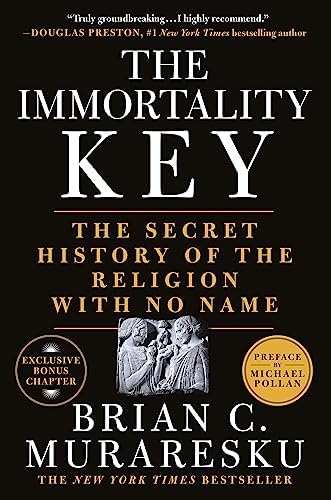
The Immortality Key by Brian Muraresku provides evidence that Eleusinian mysteries used psychedelics, with ancient chalices testing positive for psychedelic residue.
The Mystic Founder Investment Thesis
Jonathan developed an angel investing strategy targeting entrepreneurs who have had mystical experiences, based on Jeffrey Kripal's theory that all great cultural works come from mystics.
Mutants and Mystics demonstrates that much of popular media, especially comic books, was created by mystics, with Esalen Institute and X-Men comics emerging simultaneously.
Kripal's thesis: "every single great book in the canon was because the author had a mystical experience that they were trying to process. That literally the muses are real."
Historical examples include Nietzsche's mystical experience at Silsmaria leading to eternal recurrence theory, and his precognitive dream about his brother's death.
The "filter thesis" suggests the brain reduces rather than creates consciousness, explaining why low brain activity sometimes corresponds to heightened awareness in near-death experiences.
Religious Exploration and the Equivalence Problem
Jonathan's spiritual journey moved from atheism through Christianity and Buddhism, ultimately stalled by the "equivalence problem" - multiple religions making similar miraculous claims.
"Even if I agree with everything that you said, he came back from the dead, he did all these miracles. So what? There are these other traditions who say the exact same things" - Jonathan to Christian apologists.
Current investigation focuses on whether orthodox, exclusivist forms of religions hold up to scrutiny, with Mormonism likely failing due to King James Bible translation errors in Mormon texts.
Daniel 11 research examines whether the Old Testament book contains genuine sixth-century prophecy or was written during the Maccabean revolt as retroactive "prophecy."
Jonathan practices multiple traditions experientially - Buddhist meditation, Orthodox pilgrimage to Mount Athos - while maintaining intellectual rigor about their claims.
The Beginning of Infinity: Why We're Uniquely Positioned
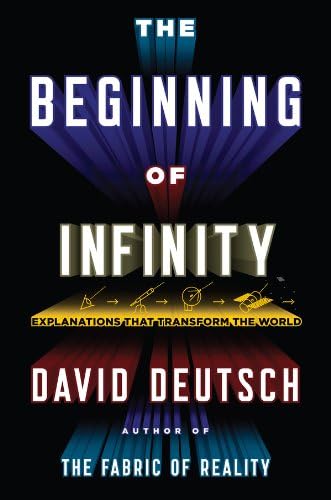
The Beginning of Infinity by David Deutsch argues we're perpetually at the start of infinite knowledge expansion, with current understanding representing less than 1% of reality.
Modern seekers have unprecedented access to religious traditions - Augustine only read Plato's Timaeus in Greek due to limited texts, while we have complete canons plus cross-cultural access.
Technology enables new forms of mystical research: better life-saving techniques increase near-death experience accounts, manufactured psychedelics provide controlled consciousness alteration.
"We are at maybe culturally, we're so stagnant... But for someone who's really passionate, I think we can answer this question. We can go further than anyone in human history" - Jonathan
Greatness Cannot Be Planned by Ken Stanley supports the iterative approach: "if you just completely iterate as you're moving along, you end up somewhere that's much better."





These notes may contain occasional inaccuracies. Learn how podbrain notes are made
More in Finance & Business

The Biggest Pivot In AI History Is Happening Right Now | Jordi Visser
Jun 20, 2026
How Substack Creators Are Covering This Strange Markets Era
Jun 20, 2026
#422 Joseph Pulitzer
Jun 20, 2026
World's First Trillionaire, Anthropic Fable Banned, The New Oligarchs, Iran Peace Deal
Jun 19, 2026Anthropic's Co-Founder and Top Economist on Doing Research at the AI Frontier
Jun 19, 2026
.svg)