
Cliff Asness - Surviving the Meme Stock Bubble (Ep. 298)
Jim O'Shaughnessy hosts Cliff Asness, co-founder and Chief Investment Officer of AQR Capital Management, one of the world's largest quantitative investment firms. The conversation explores the emotional reality of investing, the evolution of quantitative strategies, and critiques of popular investment trends.

Episode


- 01
Prospect theory is very real - good years feel about a third as good as equivalent bad years feel bad, affecting even quantitative investors emotionally
- 02
Value spreads at the end of 2020 got wider than the dot-com bubble, making it the craziest valuation environment in 60+ years of data
- 03
Private equity uses 'volatility laundering' - marking illiquid assets at artificially low volatility when they're actually levered active equity with higher risk
- 04
Machine learning forces quants to surrender some intuition for better results, moving from 50% story/50% evidence to roughly 67% evidence/33% story
- 05
The average hedge fund delivers zero alpha after fees, making active management an inherently arrogant act that assumes you're better than average
- 06
ESG constraints are costly by design - they can only help the world by raising cost of capital for 'bad' companies, meaning ESG investors should expect lower returns
- 07
Statistics should be taught in junior high instead of calculus, as understanding randomness is crucial for functional citizenship and informed decision-making
Get the latest ideas from Infinite Loops.
Plus the best new takeaways about investing from other top podcasts — read in minutes, not hours.
By continuing, you agree to podbrain's Terms and Privacy Policy.
These notes may contain occasional inaccuracies. Learn how podbrain notes are made
Jim O'Shaughnessy hosts Cliff Asness, co-founder and Chief Investment Officer of AQR Capital Management, one of the world's largest quantitative investment firms. The conversation explores the emotional reality of investing, the evolution of quantitative strategies, and critiques of popular investment trends.
The discussion covers AQR's experience through major market crises including the dot-com bubble, global financial crisis, and the 2018-2020 challenging period. Asness shares insights on how quantitative firms adapt to changing markets while maintaining disciplined approaches to factor investing and risk management.
The Emotional Reality of Quantitative Investing
Despite being quantitative investors, both Asness and O'Shaughnessy experience prospect theory firsthand - 'good years feel about a third as good as equivalent bad years feel bad' - Asness
During bad periods, quant firms get more aggressive in explaining their strategies, especially when losses are valuation-based rather than fundamental breakdowns
AQR's correlation to basic value strategies is only about 0.2, but during value disasters like the tech bubble and COVID period, they still suffer alongside traditional value investors
Valuation Extremes and Market Manias
The value spreads at the end of 2020 were wider than the dot-com bubble, representing 'the craziest thing in 50, 60 years of good data' - Asness
During the dot-com bubble, O'Shaughnessy wrote 'The Internet Contrarian' in April 1999, predicting 95% of internet companies would be 'carried out feet first or be 90% low'
The GameStop phenomenon and meme stock trading created a 'death cult' mentality where retail investors couldn't distinguish between FanDuel and Robinhood - both just apps for gambling
Asness received significant backlash after calling AMC investors 'crazy' on CNBC, despite AQR holding only 12 basis points short position in the stock
The Private Equity Critique and Volatility Laundering
Asness coined the term 'volatility laundering' to describe how private equity artificially shows low volatility (6.5%) compared to public equities (17%) by simply not marking positions to market
Private equity is 'active levered equity' with beta greater than one, but investors don't have to acknowledge losses until forced sales occur
Pioneering Portfolio Management by David Swensen originally justified private equity through the illiquidity premium, but if illiquidity becomes a 'feature' rather than a 'bug,' expected returns should be lower
The democratization of private equity to 401(k)s is 'a pretty bad idea' because regular investors lack domain expertise and are being misled by mark-to-market practices
Machine Learning Evolution in Quantitative Investing
AQR has moved from requiring roughly 50% story and 50% evidence to approximately 67% evidence and 33% story when incorporating machine learning techniques
Natural language processing now analyzes corporate statements as vectors of numbers rather than simple good/bad word tables, creating better sentiment analysis with some opacity
'If artificial intelligence, machine learning, if I understood every step of what it's doing, what's it adding to my world?' - Asness on accepting necessary opacity in ML
The challenge is that ML improvements make explaining losses during bad periods more difficult compared to traditional factor-based strategies
Hedge Fund Reality and Beta in Alternatives
AQR's 2001 paper 'Do Hedge Funds Hedge' found the average hedge fund delivers zero alpha after fees, despite being 0.8 correlated to the S&P 500
Active management is 'an inherently arrogant act' because Sharpe's arithmetic proves the average cannot beat the average, so managers must believe they're above average
Beta-one alternatives make sense for most investors funding out of equities - 'don't think of this investment as a beta of one, think of it as we're not charging you for an index fund' - Asness
AQR originally launched with only 22% volatility products, which was 'theoretically correct and practically disastrously wrong' due to client psychology around large drawdowns
ESG Investing and Stated vs Revealed Preferences
ESG constraints are costly by design - they can only help the world by raising cost of capital for 'bad' companies, meaning ESG investors should expect lower returns
O'Shaughnessy's experience with ESG led him to study stated versus revealed preferences, discovering polling methods that accurately predicted Trump's victory months ahead of traditional pollsters
'You can't tell people you're gonna make them even more money if you insist it's ESG' - investment constraints have a maximum expected value of zero
Academic vs Practitioner Perspectives
O'Shaughnessy wrote What Works on Wall Street to democratize quantitative research, but faced academic criticism despite extensively citing their work in the bibliography
The small firm effect largely disappears when adjusting for market beta and implementation costs, with most outperformance coming from the illiquid first decile
Credentialism cuts both ways - 'experts are on average right' but it's a disaster to assume they're always right or always wrong
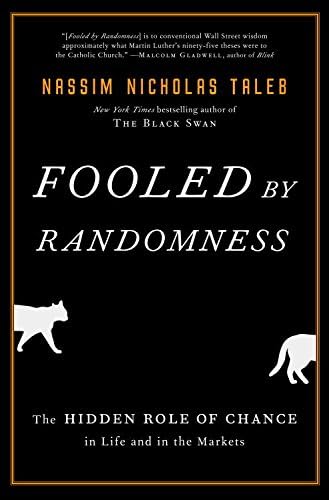
Fooled by Randomness by Nassim Taleb was 'doing the Lord's work' in helping people understand randomness, despite the author's pretentious writing style



These notes may contain occasional inaccuracies. Learn how podbrain notes are made
More in Finance & Business

The Biggest Pivot In AI History Is Happening Right Now | Jordi Visser
Jun 20, 2026
How Substack Creators Are Covering This Strange Markets Era
Jun 20, 2026
#422 Joseph Pulitzer
Jun 20, 2026
World's First Trillionaire, Anthropic Fable Banned, The New Oligarchs, Iran Peace Deal
Jun 19, 2026Anthropic's Co-Founder and Top Economist on Doing Research at the AI Frontier
Jun 19, 2026
.svg)