
Ben Cohen - The Hidden Art of Making Things Better (Ep. 319)
This episode of Infinite Loops features host Jimmy Soni, editor-in-chief of Infinite Books, in conversation with Ben Cohen, a Wall Street Journal staff writer best known for his Science of Success column. Cohen is also the author of...

Episode


- 01
The Hot Hand was released March 10, 2020 — the book party was Tuesday, and 'the world shut down on Wednesday,' making for a uniquely strange launch experience.
- 02
The 1985 Tversky paper declared the hot hand a cognitive illusion, but Harvard undergrads using NBA shot-tracking camera data found that adjusting for shot difficulty reveals a genuine hot hand effect.
- 03
Sam Walker's editorial standard at WSJ Sports: every story's lead quote could theoretically be 'I've never seen anything like this before' — the bar Cohen still measures himself against.
- 04
Moneyball shaped Cohen's entire journalistic worldview as a 9th grader: 'That story is just so brilliant from start to finish... and then for that story to become the story of everything in America.'
- 05
Cohen's upcoming book centers on a single thesis: innovation is less about invention and more about improvement — 'It's not making something new. It's taking something that already exists and making it better.'
- 06
ASML, the Dutch maker of EUV chip machines, is 'the most important machine on the planet' and one of the 20 most valuable companies in the world — yet most people confuse the name with ASMR.
- 07
Driscoll's was discarding its best-tasting berries for decades because high-flavor varieties lacked the durability to survive the supply chain — until they created the 'Sweetest Batch' premium line.
- 08
Cohen's core creative principle: 'If you think this is interesting, somebody else will too' — the conviction he returns to every time he faces a blank document and a blinking cursor.
Get the latest ideas from Infinite Loops.
Plus the best new takeaways from other top podcasts — read in minutes, not hours.
By continuing, you agree to podbrain's Terms and Privacy Policy.
These notes may contain occasional inaccuracies. Learn how podbrain notes are made
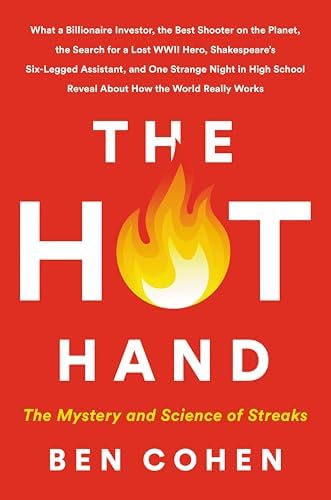
This episode of Infinite Loops features host Jimmy Soni, editor-in-chief of Infinite Books, in conversation with Ben Cohen, a Wall Street Journal staff writer best known for his Science of Success column. Cohen is also the author of The Hot Hand The Mystery and Science of Streaks, a book exploring whether hot streaks in basketball — and beyond — are real or illusory.
The conversation traces Cohen's full arc: from writing letters to the Star-Ledger as a 10-year-old Yankees fan in New Jersey, to becoming sports editor of the Duke Chronicle, to landing a WSJ internship by accident when another candidate took a Washington Post job. Cohen describes how the WSJ Sports section, launched only in 2009, forced him to develop a distinctive editorial philosophy — find stories no other outlet has written. That philosophy, shaped heavily by founding editor Sam Walker, eventually carried Cohen from NBA coverage into his wide-ranging Science of Success column.
The discussion covers the origins of The Hot Hand, the mechanics of writing a book while holding a full-time job, and Cohen's next project — a book built around companies like Athletic Brewing, Driscoll's, Birkenstock, and Dyson that achieved breakthroughs not through invention but through relentless pursuit of better. Cohen also reflects on the formative influence of Moneyball and the unexpected story of how The Princess Bride almost never got made.
From Star-Ledger Letters to the WSJ Sports Desk
Cohen's first byline came from writing responses to the Star-Ledger's daily sports question as a 10-year-old: 'No one knew that Ben Cohen from Livingston, New Jersey was 10 years old weighing in with hot takes about the Yankees.'
At Duke, Cohen served as sports editor of the Chronicle, taking a reduced course load of 2 classes and an independent study during his junior fall while putting the paper to bed at 3 AM nightly.
Cohen landed his WSJ internship only because the original hire took a Washington Post job: 'Can you start in 2 weeks?' He has had one employer since graduation.
His first filed story at the Journal was returned as a complete top-to-bottom rewrite with only his byline intact — an early lesson in the paper's standards that he describes as formative rather than demoralizing.
Sam Walker's Editorial Philosophy: The 'Never Seen Anything Like This' Standard
The WSJ Sports section launched in 2009 with no legacy format to inherit, forcing the team to invent its coverage model from scratch: a story that runs in the section 'not only can't run in any other section, but hasn't run in any other section.'
Founding editor Sam Walker's rule: the lead quote of any story could theoretically be 'I've never seen anything like this before' — not that it should be, but that the idea had to be novel enough to earn it.
Walker's highest form of praise was replying to a pitch with 'Yes!' followed by eight exclamation points and random bold text and yellow highlights — emails Cohen says he should print out because they still mean so much.
Cohen identifies multiple routes to exclusivity: investigative reporting, distinctive framing, original data collection, humor in a humorless industry, or simply calling far more people than anyone else would.
Moneyball as a Formative Text and Cultural Touchstone
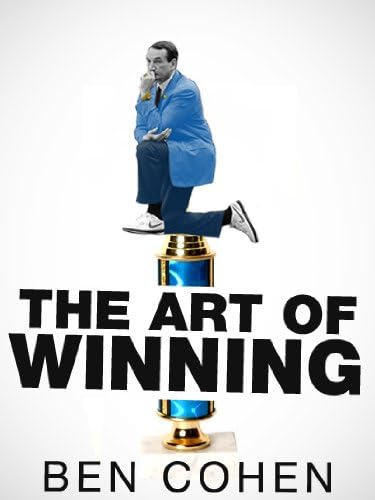
Moneyball The Art of Winning an Unfair Game by Michael Lewis was the book that most shaped Cohen's development, read in 9th grade as a baseball book before he understood its broader implications for business and journalism.
Cohen's key insight from Moneyball: sports is the most quantified part of society — salaries, stats, and outcomes are all visible — yet players were still systematically misvalued, which meant the same had to be true in every other industry.
The Sloan Sports Analytics Conference, which Cohen calls 'Dorkapalooza,' was born directly out of Moneyball's influence — and the Harvard undergrad paper presented there eventually sparked The Hot Hand.
Lewis was reportedly nervous to publish Moneyball, but Billy Beane reassured him: 'You don't think anyone's going to read this book' — partly because 'you don't think anybody in baseball reads books, do you?'
The Hot Hand: From Academic Debate to Book
The hot hand debate originates with a seminal 1985 paper by Amos Tversky of Kahneman-and-Tversky fame, which argued the hot hand is a cognitive illusion — a canonical example of seeing patterns in randomness.
Harvard undergrads using NBA shot-tracking camera data found that when you adjust for shot quality and difficulty, a genuine hot hand effect emerges — the broad takeaway of the Tversky paper was accurate, but the specific conclusion may not have been.
The Hot Hand uses the mystery of streaks as a narrative spine to explore basketball, Hollywood, investing, and farming — including a visit to a fifth-generation sugar beet farmer in North Dakota named Nick Hagen who must decide whether to bet on productive patches of land year over year.
The book's Rob Reiner chapter illustrates how a hot streak unlocks opportunity: after This Is Spinal Tap, Stand By Me, and The Sure Thing, Reiner had enough capital to finally get The Princess Bride made — a project Robert Redford, Norman Jewison, and François Truffaut had all previously failed to produce.
The Hot Hand was released March 10, 2020. The book party was on a Tuesday. The world shut down on Wednesday. Cohen walked into Three Lives Bookstore in the West Village 'probably the day before it closed for a very long time.'
Writing Process: 1,000 Words a Day and the Book Discipline
Cohen wrote The Hot Hand before having children, waking at 7:30 AM to write 1,000 words before work: 'You don't think you're doing all that much, and all that work compounds over time. After a few months, you have 85,000 words.'
He identifies the first hour of the morning — before checking email or Twitter — as the most productive writing window: 'I could get more done in that first hour than I would over 12 hours over the course of the day.'
Cohen's lesson from his current book: always write immediately after a reporting trip. Waiting months means reliving interviews through tape and losing the images that were 'floating around my head' in the moment.
He describes book writing and column writing as cross-training: 'The book writing allows me to push my limits a little bit more and stretch muscles that I don't get when I'm writing a weekly column.'
The Science of Success Column: Finding Stories in the Cracks
Cohen pitched the Science of Success column in 2022 after nearly a decade covering the NBA, framing it as applying the WSJ Sports playbook — novel angles, human characters, data-driven insight — to all of business.
He describes two modes of story-finding: taking small ideas and making them big, and taking big ideas and making them small — illustrated by the Golden State Warriors' 2016 peanut butter and jelly dispute, which he reported by quietly interviewing players including Steph Curry in locker rooms across two cities.
His ASML story — profiling a customer support engineer at a Micron chip fab in Boise, Idaho — used one person doing one crucial job to explain why this obscure Dutch company is among the 20 most valuable in the world and the sole maker of EUV lithography machines.
Cohen's operating principle: 'If I find something interesting, the chances are that I can convey that interest and enthusiasm to readers. If I don't know something that it feels like everybody else knows, the chances are that they don't know it either.'
He maintains a Google Doc simply called 'Ideas' where he pastes paragraphs and notes whenever he encounters an interesting person, company, or concept worth revisiting.
The Next Book: Better as a Theory of Innovation
Cohen's forthcoming book argues that the most consequential form of innovation is not invention but improvement: 'It's not making something new. It's taking something that already exists and making it better.'
Athletic Brewing's founder ran his own polls finding 55% of Americans said they'd drink non-alcoholic beer, while the category held only 0.3% market share — a data-identified inefficiency that drove the company's creation.
Driscoll's had been discarding its most flavorful berry varieties for decades because high-flavor genetics lacked supply chain durability. The 'Sweetest Batch' line reversed this by charging a slight premium, and as a side effect, keeping better genetics in the pool is now raising the flavor floor of their standard berries.
The book will profile companies including Athletic Brewing, Driscoll's, Birkenstock, Dyson, Waymo, Ferrari, and Hermès — each representing a different mechanism for achieving better.
Cohen's closing thesis, offered as his 'emperor for a day' idea: 'Better is always out there for people who can find it' — and the willingness to believe that nothing is stopping you from finding it is itself the competitive advantage.



These notes may contain occasional inaccuracies. Learn how podbrain notes are made
More in Finance & Business
The Biggest Pivot In AI History Is Happening Right Now | Jordi Visser
Jun 20, 2026
How Substack Creators Are Covering This Strange Markets Era
Jun 20, 2026
#422 Joseph Pulitzer
Jun 20, 2026
World's First Trillionaire, Anthropic Fable Banned, The New Oligarchs, Iran Peace Deal
Jun 19, 2026Anthropic's Co-Founder and Top Economist on Doing Research at the AI Frontier
Jun 19, 2026
.svg)