
Prada Group CEO: The Old Normal of Luxury, the Bet on Versace and Why Patience Beats Trends
Andrea Guada, CEO of Prada Group for three years, discusses the luxury conglomerate's strategy during a period of industry normalization. Under his leadership, the group has grown quarter by quarter, with Miu Miu becoming arguably the hottest brand in luxury and the recent acquisition of Versace.

Episode

- 01
Prada Group has grown from 170 stores three years ago to only 176 today despite massive growth - 'My usual answer is no' - Andrea
- 02
The luxury industry has lost one consumer out of five in the last three years, signaling market normalization
- 03
Versace acquisition targets the group's ambition to reach 10 billion euros with patient, long-term brand building
- 04
AI is primarily used in CRM to personalize messages: 'the more you're able to do that, the more business becomes hot' - Andrea
- 05
Asian tourism to Europe is at 50% of 2019 levels, American tourism down 20-25% from 2022-23 peaks
- 06
Prada's summer 2024 strategy goes 'all in' on white as the defining color across collections
- 07
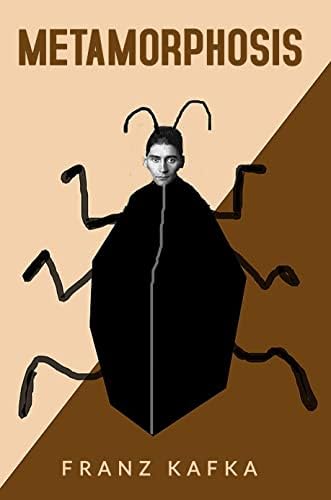
Andrea rereads The Metamorphosis and The Castle, believing Kafka understood contemporary society's transformations
Get the latest ideas from In Good Company with Nicolai Tangen.
Plus the best new takeaways from other top podcasts — read in minutes, not hours.
By continuing, you agree to podbrain's Terms and Privacy Policy.
These notes may contain occasional inaccuracies. Learn how podbrain notes are made
Andrea Guada, CEO of Prada Group for three years, discusses the luxury conglomerate's strategy during a period of industry normalization. Under his leadership, the group has grown quarter by quarter, with Miu Miu becoming arguably the hottest brand in luxury and the recent acquisition of Versace.
The conversation covers Prada's century-old DNA rooted in culture, art, and architecture, the deliberate restraint in store expansion despite growth opportunities, and the group's approach to managing creative tension across brands. Guada also explores the changing dynamics in key markets like China and Europe, the role of AI in customer relationship management, and his philosophy of 'resonant leadership' that balances founder mentality with generational transition.
The DNA of Prada: Culture, Opinion, and Constant Vision
Prada is defined as 'a point of view, an opinion, culture' deeply rooted in art, architecture, and literature with every detail intentionally thought through.
'Nothing is changing' in Prada's core brand identity despite evolving fashion trends and societal shifts - Andrea emphasizes consistency over adaptation.
The brand maintains cultural authenticity through locations and experiences, exemplified by converting an entire Hong Kong store floor into an apartment for exclusive customer experiences.
Industry Normalization: From Explosive Growth to Old Normal
'This industry is upside down' - Andrea describes how luxury grew 3-5 times in just 10-15 years, an unsustainable pace requiring normalization.
The 'new normal' is actually the 'old normal': luxury should be about exclusivity, selectivity, value, dreams, experience, and hospitality.
The industry has lost one consumer out of five in the last three years, indicating market correction and consumer digestion of rapid growth.
Winning brands require 'constant positive tension between brand management and creative direction' with patience, listening, and long-term commitment.
Miu Miu's Success: Inclusive Rebellion and Strategic Restraint
Miu Miu is described as 'an inclusive brand' for women only that works across age groups (25-50) and occasions (Monday morning to Saturday night).
The brand is 'rebellious' and 'out of fashion logic' while maintaining growth potential in the women-only segment with brands 4-5 times larger as reference points.
Strategic restraint defines growth: 'My usual answer is no' to new store opportunities, expansion into men's categories, or rushing success.
Store count discipline: from 170 stores three years ago to only 176 today, with projections of 180-185 stores in five years maximum.
Versace Acquisition: Cultural DNA and Long-term Vision
Versace was acquired as an opportunity, not a planned acquisition, with the brand's cultural roots in Magna Grecia and ancient Greek influence appealing to Prada Group's DNA.
'Versace invented glamour, Versace invented pop, Versace invented music in the shows' - Andrea identifies the brand's unique cultural contributions.
The brand 'has been a little bit mismanaged as a brand, not as a business' requiring patient rebuilding with new creative director Peter Mullier.
Donatella Versace remains part of the team for image and networking, while the focus shifts to respecting long roots and modernizing for 2026.
AI, Storytelling, and Customer Connection in Modern Luxury
AI is primarily used in CRM for message personalization: 'the more you're able to do that, the more business becomes hot' with unprecedented conversion rates.
'If I'm able to tell you a story that makes sense, if I'm able to get your emotions going, it's much easier to have your hand going to the pocket' - Andrea on storytelling's commercial power.
Successful luxury means customers 'give me your credit card without even asking what is the price' - pricing discussions indicate failure in emotional engagement.
Young consumers drive sustainability focus with Prada's Re-Nylon collection linking ocean pollution education to sustainable materials and targeted communication.
Global Market Dynamics and European Challenges
China shows 'plateau and slightly positive dynamic' after two years of digestion following explosive growth, similar to North America's earlier pattern.
Europe faces tourism challenges with Asian visitors at 50% of 2019 levels and American tourists down 20-25% from 2022-23 due to war perceptions and travel difficulties.
'Europe is in the middle of... the weak in between big powers' with slow economics but the heaviest currency, creating complex market dynamics.
Leadership Philosophy: Resonant Leadership and Cultural Evolution
Andrea practices 'resonant leadership' - 'convincing your mind and convincing your heart that we are all in a journey with a very clear mission and allowing everyone to express to their best.'
Decision-making involves intense debate that 'can even last 10 days' but produces 'upper compromise' rather than lower compromise for better results.
'I'm very good in listening to what they're not telling me' - Andrea focuses on reading between the lines in leadership conversations.
Cultural change goal: 'one day I ask to people what has changed, and they say everything, and then I say, When? I don't know' - gradual, imperceptible transformation.
Management efficiency rules include budget presentations limited to 10 pages maximum and cutting standard presentation openings to focus on substance.
Personal Philosophy: Literature, Patience, and Life Balance
Andrea currently rereads The Metamorphosis and recently finished The Castle, believing Kafka 'understood our contemporary world very well' with the cockroach transformation metaphor reflecting societal changes.
'Be patient' is his key advice to young leaders, identifying impatience as this generation's primary weakness despite their other strengths.
Work-life balance achieved through complete disconnection: 'As soon as I'm out of here, I'm out of this. Black and white' with swimming, eating, and travel as primary relaxation methods.
Future aspirations include mentoring young CEOs and potentially becoming 'a great chef' while working 'heavily, fewer days' as life expectancy increases.


These notes may contain occasional inaccuracies. Learn how podbrain notes are made
More in Finance & Business

The Biggest Pivot In AI History Is Happening Right Now | Jordi Visser
Jun 20, 2026
How Substack Creators Are Covering This Strange Markets Era
Jun 20, 2026
#422 Joseph Pulitzer
Jun 20, 2026
World's First Trillionaire, Anthropic Fable Banned, The New Oligarchs, Iran Peace Deal
Jun 19, 2026Anthropic's Co-Founder and Top Economist on Doing Research at the AI Frontier
Jun 19, 2026
.svg)