
Wingstop: Antonio Swad. A Brilliant Idea — And a Nail-Biting Exit
Antonio Swad grew up in working-class Columbus, Ohio in the 1960s-70s with a truck driver father and waitress mother. After high school, he worked at Ponderosa Steakhouse and Smuggler's Inn before moving to Dallas in the 1980s, where he eventually opened his first pizza restaurant in 1986 with $11,500 in savings.

Episode


- 01
Antonio Swad built Wingstop from a single 1,100-square-foot location in 1994 to 3,000+ global locations worth $5 billion
- 02
Wings cost 55 cents per pound in 1994 when most went to pet food manufacturing - now they drive chicken pricing
- 03
Sold Wingstop for $22 million in 2003 but fought seven years of litigation to collect the full $12 million note
- 04
Pizza Patron's 'Pizza for Pesos' promotion accepting Mexican currency generated global media attention and franchise growth
- 05
Franchising success requires relationship management skills beyond just good food - 'it's not for everybody' - Antonio
- 06
Victor Kiam's leadership concept of 'painting the vista' helped Antonio build teams that performed beyond their perceived abilities
- 07
Antonio became vegetarian due to commercial animal cruelty but continued selling chicken until haunted by stadium vision of 65,000 chickens
Get the latest ideas from How I Built This with Guy Raz.
Plus the best new takeaways about leadership from other top podcasts — read in minutes, not hours.
By continuing, you agree to podbrain's Terms and Privacy Policy.
These notes may contain occasional inaccuracies. Learn how podbrain notes are made
Antonio Swad grew up in working-class Columbus, Ohio in the 1960s-70s with a truck driver father and waitress mother. After high school, he worked at Ponderosa Steakhouse and Smuggler's Inn before moving to Dallas in the 1980s, where he eventually opened his first pizza restaurant in 1986 with $11,500 in savings.
The conversation covers Antonio's journey building two successful franchise concepts: Wingstop, which grew from a single location in Garland, Texas to over 3,000 locations worldwide, and Pizza Patron, a Hispanic-focused pizza chain that reached 100 locations before he sold it in 2016.
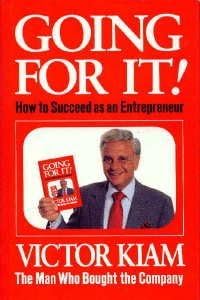
Antonio's story includes a cautionary tale about selling Wingstop in 2003 for $22 million, where poorly written contract language led to seven years of litigation to collect the full payment. His approach to leadership was influenced by Going for It! by Victor Kiam, particularly the concept of 'painting the vista' to motivate teams toward shared goals.
From Pizza Delivery Reject to Restaurant Owner
Antonio learned pizza-making during a year managing the Village Inn in Watertown, New York, after researching the location in Funk & Wagnalls Encyclopedia which described it as the 'beautiful Finger Lakes region known for its dairy production.'
With $11,500 saved, he opened Pizza Pizza in 1986 in a rough Dallas neighborhood where 'even Domino's wouldn't deliver because it was too dangerous' but offered $4.99 large pizzas when competitors charged much more.
The breakthrough came when Antonio realized he was in 'the second densest Hispanic neighborhood in Dallas' and rebranded to Pizza Patron, hiring bilingual staff to serve customers in Spanish.
The Chicken Wing Epiphany That Built an Empire
Antonio's wing inspiration came from observing customers at Smuggler's Inn demolish tiny Wing Dings during happy hour and later seeing 'buckets of chicken wings' at Taco Mac in Atlanta where 'everyone is mauling chicken wings.'
In 1994, whole chicken wings cost just 55 cents per pound because 'a lot of the wings went to pet food manufacturing' as the chicken market was priced entirely on breast meat value.
The Garland location next to Blockbuster Video proved strategic: 'I thought that it was a great food to go with movies' and the store eventually reached over $2 million in annual sales.
Antonio developed proprietary sauces including Hawaiian, lemon pepper, garlic Parmesan, Cajun, and atomic made with fresh habanero peppers, saucing wings immediately after frying for maximum flavor penetration.
Franchising Gold Rush and the $20,000 Entry Fee
The first Wingstop franchise opened in Louisville, Texas for a $20,000 fee when 'you could open a store at that time for about $125,000 all in' - today's franchise fees reach $300,000 to $1 million.
Antonio's franchise strategy avoided picking locations for franchisees: 'If you find the real estate for them, you pick up some contingent liability, almost assuring their success' which creates legal risk.
By 1999, Wingstop had grown to 150 locations with the original company store doing 'well over a million dollars a year' and eventually reaching '$2 million a year' in sales.
The Stadium Vision That Changed Everything
At a Dallas Cowboys game, Antonio experienced a defining moment: 'I started to imagine that in 65,000 people... there was a chicken on every seat instead of a person' and realized even killing 65,000 chickens 'wouldn't be enough to supply even half' the wings consumed during the game.
Two weeks later, a loan packager called asking 'would you ever consider selling the company?' and introduced Antonio to a buyer who offered '$20 million' for the business he owned 100%.
The deal structure provided '$10 million at closing' with '$12 million' carried as a note over 10 years, but Antonio used an inexperienced franchise lawyer against 'a big law firm out of Houston.'
The $12 Million Contract Disaster
After closing, the buyers 'fire George, the guy I sold the company to' within two weeks and brought in 'some of these Boston guys' to run operations.
Payments never came because buried in the voluminous documents was language stating payment would be made 'based on available cash flow' and 'there's no cash flow available' as they spent money building corporate stores.
When buyers offered '$2 million' to settle the '$12 million' note, Antonio responded: 'I'll spend every dollar I have collecting every dollar I'm owed' and sued for seven years until getting 'every penny.'
Pizza Patron's Controversial Marketing Genius
Pizza Patron's 'Pizza for Pesos' promotion accepting Mexican currency 'catapulted the brand and the franchising program into a light I couldn't have bought that much publicity at any price.'
The 'La Chingona' pizza generated controversy when Spanish-language media 'would not mention it on air because it was considered to be quite offensive,' making the story about censorship rather than the product.
Antonio sold Pizza Patron in 2016 after '32 years' in the pizza business to Charles Laughlin, who 'immediately had 22 company-owned stores' but struggled with franchise relationship management.
Leadership Lessons from Painting the Vista
Antonio credits his success to Victor Kiam's concept from Going for It! of 'painting the vista' - helping people 'look out a window' and visualize shared goals to motivate exceptional performance.
Reflecting on Wingstop's current $5 billion valuation and 3,000+ locations, Antonio says 'I'm not filled with regret in any way' because 'when you live in the moment, you kind of take responsibility for what are you doing today.'
Antonio emphasizes that 'nobody achieves anything great alone' and attributes his success to 'the ability to attract and maintain real excellent people' who believed in his vision.

These notes may contain occasional inaccuracies. Learn how podbrain notes are made
More in Finance & Business
The Biggest Pivot In AI History Is Happening Right Now | Jordi Visser
Jun 20, 2026
How Substack Creators Are Covering This Strange Markets Era
Jun 20, 2026
#422 Joseph Pulitzer
Jun 20, 2026
World's First Trillionaire, Anthropic Fable Banned, The New Oligarchs, Iran Peace Deal
Jun 19, 2026Anthropic's Co-Founder and Top Economist on Doing Research at the AI Frontier
Jun 19, 2026
.svg)