
diapers.com: Marc Lore. The ecommerce visionary who lost to Amazon but still made billions (2021)
Mark Lori is the serial entrepreneur behind Diapers.com and Jet.com, two major e-commerce ventures that directly challenged Amazon's dominance. A former derivatives trader at Bankers Trust who became the youngest executive vice president at age 28, Lori left finance in 2000 to pursue entrepreneurship. His journey...

Episode


- 01
Mark Lori sold diapers at a loss, buying them at full retail price from wholesale clubs and selling them without markup to build customer loyalty
- 02
Amazon slashed diaper prices by 30% after acquisition talks failed, an 'unprecedented' move in retail according to Lori
- 03
Diapers.com reached $300 million revenue by 2010 but Amazon's aggressive tactics forced a $550 million sale despite a higher competing offer
- 04
Jet.com burned $40 million monthly and planned to lose $3 billion before profitability, raising $750 million in total funding
- 05
Walmart acquired Jet.com for $3.3 billion in 2016, the highest price ever paid for a U.S. e-commerce startup at that time
- 06
Lori qualified for the 1998 U.S. Olympic bobsled team after pushing a promotional sled at the World Financial Center in Manhattan
- 07
The key to competing with Amazon was encouraging customers to buy multiple items shipping from the same warehouse to reduce costs
Get the latest ideas from How I Built This with Guy Raz.
Plus the best new takeaways from other top podcasts — read in minutes, not hours.
By continuing, you agree to podbrain's Terms and Privacy Policy.
These notes may contain occasional inaccuracies. Learn how podbrain notes are made
Mark Lori is the serial entrepreneur behind Diapers.com and Jet.com, two major e-commerce ventures that directly challenged Amazon's dominance. A former derivatives trader at Bankers Trust who became the youngest executive vice president at age 28, Lori left finance in 2000 to pursue entrepreneurship. His journey included an unexpected detour as a member of the U.S. national bobsled team before launching multiple successful startups.
The conversation covers Lori's transformation from what he calls a 'mercenary' focused solely on making money to a 'missionary' driven by purpose and values. His first major venture, Diapers.com, pioneered online baby product sales despite losing money on every diaper sold. After Amazon's aggressive competitive tactics forced a sale for $550 million, Lori launched Jet.com with $750 million in funding to compete directly with Amazon again.
The discussion reveals the intense competitive dynamics of e-commerce, particularly how Amazon used predatory pricing and acquisition pressure against smaller rivals. Lori's story illustrates both the challenges of competing against tech giants and the strategic value that established retailers like Walmart saw in acquiring innovative e-commerce platforms and talent.
From Banking Prodigy to Olympic Bobsledder
Lori graduated from Bucknell University in 1993 and joined Bankers Trust, becoming the youngest executive vice president at age 28 while earning $500,000 annually.
In 1996, Lori qualified for the U.S. national bobsled team after casually trying a promotional sled setup at the World Financial Center in Manhattan and recording the fastest time of the week.
Despite qualifying for the 1998 Olympics, Lori chose to continue his banking career rather than commit to two years of training and travel, driven by his 'mercenary' focus on making money.
The Sports Stock Market Experiment
In 2000, Lori left banking to launch The Pit with childhood friends Vinny Bharara and Lax Chandra, creating a sports stock market where baseball cards served as proxies for athlete performance.
Lori invested his entire savings of $390,000 into the company, telling investors 'that's all I had' when asked why not $400,000, which convinced 60 angel investors to contribute $5 million total.
The business generated $10 million in transaction revenue in 10 months before the NASDAQ crash made fundraising impossible, leading to a $5.7 million sale to Topps baseball card company.
Diapers.com: Losing Money to Build Market Share
Lori discovered 'diapers' was searched 200,000 times monthly on Google in 2004, but no one sold them online at reasonable prices because they were loss leaders with terrible margins.
Initially, Procter & Gamble and Kimberly Clark refused to sell directly, forcing Lori and Vinny to buy diapers at full retail price from wholesale clubs like BJ's and Costco without any markup.
The strategy was intentional: 'We didn't mark them up. We just lost more money' to drive traffic and sell higher-margin baby products, leveraging unlimited online shelf space versus brick-and-mortar limitations.
Lori's team developed sophisticated box optimization algorithms to maximize shipping efficiency, recognizing that marginal costs for additional items in the same box were minimal.
Amazon's Aggressive Competitive Response
By 2010, Diapers.com reached $300 million in revenue, prompting Amazon to slash diaper prices by 30% - 'unprecedented in the history of retail' according to Lori.
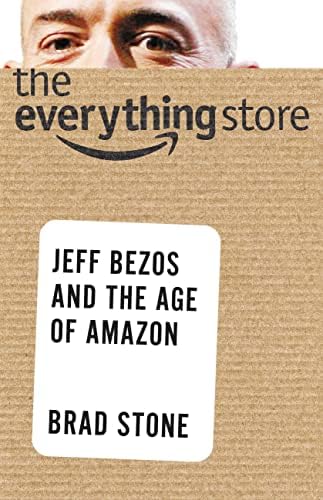
The Everything Store by Brad Stone documented Amazon's tactics, including a September 2010 meeting where Amazon announced Amazon Mom and threatened further price cuts if Diapers.com didn't accept acquisition.
Amazon's representatives told Lori they would 'take the price of diapers to zero' and made explicit threats about burying the business if he accepted a competing offer $100 million higher than Amazon's.
The $550 million Amazon acquisition felt like 'selling out' rather than selling the company, leaving Lori and Vinny depressed despite the financial windfall because their vision was cut short.
Jet.com: The $3 Billion Gamble Against Amazon
After leaving Amazon in 2013, Lori launched Jet.com with a plan to lose $3 billion before profitability, raising $750 million to build a more efficient e-commerce platform.
Jet's smart pricing engine encouraged customers to buy multiple items from the same warehouse, offering real-time price reductions when substitutions could eliminate separate shipments and reduce costs.
The company initially launched with a $50 annual membership fee like Costco, but dropped it after three months when investors expressed concerns about proving retention rates quickly enough.
Burning $40 million monthly, Jet reached a $1 billion revenue run rate within 10 months of launching, which Lori believes was 'probably unprecedented at the time.'
Walmart's Strategic $3.3 Billion Acquisition
Walmart CEO Doug McMillon acquired Jet.com for $3.3 billion in 2016, the highest price ever paid for a U.S. e-commerce startup, to gain technology and talent rather than the brand itself.
Unlike the Amazon experience, Walmart empowered Lori to lead e-commerce strategy, with McMillon saying 'we want to give you and your team the keys to sort of pull this all together.'
Lori's strategy included acquiring brands like Bonobos to 'change the narrative' and attract top talent who previously wouldn't consider working at Walmart.
After four and a half years at Walmart, Lori stepped down feeling he had 'dramatically accelerated top line sales' and created an innovation incubator for future retail startups.
These notes may contain occasional inaccuracies. Learn how podbrain notes are made
More in Finance & Business

The Biggest Pivot In AI History Is Happening Right Now | Jordi Visser
Jun 20, 2026
How Substack Creators Are Covering This Strange Markets Era
Jun 20, 2026
#422 Joseph Pulitzer
Jun 20, 2026
World's First Trillionaire, Anthropic Fable Banned, The New Oligarchs, Iran Peace Deal
Jun 19, 2026Anthropic's Co-Founder and Top Economist on Doing Research at the AI Frontier
Jun 19, 2026
.svg)