
The Life of Jesus
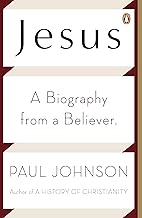
The episode examines Jesus A Biography from a Believer by Paul Johnson, a historian who has written extensively on figures including Winston Churchill, Alexander the Great, Julius Caesar, Socrates, Mozart, Picasso, and Disney.


- 01
"Jesus was, in terms of his influence, the most important human being in history" - Paul Johnson establishes Jesus' unparalleled historical impact with over 100,000 English biographies
- 02
"Love your enemies. Do good to them which hate you. Bless them that curse you" - Jesus taught radical compassion that had no equivalent in ancient Near Eastern wisdom literature
- 03
"No prophet is acceptable in his hometown" - Jesus' teaching immediately provoked violent rejection in Nazareth, nearly resulting in his death by mob
- 04
"He was philanthropy incarnate" - Jesus introduced the concept of loving all mankind universally, a revolutionary idea absent from his era's intellectual climate
- 05
"There's more agreement in the sources about the death of Jesus than there is about the assassination of Julius Caesar" - Paul Johnson on the historical documentation of crucifixion
- 06
"If Jesus were to appear again today, we can be sure not only that he would find countless followers, but equally that he would be persecuted and killed" - Johnson on the timeless relevance of Jesus' alternative to cruelty
Get the latest ideas from Founders Podcast.
Plus the best new takeaways from other top podcasts — read in minutes, not hours.
By continuing, you agree to podbrain's Terms and Privacy Policy.
These notes may contain occasional inaccuracies. Learn how podbrain notes are made
The episode examines Jesus A Biography from a Believer by Paul Johnson, a historian who has written extensively on figures including Winston Churchill, Alexander the Great, Julius Caesar, Socrates, Mozart, Picasso, and Disney.
Johnson frames Jesus' life within the harsh context of first-century Palestine under Roman occupation, contrasting the brutal rule of Herod the Great with Jesus' revolutionary teachings of love and mercy.
The biography covers Jesus' birth around 4 BC in Nazareth, his childhood in a pious household led by carpenter Joseph and Mary, and the mysterious 18-year gap in documentation between ages 12 and 30.
Johnson focuses primarily on Jesus' three-year teaching mission, analyzing his methods of communication through parables and maxims, his selection of the 12 apostles, and the universal message of compassion that challenged both religious and political authorities.
The narrative concludes with Jesus' crucifixion ordered by Pontius Pilate in collaboration with temple high priests, examining the trials as "a bitterly ironic condemnation of human justice" and positioning Jesus' alternative worldview as perpetually relevant to cruel societies across all eras.
The World Jesus Entered: Rome's Brutal Empire
First-century Palestine was "harsh, cruel, violent, and unstable" with 50-60 million people under Roman law, an empire built on approximately 15 million slaves rather than technology
Herod the Great ruled for over 30 years as the richest individual in the empire, building ships, temples, aqueducts, and shopping centers across dozens of cities, but was "a monster" who killed over 40 of his wives, children, and close relatives
Johnson deliberately contrasts Herod's murderous reign with Jesus' teachings to highlight the revolutionary nature of the message Jesus would bring to this violent world
The Missing Years: From Nazareth Childhood to Public Ministry
Jesus was born around 4 BC in Nazareth, a small Galilean town of workshops and craftsmen, to Joseph, a prosperous carpenter-entrepreneur, and Mary, in a home characterized by "great piety" and meticulous Jewish observance
At age 12, Jesus was found in the Jerusalem temple "sitting in the midst of the elders, both hearing them and asking them questions," astonishing listeners with his understanding. His first recorded words were a question: "Why were you looking for me? Did you not know that I must be in my father's house?"
"For more than half of Jesus' life, we know absolutely nothing about what he did or where he went or how he lived" - Johnson on the 18-year gap between ages 12 and 30, though Jesus clearly emerged as a man of wide, self-taught knowledge
"His words and concepts betray absolutely no sign of academic deformation or the impress of a system. Being an autodidact, Jesus was his own man" - Johnson describes Jesus' intellectual independence
Jesus possessed broad practical knowledge of trade and agriculture, likely gained through actual experience after Joseph's death led to the household's breakup and Jesus leaving home to seek experience in the wider world
Baptism and the Launch of Mission
Judaism in Jesus' time was "ripe for reformation, just like Christianity was in the early 16th century," with Jesus offering a spiritual revolution "based on love and neighborliness, which could be embraced by all classes and all people"
John the Baptist, possibly Jesus' cousin, was teaching reformation and baptism while drawing huge crowds and official attention. Jesus requested baptism from John to stress "the universality of the sacrament, the need for every human being to wash off the stains of the past"
"The baptism of Jesus was also the culmination of John's own mission" - Johnson on how John's role was to launch Jesus' mission, before John was arrested and beheaded for speaking against authorities
Jesus was observant, detail-oriented, with intense eye contact, and possessed innate authority that "did not need to acquire it. It was innate" - descriptions from multiple sources
Recruiting the Twelve: Building the Core Team
"Jesus knew he was starting something new" and made recruiting the 12 apostles his first important act, understanding that "the first and most important step when starting anything is recruiting the people who are going to help you on your mission"
Before assembling the apostles, Jesus faced violent rejection in Nazareth where a mob "physically ejects Jesus from the synagogue and takes him to a nearby cliff" with lethal intent because his teaching conflicted with existing beliefs
"No prophet is acceptable in his hometown" - Jesus' observation on the difficulty of gaining acceptance among those who knew him before his mission
"Jesus insisted that the group come with him full time. This mission is only for the fully committed" - Jesus demanded absolute commitment, admitting his work would cause family dissension and required "painful choices"
The 12 apostles had "particular functions and were given powers to carry them out," with Jesus sometimes giving them nicknames like calling brothers James and John "the sons of thunder because of their enthusiasm"
Teaching Methods: Persuasion Over Spectacle
"Jesus wanted to convince you or to persuade you through reason, and he hated to be looked at like some kind of holy magician" - Johnson on Jesus' preference for intellectual persuasion over miraculous displays
"Jesus makes it clear that it is preferable that men show faith by listening to the truth and by accepting it and following it rather than by waiting for signs and miracles to convince them"
Jesus repeatedly demanded privacy after healings, with multiple instances of "Jesus charged them that they should tell no man," "Do not go into the town, nor tell anyone," and "see that no man knows this"
"He wanted to avoid at all costs being known as a miracle worker. He detested being thought of as a kind of holy magician. But sometimes publicity was unavoidable and it could be dangerous as well as irksome"
Jesus taught continuously for three years, with Johnson calculating "as many as 400 different occasions when crowds gathered, as well as scores of private sessions." He was "convivial" - cheerful, friendly, jovial - and "loved to teach when people were relaxed and enjoying their food and companionship"
Revolutionary Content: The Beatitudes and Beyond
"Jesus taught that life was to be devoted to self-transformation" through The Beatitudes, emphasizing humility, gentleness, pursuit of justice, compassion, inner purity, reconciliation, and standing for what is right
"This was tough teaching, hard to follow, and entirely new. It had no equivalent in the Old Testament or any of the pious wisdom literature of the ancient Near East" - Johnson on the radical nature of The Beatitudes
Jesus taught extreme maxims: "Love your enemies. Do good to them which hate you. Bless them that curse you. If someone slaps you on one cheek, turn to them the other also"
"Judge not, and you will not be judged. Condemn not and you will not be condemned. Forgive and you will be forgiven" - Jesus emphasized that inner sentiments mattered, teaching that "evil feelings allowed to develop unrestrained led to major sins"
When asked "what is the great commandment?" Jesus combined two ideas: "love God with everything you have, and then love every other person. There is none other commandment greater than these"
When asked "who is my neighbor?" Jesus answered "everyone," turning compassion "into a huge, overarching principle. He taught the love of mankind as a whole"
Philanthropy Incarnate: Universal Love as Revolution
"Love of mankind as a whole did not exist in Jesus' day as a concept. The intellectual, social, and racial climate of Jesus' day was hostile to this message"
"Jesus was a universalist. He said, I will draw all men to me. He had no home, no country, no race, no characteristics tying him to a tribe or nation. He was united to all men by love. He was philanthropy incarnate"
The Greeks had a word "philanthropoia" meaning love of all mankind, which translates to "philanthropy" - Johnson connects this to Jesus being "philanthropy, the love of man incarnate"
"There was nothing exclusive about Jesus and his teaching. His message was the most inclusive of all such communications" - emphasizing the universal accessibility of his teachings
Communication Genius: Parables and Poetic Imagery
"He thought and reasoned and spoke as a poet does, in images, flashes of insight. All the time he taught, he was creating little pictures in the minds of the men and women who listened to him"
"There are not a half a dozen lines of his teaching without an image and often an unforgettable one" - Johnson on Jesus' rich use of metaphor, simile, and vivid comparisons with nature
Jesus favored the parable as his primary storytelling form, understanding that "the lessons that stick are the ones that are wrapped in stories," combining maxims and storytelling as the most effective teaching methods
The parables of the Good Samaritan and the prodigal son became the most memorable and widely spread, with the Good Samaritan told in response to "who is my neighbor?" to illustrate that "we are all neighbors, one to another"
"As David Ogilvy famously said, you can't save souls in an empty church" - Johnson on Jesus' understanding that effective communication requires audience engagement
Wealth, Poverty, and What You Do With Resources
"Jesus' sympathies lay with the poor, the disenfranchised" though "Jesus never made the mistake of supposing that poverty made people virtuous"
"Jesus was painfully aware that wealth offered endless opportunities for corruption. Jesus' general point about wealth is that it all depends on what you do with it"
In the Good Samaritan parable, Jesus describes how the merchant's industriousness and successful trade enabled him to help others: "A less successful man might also have felt compassion for the battered traveler, but could have done little about it"
"Jesus was eager to encourage all those who had wealth to distribute a generous portion of it to the poor" - emphasizing wealth as a tool for virtue when properly deployed
Focus on the Individual and Children's Wisdom
"Although Jesus constantly addressed crowds, he spoke directly to each individual who composed them. It was his gift and also his philosophy. Jesus' love of people as individuals was in some ways his most striking characteristic"
"Jesus was for gentleness, patience, and forbearance. He was hugely intuitive. He disliked any kind of legalism or ponderous logic, preferring the flashes of instant perception and poetry"
Jesus was fascinated by children and "brought them into his teaching constantly," noting how mothers' delight in babies "obliterated the pains of childbirth" and how "the impulses of children at play interested him"
"It was always Jesus' teaching and his profound belief that the study of children had much to tell" - Johnson notes this remains relevant, as "somewhere along the line, we lose that impulse for play"
Jesus trained apostles through imitation of his teaching methods, with this pattern spreading from apostles to disciples and continuing in churches today
Jesus' New Ten Commandments for Living
"The revolution was entirely inward, a revolution against selfishness and greed. The reborn person would be totally different and all would be changed, but outwardly, the world would carry on"
"At the heart of this is the imitation of Jesus, the example of how a person behaves and thinks and speaks. Those that imitate Jesus have made the world a better place, and they lead more fulfilled and happier lives"
The ten commandments: (1) Develop a true personality - each person is unique; (2) Abide by universality - see humanity as whole; (3) Respect equality - give equal consideration to all; (4) Use love in all relationships at all times; (5) Show mercy
"Mercy is an emotional word like love. It is hard to define, though instantly recognizable when exercised. Mercy is grace, it is undeserved" - Johnson on the fifth commandment
Commandments 6-10: (6) Balance - keep your head when others lose theirs; (7) Cultivate an open mind - Jesus fought bigotry constantly; (8) Pursue truth; (9) Judiciously use power with restraint, mercy, and love; (10) Show courage in enduring pain and persecution
Crucifixion: The Ironic Condemnation of Human Justice
"There's more agreement in the sources about the death of Jesus than there is about the assassination of Julius Caesar" - Johnson on the historical documentation of Jesus' execution
Jesus was executed on orders of Pontius Pilate, the Roman prefect, in collaboration with temple high priests who "regarded him as a threat to their stability in both the religious and political order"
"The narratives amount to, in effect and perhaps in intention, a bitterly ironic condemnation of human justice, lying and perjury, prejudice and false witness, an eagerness to take innocent life. Cowardice on all sides, and not without a vile touch of frivolity"
Crucifixion involved nailing a person to a cross through wrists or hands and sometimes feet, causing "immense suffering and pain as the victim would gradually suffocate due to the inability to support their own weight." Death was "often slow and agonizing"
Jesus was "compelled to carry the heavy cross on which he was to be crucified to the place of execution," weak from shock, blood loss, and having had no sleep
Timeless Relevance: Jesus' Alternative to Cruelty
"Palestine in the first century AD was a land crowded, just as our earth is crowded, with a multiracial, multi-religious population. The people believed themselves to be civilized. In practice, it was corrupt, mendacious, grossly inefficient, and cruel"
"Amid all this teeming humanity is the gregarious, friendly figure of Jesus, always there, teaching, listening, and talking with people of all kinds. He was usually soft-spoken and genial. He was a fascinating, irresistible figure, radiating love, benevolent, forgiving, talking always of mercy, and smiling often"
"Jesus lived in a cruel, unthinking world, and his life and death formed an eloquent protest against it. He offered an alternative, not an outward life of revolution and reform"
"We live in a cruel world too, so Jesus' alternative is still relevant. If Jesus were to appear again today, we can be sure not only that he would find countless followers, but equally that he would be persecuted and killed"
"That is why his biography, in our terrifying 21st century, is important. We must study it and learn" - Johnson's closing argument for the perpetual relevance of Jesus' life and teachings




These notes may contain occasional inaccuracies. Learn how podbrain notes are made
More in Finance & Business

Jamie Dimon succession race narrows
Jun 26, 2026
HIGHLIGHTS: Miljan Gutovic - CEO of Holcim
Jun 26, 2026
Will The K-Shaped Economy Destroy America? | Darius Dale
Jun 25, 2026
Is DePIN Entering Its Next Growth Phase?
Jun 25, 2026
Gretchen Rubin - How Curiosity Becomes a Calling (Ep. 320)
Jun 25, 2026


.svg)