
Phil Knight: Founder of Nike
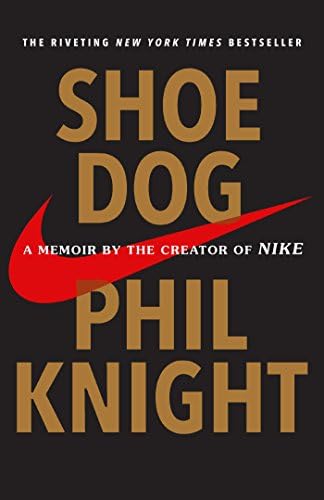
This episode explores Shoe Dog, Phil Knight's entrepreneurial autobiography about founding Nike, which the host considers a nearly perfect entrepreneurial memoir that provides energy and new insights with each reading.


- 01
Phil Knight's crazy idea: Japanese running shoes could undercut German-dominated market, inspired by Japanese cameras disrupting German camera market
- 02
Bill Bowerman's math: removing one ounce from shoes equals 55 pounds less burden over one mile, making lightness crucial for speed
- 03
Nike started with 12 pairs of Japanese shoes sent to a 24-year-old living at home, growing through pure reinvestment of every dollar
- 04
Jeff Johnson wrote daily letters to Phil Knight, building customer database on index cards and creating first Nike retail sanctuary for runners
- 05
Phil Knight's philosophy: 'Somebody may beat me, but they're going to have to bleed to do it' - applied to both running and business
- 06
Nike IPO made Phil Knight worth $178 million, yet his reaction was regret wishing he could do it all over again
- 07
Knight's advice: 'Don't settle for a job or profession or career. Seek a calling' - fatigue becomes easier, disappointments become fuel
Get the latest ideas from Founders Podcast.
Plus the best new takeaways about entrepreneurship from other top podcasts — read in minutes, not hours.
By continuing, you agree to podbrain's Terms and Privacy Policy.
These notes may contain occasional inaccuracies. Learn how podbrain notes are made
This episode explores Shoe Dog, Phil Knight's entrepreneurial autobiography about founding Nike, which the host considers a nearly perfect entrepreneurial memoir that provides energy and new insights with each reading.
The story follows Knight from his 1962 Stanford business school paper proposing Japanese running shoes could disrupt the German-dominated market, through decades of near-bankruptcy experiences, to Nike's eventual IPO. Central to the narrative is Knight's relationship with two father figures: his respectability-obsessed actual father who discouraged the venture, and Bill Bowerman, his former track coach who became Nike's co-founder and obsessed over shoe innovation.
The book chronicles Nike's evolution from Blue Ribbon Sports, importing and selling Japanese Onitsuka Tiger shoes from a car trunk, to creating their own brand after being betrayed by their supplier. Throughout, Knight maintained his philosophy of reinvesting every dollar back into growth, often operating on the edge of bankruptcy while building what would become the world's most successful athletic company.
The Crazy Idea That Started Nike
Knight's Stanford business school paper argued that Japanese running shoes could disrupt the German-dominated market, just as Japanese cameras had overtaken German cameras - an idea his classmates greeted with 'formal boredom' and vacant stares.
The concept was beautifully simple: if Onitsuka could get shoes into American stores and price them to undercut Adidas, it could be hugely profitable, targeting the brand most American athletes wore.
Knight's father represented the antithesis of entrepreneurial thinking, being 'obsessed with what other people thought' and worshipping 'respectability' - wanting his son to stop 'jackassing around with these shoes.'
Bill Bowerman: The Chosen Father and Shoe Obsessive
Bowerman was 'constantly sneaking into lockers and stealing footwear,' spending days tearing shoes apart and stitching them back up with modifications that made runners either 'run like deer or bleed.'
His mathematical precision drove innovation: 'One ounce sliced off a pair of shoes is equivalent to 55 pounds over one mile' - calculated from 880 steps per mile, making lightness directly translate to speed.
Knight describes Bowerman as having 'a prehistoric strain of maleness, a blend of grit and integrity, and calcified stubbornness that is all but extinct today' - including rigging his mailbox with explosives to stop a reckless truck driver.
Bowerman's book Jogging sold millions of copies, expanding the market for running shoes by promoting the philosophy that 'if you have a body, you're an athlete' to mainstream America.
Building Blue Ribbon on Financial Tightropes
Nike began with just 12 pairs of Japanese shoes sent to Knight, still living at home - 'God, they were beautiful' - which he immediately shared with Bowerman, leading to their 50-50 partnership.
Knight's distribution strategy was selling shoes from his car trunk at track meets, discovering 'it wasn't selling' because 'I believed in running' and 'belief is irresistible.'
The company operated for seven years before Knight could afford to work there full-time, constantly reinvesting every dollar: 'Any dollar that wasn't nailed down, I was plowing directly back into the business.'
Financial desperation led to employees' families lending their life savings - Woodell's parents gave their last $8,000, which later converted to $1.6 million worth of stock at IPO.
Jeff Johnson: The Obsessive Employee Every Startup Needs
Johnson wrote constant letters to Knight about everything - daily sales, weekly sales, competitor analysis, expansion ideas - prompting Knight to note 'every time a thought crossed Johnson's mind, he wrote it down.'
He built a customer database on index cards with personal information, shoe sizes, and preferences, sending Christmas cards, birthday cards, and race congratulations to maintain relationships.
Johnson created the first Nike store as 'a sanctuary for runners' with comfortable chairs from yard sales and shelves filled with first-edition running books from his personal library.
His romantic view of running as 'a mystical exercise, no less than meditation or prayer' drove his mission to help 'all the oppressed runners of the world' find community.
The Birth of Nike Brand and Betrayal by Suppliers
After seven years of building Onitsuka's American market, the supplier betrayed Blue Ribbon by secretly negotiating with other distributors, forcing Knight to develop his own brand while maintaining the facade of partnership.
The Nike name came from Johnson in a dream - 'Nike, the Greek goddess of victory' - during the intense period of designing their first independent shoe line.
When announcing the supplier cutoff to employees, Knight reframed the crisis: 'This is the moment we've been waiting for. Our moment. No more selling someone else's brand... Let's look at this as our liberation, our Independence Day.'
The transition felt transformative: 'I felt spent, but proud. I felt drained, but exhilarated... I felt like an artist. I felt like a creator' - comparing Bowerman's workshop innovations to 'Edison in Menlo Park, Da Vinci in Florence.'
Competitive Philosophy and Going Public Reluctantly
Knight's competitive drive bordered on obsession - as a child, he played his cousin 116 games of badminton because 'my cousin beat me 115 straight times. I refused to quit until I'd won.'
He adopted Prefontaine's philosophy: 'Somebody may beat me, but they're going to have to bleed to do it' - applying this to both athletic competition and business battles.
Knight resisted going public for years, finding the phrase itself 'off-putting' as someone 'defined by shyness, intensely private,' but eventually recognized it as mandatory to solve cash flow problems.
On IPO night, worth $178 million, his primary emotion was regret: 'Good God, I thought. Regret. Because I honestly wished I could do it all over again.'
Life Philosophy and Entrepreneurial Wisdom
Knight's deepest regret was missing his sons' childhood: 'Above all, I regret not spending more time with my sons' - yet this clashed with his 'secret regret that I can't do it all over again.'
His core advice: 'Don't settle for a job or a profession or even a career. Seek a calling' - promising that 'the fatigue will be easier to bear, the disappointments will be fuel.'
He redefined business purpose beyond profit: 'Business was no more about making money than being human is about making blood' - focusing on creating, contributing, and helping others 'live more fully.'
His final wisdom challenges conventional advice: 'Those who urge entrepreneurs to never give up? Charlatans. Sometimes knowing when to give up, when to try something else, is genius. Giving up doesn't mean stopping. Don't ever stop.'

These notes may contain occasional inaccuracies. Learn how podbrain notes are made
More in Finance & Business

Jamie Dimon succession race narrows
Jun 26, 2026
HIGHLIGHTS: Miljan Gutovic - CEO of Holcim
Jun 26, 2026
Will The K-Shaped Economy Destroy America? | Darius Dale
Jun 25, 2026
Is DePIN Entering Its Next Growth Phase?
Jun 25, 2026
Gretchen Rubin - How Curiosity Becomes a Calling (Ep. 320)
Jun 25, 2026
.svg)