
The Relentless Missionary Creating AGI: Demis Hassabis
This episode explores The Infinity Machine by Sebastian Mallaby, a biography of Demis Hassabis, co-founder of DeepMind and 2024 Nobel Prize winner in Chemistry. Hassabis transformed from chess prodigy to AI pioneer, building the company that created AlphaGo...

Episode


- 01
Demis Hassabis works 24/7 with 'no 50% mode' - only 100% dedication to his AI mission, as described in The Infinity Machine
- 02
DeepMind's AlphaGo Zero discovered strategies 'unknown to mortal players' by learning only from self-play, not human wisdom
- 03
Google bought DeepMind for $650 million in 2014, with Hassabis netting $136 million to escape the 'fundraising hamster wheel'
- 04
Hassabis won the 2024 Nobel Prize in Chemistry for protein structure prediction using AI, fulfilling a decades-long scientific dream
- 05
ChatGPT's release prompted Hassabis to declare 'This is wartime' - OpenAI had 'literally parked the tanks on the lawn'
- 06
Peter Thiel invested $2.3 million in DeepMind, seeing Hassabis as an 'authentic missionary entrepreneur' destined for this mission
- 07
Hassabis identified with Ender's Game protagonist, telling the author to read it to understand his capacity for endurance and responsibility
Get the latest ideas from Founders Podcast.
Plus the best new takeaways about artificial intelligence from other top podcasts — read in minutes, not hours.
By continuing, you agree to podbrain's Terms and Privacy Policy.
These notes may contain occasional inaccuracies. Learn how podbrain notes are made
This episode explores The Infinity Machine by Sebastian Mallaby, a biography of Demis Hassabis, co-founder of DeepMind and 2024 Nobel Prize winner in Chemistry. Hassabis transformed from chess prodigy to AI pioneer, building the company that created AlphaGo and AlphaFold.
The book chronicles Hassabis's journey from discovering chess at age four to founding DeepMind in 2010, when fellow scientists 'rolled their eyes' at the idea of building artificial general intelligence. His mission: use AI to solve every scientific problem plaguing humanity.
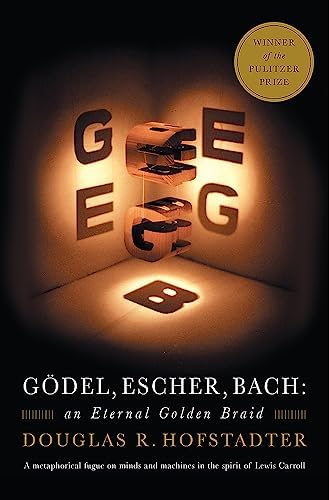
Key influences shaped his path, including Ender's Game (which he identified with deeply), Gödel, Escher, Bach (given to him at age 16), and early exposure to AI through The Chess Computer Handbook. The narrative weaves through his relationships with tech titans like Peter Thiel, Larry Page, and Elon Musk.
The story culminates in the current AI race, where Hassabis competes against OpenAI and other rivals while maintaining his scientific mission. As he puts it: 'I'm doing this for knowledge and science. This is my whole life's work.'
The Making of a Missionary: Chess Prodigy to AI Visionary
Hassabis discovered chess at age four and within weeks 'had mastered the game well enough to defeat adults,' sitting on telephone books to reach tournament tables by age five
His father's volatile reactions to losses taught him extreme dedication: 'The only way I could know if I've done my best is if I basically push myself to the point just before death' - Hassabis at age 9-10
The Chess Computer Handbook by David Levy introduced 12-year-old Hassabis to AI themes, leading him to build his first program that 'could beat his little brother' at Othello
At age 16, Peter Molyneux gave him Gödel, Escher, Bach, described as 'a fire hose of a book that inspired a remarkable number of future AI scientists'
Building DeepMind: From Ridiculous Idea to Google Acquisition
When DeepMind launched in 2010, 'fellow scientists had rolled their eyes, believing the construction of human-like AI to be impossible' and 'almost every potential investor had turned them away'
Peter Thiel invested $2.3 million after being hooked by chess talk, seeing Hassabis as 'an extreme case of an authentic entrepreneur... a missionary who feels compelled to work on a particular challenge'
Google acquired DeepMind for $650 million in 2014, with Hassabis explaining: 'I was fed up with scrambling around trying to justify what I knew was the biggest thing of all time'
The acquisition freed DeepMind from 'the fundraising hamster wheel' - within years they were spending $260 million annually on staff, six times their total first three years
Scientific Breakthroughs: AlphaGo to Nobel Prize Victory
AlphaGo Zero 'outclassed its predecessor by a mile' by learning exclusively from self-play, discovering 'strategies unknown to mortal players' without human training data
The system 'came up with a style that was completely alien' - 'AI stood in judgment over centuries of human wisdom, vindicating some verdicts and tossing out others'
DeepMind solved protein folding with AlphaFold, earning Hassabis the 2024 Nobel Prize in Chemistry and 'gifting its results to science' for free global use
The breakthrough demonstrated how 'perhaps 20' DeepMind researchers 'had defeated' hundreds of academic scientists who 'had spent decades on protein folding'
The AI War: ChatGPT Changes Everything
ChatGPT gained 'a million users within five days' and '100 million within two months, making it the fastest growing consumer application ever'
Hassabis declared 'This is wartime' in response: 'OpenAI and Microsoft have literally parked the tanks on the lawn'
He questioned Sam Altman's motivations, citing Paul Graham's observation: 'Sam is extremely good at becoming powerful. You could parachute him into an island full of cannibals and come back in five years and he'd be the king'
DeepMind shifted from 'peacetime to wartime,' merging with Google Brain and focusing on their Gemini model to compete directly with OpenAI
The Relentless Mission: 100% Dedication to Scientific Discovery
Co-founder Shane Legg described Hassabis: 'There is no 50% mode in Demis. There's not even a 99% mode in Demis. There is only 100%'
Hassabis works night shifts '10 p.m. till four in the morning' for reading and thinking, then normal office hours - 'He works, sleeps, eats, breathes the mission 24 hours a day'
His core motivation remains scientific: 'I'm doing this for knowledge and science. This is my whole life's work. The mission is in me. It is infused in me. You can't separate it from me'
At 2 a.m., he feels 'reality is staring at me, screaming at me, literally screaming at me, trying to tell me something if I could just listen hard enough'




These notes may contain occasional inaccuracies. Learn how podbrain notes are made
More in Finance & Business

The Biggest Pivot In AI History Is Happening Right Now | Jordi Visser
Jun 20, 2026
How Substack Creators Are Covering This Strange Markets Era
Jun 20, 2026
#422 Joseph Pulitzer
Jun 20, 2026
World's First Trillionaire, Anthropic Fable Banned, The New Oligarchs, Iran Peace Deal
Jun 19, 2026Anthropic's Co-Founder and Top Economist on Doing Research at the AI Frontier
Jun 19, 2026
.svg)