
How SpaceX Works
This episode explores Max Olson's introduction essay for his upcoming book SpaceX Foundation, a historical account of SpaceX's first decade told through first-hand sources like Elon's company updates and internal memos. The essay, titled 'Atoms are...

Episode


- 01
SpaceX discovered rocket materials cost only 2% of typical prices - 'atoms are cheap, process is expensive' - leading to vertical integration strategy
- 02
The 'idiot index' measures actual part cost versus raw materials cost - SpaceX built a $120,000 actuator for $3,900 using this principle
- 03
SpaceX launched more mass to orbit in 2025 than China, Russia, Europe and all American launchers combined - over five times more
- 04
Elon's engineering philosophy: 'Push the envelope such that it blows up' - failures provide precise data about where reality diverges from models
- 05
SpaceX's cultural meme system includes 'tip of the spear' focus, questioning all requirements, and treating visible failures as learning opportunities
- 06
The real moat isn't technology but culture - SpaceX's integrated system of strategy, engineering, and people creates self-reinforcing feedback loops
- 07
Vertical integration accelerates iteration - when engineers need changes, manufacturing is in the same building using same CAD systems and tooling
- 08
Standardization economics: building 40 identical Falcon 9s annually creates automotive-style learning curves impossible with custom aerospace approaches
Get the latest ideas from Founders Podcast.
Plus the best new takeaways about space from other top podcasts — read in minutes, not hours.
By continuing, you agree to podbrain's Terms and Privacy Policy.
These notes may contain occasional inaccuracies. Learn how podbrain notes are made
This episode explores Max Olson's introduction essay for his upcoming book SpaceX Foundation, a historical account of SpaceX's first decade told through first-hand sources like Elon's company updates and internal memos. The essay, titled 'Atoms are Cheap, Process is Pricey,' examines why SpaceX succeeded where others failed and whether their methods are learnable.
The analysis reveals SpaceX's dominance stems not from secret technology but from an integrated system of strategy, engineering, and culture. In 2025, SpaceX launched more mass to orbit than every other global provider combined, achieving this through vertical integration, standardization, and a fail-fast engineering culture that treats explosions as data points.
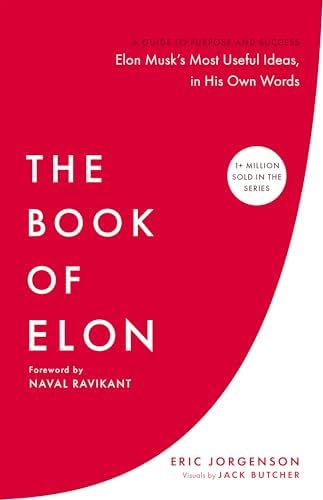
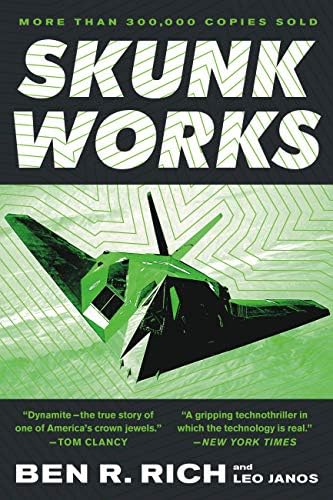
Drawing insights from The Book of Elon by Eric Jorgensen and referencing historical precedents like Lockheed's Skunkworks program detailed in Skunk Works, the essay argues that SpaceX's real innovation wasn't any single component but redesigning the entire aerospace stack around cost economics and rapid iteration cycles.
The 98% Problem: Why Atoms Are Cheap But Process Is Expensive
SpaceX discovered that rocket materials represent only 2% of typical prices, compared to 20-30% for cars - leading Elon to ask what rockets should cost versus what they do cost
The remaining 98% goes to supplier markup stacking (15-30% per tier), custom designs without manufacturing scale, and expendable hardware thrown away after each flight
Elon's 'idiot index' measures the ratio of actual part cost to raw materials cost - SpaceX built a vendor-quoted $120,000 actuator for $3,900 in-house
As explained in The Book of Elon, Musk questioned how Russians could build low-cost rockets when 'we should be able to build a cost-efficient launch vehicle' in America's competitive environment
Vertical Integration as Inevitable Strategy
SpaceX builds 80% of hardware internally after suppliers repeatedly quoted prices incompatible with cost targets - 'you cannot negotiate your way to a 10x cost reduction with suppliers who have profits baked in at every tier'
NASA study found SpaceX developed Falcon 9 for roughly $440 million - traditional contractors would have cost 3-10 times that amount
Vertical integration accelerates iteration - when engineers need bracket changes, manufacturing is in the same building using same CAD systems, enabling week-scale improvements
The strategy creates fixed cost concentration requiring high volume to be profitable - traditional 2-4 launches per year makes in-house manufacturing a liability
Platform Standardization: The Model T of Rockets
SpaceX bet that cost savings from standardization would exceed customization value - customers wanted low prices more than bespoke solutions
Falcon 9 uses identical components across all variants: same nine Merlin engines, same structure, same aluminum lithium alloy, same avionics and ground systems
Even Falcon Heavy is just three Falcon 9 first stages strapped together - a scaled variant from the same core, not a new vehicle
Building 40 identical Falcon 9s annually creates automotive-style learning curves impossible in custom aerospace - every anomaly feeds back to design teams
Reality as Validation: Inverting Traditional Engineering
Traditional aerospace follows 'measure twice, cut once' - Boeing 'utilizes well-established systems engineering methodology targeted at initial investment in engineering studies prior to building and testing'
SpaceX inverted this approach: 'You can't think your way to perfect solutions for problems you don't fully understand' - complex systems have emergent behaviors only visible when assembled
Elon's development philosophy: 'Push the envelope such that it blows up' - if vehicles don't fail, you haven't learned where the limits are
SpaceX runs different risk profiles simultaneously: Dragon (crew, never fail), Falcon 9 (ascent can't fail, landing attempts allowed to), Starship (development, failure instrumental)
Hardware-Rich Iteration and High Production Rates
Elon's principle: 'A high production rate solves many ills' - more iterations with shorter time between attempts drives faster learning
SpaceX builds many cheaper prototypes rather than one polished version they're afraid to break - leading to design decisions like using weldable stainless steel over expensive carbon fiber
Historical precedent from Skunk Works: P-80 fighter went concept to test flight in five months, SR-71 Blackbird went idea to rollout in four years and remains fastest manned plane
The system reinforces itself: first principles reduce complexity, cheaper prototypes enable more builds, more prototypes enable faster iteration and more failures for data
Cultural Memes That Power the System
Five core memes spread through SpaceX: tip of the spear focus, push through roadblocks, scrappiness over bureaucracy, question all requirements, treat everything as learning
Elon's requirement deletion rule: 'If you are not adding back at least 10% of the requirements you deleted, you aren't deleting enough'
Direct technical engagement bypasses organizational filters - Elon spends 50% of time talking directly to engineers, not VPs summarizing engineering work
SpaceX published 'How Not to Land an Orbital Rocket' compilation videos of spectacular crashes - signaling that visible failure is acceptable if lessons are extracted
The Self-Reinforcing System and Future Impact
The real moat isn't any single tactic but that tactics form an integrated system - copy one without others and it breaks down
SpaceX Foundation will document this system's development through over 100 company dispatches from 2003-2013, starting with Tom Mueller building rocket engines in his garage
The cultural memes are spreading as SpaceX-trained engineers move to space startups, defense tech, manufacturing automation, and energy companies
Key lesson distilled: 'How fast are your feedback loops? How fast can you get to reality?' - treating reality as teacher and getting to class as often as possible
These notes may contain occasional inaccuracies. Learn how podbrain notes are made
More in Finance & Business

The Biggest Pivot In AI History Is Happening Right Now | Jordi Visser
Jun 20, 2026
How Substack Creators Are Covering This Strange Markets Era
Jun 20, 2026
#422 Joseph Pulitzer
Jun 20, 2026
World's First Trillionaire, Anthropic Fable Banned, The New Oligarchs, Iran Peace Deal
Jun 19, 2026Anthropic's Co-Founder and Top Economist on Doing Research at the AI Frontier
Jun 19, 2026
.svg)