
How Jensen Works
The episode features insights from The Nvidia Way by Tay Kim, focusing exclusively on Jensen Huang's operational philosophy and management principles. Jensen is the longest-running founder-CEO of a tech company globally, with over three...

Episode


- 01
"If you're not spending 90% of your time teaching, you're not doing your job" - Jim Senegal's maxim that Jensen embodies through constant employee education
- 02
Jensen maintains 60 direct reports with no one-on-ones, creating a flat organization that fights slow decision-making and political infighting
- 03
"Second place is the first loser" - Jensen's unapologetic stance on winning, paired with public criticism so entire organization learns from mistakes
- 04
Speed of light principle: work contained only by laws of physics, with zero delays, queues, or downtime as theoretical maximum
- 05
Top five emails give Jensen unfiltered information from company edge - he reads 100 daily to intercept weak signals like early AI trends
- 06
"I look in the mirror every morning and say, you suck" - Jensen's habit of self-criticism that tortured himself and company into greatness
- 07
CUDA investment from 2002-2008 cost company 10% gross margin drop during financial crisis, but created trillion-dollar AI positioning two decades later
Get the latest ideas from Founders Podcast.
Plus the best new takeaways about education from other top podcasts — read in minutes, not hours.
By continuing, you agree to podbrain's Terms and Privacy Policy.
These notes may contain occasional inaccuracies. Learn how podbrain notes are made
The episode features insights from The Nvidia Way by Tay Kim, focusing exclusively on Jensen Huang's operational philosophy and management principles. Jensen is the longest-running founder-CEO of a tech company globally, with over three decades building NVIDIA into a multi-trillion dollar company.
The analysis strips away biographical details to concentrate on 20 specific ideas Jensen uses to run his company, from his teaching methodology and flat organizational structure to his extreme work ethic and strategic decision-making. These principles emerged from decades of experience and pain, refined through constant iteration.
Jensen's approach combines extreme self-confidence with relentless self-criticism, public accountability with direct communication, and long-term strategic bets with daily tactical execution. His management style emphasizes speed, transparency, and an obsessive focus on avoiding complacency.
The discussion covers Jensen's unique practices like whiteboard-centric meetings, top five emails for organizational intelligence, public criticism for collective learning, and his two-decade commitment to CUDA that positioned NVIDIA for the AI revolution despite significant short-term costs.
Professor Jensen: Teaching as Primary Leadership Function
"If you're not spending 90% of your time teaching, you're not doing your job" - Jim Senegal, founder of Costco, articulating principle Jensen embodies
Colleagues call Jensen Professor Jensen for his ability to explain complicated concepts on whiteboards in ways anyone can understand. Author Tay Kim describes becoming "his student, much like his employees do" through Jensen's persuasive and pervasive teaching style.
Jensen creates "Vulcan mind meld" effect where two unrelated NVIDIA employees who don't know each other will say identical things because he spends enormous time communicating overall strategy and vision to entire company
Whiteboard Doctrine: Forcing Rigor Through Visual Thinking
Jensen mandates whiteboard as primary communication form in meetings because it forces employees to demonstrate their thought process from scratch, making it immediately apparent when someone hasn't thought something through
"Whiteboarding forces people to be both rigorous and transparent. It requires them to start from scratch every time they step up to the board and therefore to lay out their thinking as thoroughly and clearly as possible. At the whiteboard, there is no place to hide."
Whiteboard represents both possibility and ephemerality - belief that successful idea, no matter how brilliant, must eventually be erased and new one must take its place, embodying Jensen's philosophy of constant reinvention as mandatory
Michael Dell's complementary philosophy: "Five years from now, we will have a new competitor in every business we're in, except they're going to be faster, more efficient, and more capable. They're going to put us out of business. The only way we prevent that is if we become that company."
Complacency Kills: Paranoia as Competitive Advantage
Jensen combines extreme self-confidence and charisma with inner voice saying he sucks, that nothing he ever does is good enough - impossible-to-satisfy internal standard shared by history's greatest founders
"When we were younger, we sucked at a lot of things. NVIDIA wasn't a great company on day one. We made it great over 31 years" - Jensen resisting overly positive accounts of startup period
After receiving kind introduction at Caltech commencement, Jensen responds: "Thanks for the kind introduction. It really makes me cringe listening to all of that. I hate hearing about myself."
Jensen summarizes first 15 years as CEO in third person: "If Jensen wasn't even involved in the first 15 years of our company, I would really like that. He wasn't proud of how the company was managed then, or his own naivete and lack of strategic thinking."
Andy Grove's mantra that Jensen embodies: "Success breeds complacency. Complacency breeds failure. Only the paranoid survive."
At each monthly company meeting in early days, Jensen would say "we're 30 days from going out of business" to maintain urgency
In 1997, when Intel was 860 times larger than NVIDIA in revenue, Jensen told employees: "Make no mistake. Intel is out to get us and put us out of business. They have told their employees and they have internalized this. Our job is to go kill them before they put us out of business. We need to kill them."
Steve Jobs on avoiding complacency: "If you do something and it turns out pretty good, then you should just go do something else wonderful and not dwell on it for too long. Just figure out what's next."
Flat Organization: 60 Direct Reports, Zero One-on-Ones
Jensen maintains 60 direct reports and refuses to do one-on-one meetings, deliberately designing flat structure when company was small to avoid bureaucracy and politics that plague larger organizations
"I wanted to create a company that naturally attracts amazing people" - Jensen explaining flat structure weeds out lower performers unaccustomed to thinking for themselves and acting without being told what to do
Jeff Bezos articulating same principle: "Why would great people stay in an organization where they can't get things done?" Flat structure fights danger of slow decision-making.
Jensen compares managing 60 direct reports to future of AI agents: "I have 60 direct reports. The reason they're on my e-staff is because they're world-class at what they do and they do it better than I do, much better than I do. I have no trouble interacting with them, prompt engineering them, programming them."
When new board members recommended hiring COO to reduce administrative burden, Jensen replied: "No, thanks." He steadfastly refuses to change management philosophy.
"The company's organization is like a race car, it has to be a machine. Jensen created a company he could manage directly" - organization designed to fit his specific capabilities and style
"By having a lot of direct reports, not having one-on-ones, we made the company flat and information travels quickly. That algorithm was well conceived. You want a company that's as large as necessary to do the job, but to be as small as possible and not bogged down by over-management and process."
Public Criticism: Learning from Single Person's Mistake
Jensen rejects common "praise publicly, criticize privately" approach, instead criticizing publicly so entire organization can learn from single person's mistake
"Over the years, I realized what was happening and how people protect their turf and they protect their ideas. I created a much flatter organization. I just say it out loud. I've got no trouble calling people out."
After poor chip execution, Jensen confronted engineers at all-company meeting: "Is this the piece of shit that you intended to build? The architects did a shitty job putting the product together. How could you not see the issue before it happened? Someone should have raised their hand and said, Hey, we have a design issue here."
Jensen invited Best Buy executive to speak to employees about NV30's poor performance and customer complaints. When executive finished, Jensen agreed: "He's right. This is crap."
Johnny Ive recounting Steve Jobs' similar philosophy: "I asked Steve, could we not moderate the things we said a little bit? Because I care about the team. Steve said, 'No, Johnny, you're just really vain. You just want people to like you. I thought you held the work up as the most important, not how you believe you were perceived by other people.' I was terribly cross because I knew he was right."
"I give feedback in front of everybody. Feedback is learning. For what reason are you the only one who should learn? We should all learn from that opportunity. I don't take people aside. We are not optimizing for not embarrassing somebody. We're optimizing for the company learning from our mistakes."
Tortured Into Greatness: Self-Criticism as Foundation
"I don't like giving up on people. I'd rather torture them into greatness" - Jensen sees praise as distraction and looking back on past accomplishments as deadliest sin
Executive recounts pivotal moment: "We had done a fantastic job. We just blew the doors off the quarter. And Jensen stood up in front of us and said, I look in the mirror every morning and say, you suck." Executive was struck by how someone so manifestly successful could maintain this mindset.
At Caltech commencement: "I hope you will see setbacks as new opportunities. Your pain and suffering will strengthen your character, your resilience, and agility, and they are the ultimate superpowers."
"Of all the things that I value most about my abilities, intelligence is not top of that list. My ability to endure pain and suffering, my ability to work on something for a very, very long period of time, my ability to handle setbacks and see the opportunity in them - that's my superpower."
At Stanford: "I think one of the great advantages is I have very low expectations. Most Stanford graduates have very high expectations. People with high expectations have very low resilience. And resilience matters in success. I don't know how to teach it to you, except that I hope suffering happens to you."
"To this day, I use the phrase pain and suffering inside of our company with great glee. I mean that in a happy way because you want to refine the character of your company. You want greatness out of them. Greatness is not intelligence. Greatness comes from character, and character is not formed out of smart people. Character is formed out of people who suffered."
Speed of Light: Physics as Only Constraint
Jensen insists all employees work at speed of light - work contained only by laws of physics, not organizational friction or bureaucracy
Each project must be broken down into component tasks with target completion time assuming no delays, no queues, no downtime - setting theoretical maximum that's physically impossible to exceed
Jensen wouldn't let employees think about what was likely to work or what they could reasonably achieve - only cared about what would be possible with maximum effort and minimum wasted time
Philosophy designed to prevent "internal rot" observed at other companies, serving as another guard against complacency taking root
Unapologetically Extreme: Relentless Work Ethic
"No place in company headquarters was safe from a drive-by grilling from Jensen" - including confronting employee at urinal to ask what he was working on, causing panic about appearing unproductive
"There may be people that are smarter than me, but no one is ever going to work harder than me" - Jensen on his competitive advantage
Larry Ellison describing Bill Gates in terms that apply to Jensen: "There are a lot of people in the world smarter than Bill Gates. There are very few people in the world that have his focus and endurance. He is utterly relentless. He is indefatigable. He is absolutely focused and he wants it all."
When employees griped about long work hours, Jensen's response: "People who train for the Olympics grumble about training early in the morning, too." Long hours were necessary prerequisite for excellence.
"The first time we came in second place, Jensen sternly told me, second place is the first loser. I realized I'm working for a boss who believes that we have to win at everything."
When recruiting chief engineer from Silicon Graphics, Jensen's direct approach: "John, you should really think about coming to our company because ultimately I'm going to put SGI out of business."
"You have to allow yourself to be obsessed with your work. I work every day. There's not a day that goes by that I don't work. If I'm not working, I'm thinking about working. Working is relaxing for me."
"The secret to his company's success is nothing more than sheer will" - Jensen looking directly into author's eyes
Top Five Emails: Information from the Edge
Jensen asks employees at every level to send email detailing top five things they're working on and recent observations in markets, including customer pain points, competitor activities, technology developments, potential project delays
Ideal top five email is five bullet points where first word is action word like finalize, build, or secure. Each department tags emails by topic in subject line for easy keyword searching.
Jensen reads about 100 top five emails daily to get snapshot of what's happening within company. "It's easy to pick up on the strong signals" through this process.
"Strategy isn't what I say, it's what they do. So it's really important that I understand what everybody else is doing" - Jensen explaining why he reads these emails
Top five emails became Jensen's preferred method of flattening hierarchy - he doesn't want information that's made its way through layers of management, he wants "information from the edge"
Jensen looking for next zero billion dollar market through these emails - frontier that hasn't been explored because it barely exists but could one day be huge. Weak signals about machine learning kept appearing in emails years before AI boom.
"I drink a scotch and I do emails" - Jensen describing reading top five emails as activity he does for fun
Communication Style: Blunt, Concise, Direct
Jensen's emails are "short and sweet, like a haiku" - similar to Napoleon who "could issue orders of a few sentences which clearly expressed his intentions and required little time to issue and to understand"
Steve Jobs shared this communication philosophy. From Creative Selection: "Steve was always easy to understand. He would either approve a demo or request to see something different next time. Whenever Steve reviewed a demo, he would say, often with highly detailed specificity, what he wanted to happen next."
Author of Creative Selection reflects: "I chuckled to myself over how much time I've spent thinking about this iPad demo and how much Steve taught me in one four-sentence paragraph" - world-class communication gets point across memorably in minimal words
When employee starts rambling, Jensen says "Lua" - warning sign his patience is growing thin, meaning: Listen to the question, Understand the question, Answer the question. Everyone who works for Jensen has heard Lua.
Mission is Boss and Pilot in Command
"The concept of the mission is the boss makes a lot of sense because ultimately we're here to realize a particular mission, not in service of some organization" - Jensen making mission itself the ultimate authority
Jensen starts every new project by appointing pilot in command who reports directly to him. "We always have a pilot in command for every project. Whenever Jensen talks about any project, he always wants the name. Nobody can hide behind such and such team is working on that."
Elon Musk's algorithm first commandment mirrors this: "Question every requirement, each should come with the name of the person who made it. You should never accept that a requirement came from a department. You need to know the name of the real person who made that requirement."
Jensen organizes employees into groups centralized by function (sales, engineering, operations) treated as general pool of talent, not divided by business units. "We take the people that we have and we're able to redirect them into a new mission."
Strategy is Action, Not Words or Five-Year Plans
"Strategy is not words. Strategy is actions. We don't do a periodic planning system. The reason for that is because the world is a living, breathing organism. We just plan continuously. There's no five-year plan."
Henry Singleton, whom Charlie Munger called smartest person he ever met, had identical philosophy: "I know a lot of people have very definitive plans, but we're subject to a great many forces. My plan is to stay flexible. My only plan is to keep coming to work every day. I like to steer the boat each day rather than plan way into the future."
Michael Bloomberg in autobiography: "Life works the following way. Daily, you're presented with many small and surprising opportunities. To succeed, you must string together many small incremental advances rather than counting on hitting the lottery jackpot once. Constantly enhance your skills, put in as many hours as possible, and make tactical plans for the next few steps."
Bloomberg continues: "Don't devise a five-year plan or a great leap forward. Central planning didn't work for Stalin or Mao, and it won't work for an entrepreneur either."
Ship the Whole Cow: Defending Low End of Market
The Innovator's Dilemma is one of Jensen's favorite books - taught him threat often comes from low end of market, leading to defensive strategy
"We build Ferraris. All of our chips were designed for the high end, the best performance. I don't want to let someone come in and be the price leader" - Jensen recognizing vulnerability
NVIDIA stopped throwing away parts that failed quality tests - repackaged them into less capable, cheaper versions of mainline products, making something out of nothing from rejected parts generating no revenue
Strategy dubbed "ship the whole cow" - reference to how butchers use every part of animal. NVIDIA could price low-cost chips down so much that competitors would be forced to sell at loss.
Go to School on Everybody: Relentless Learning
Jensen shows up at academic conference on machine learning and neuroscience to absorb recent AI developments himself rather than assigning someone to take notes - wants to be deeply involved
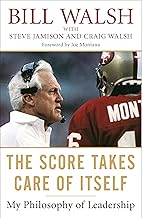
Mitch Rales, co-founder of $150 billion Danaher, takes detailed notes at small conference despite being more successful than anyone else present - friend asks why, realizes Champions behave like champions before they're champions from Bill Walsh's The Score Takes Care of Itself
Jensen is in the details - at party with 50 attendees, greets Peter Young: "You're Peter Young. You've been here for about a year before you were at Sony PlayStation and 3DFX prior to that." Had similar biographical recall for all 50 attendees.
Walt Disney: "If we lose the details, we lose it all" - principle Jensen embodies by managing company from the details up
Create Markets, Don't Fight for Share
"We do not have a culture of just going after market share. We would rather create the market" - Jensen rejecting commodity product strategy subject to downward pricing pressure
Jensen believes in doing things other people can't do, bringing unique values to marketplace through cutting-edge, revolutionary work that attracts best people
At Caltech commencement, Jensen explained robotics decision: "We decided to build something where we are sure there are no customers and everybody thinks we're crazy. Where there are no customers, there are also no competitors. That is a zero billion dollar market."
Strategy mirrors Edwin Land's approach with instant photography - when Land targeted instant photography market, there were no customers and therefore no competitors because he invented the market, allowing him to build monopoly with pricing power
"We are going to be the only guy where ASPs [average selling prices] go up over time, when everyone else's ASPs will go down" - Jensen explaining NVIDIA's unique positioning as non-commodity company
Choke You With Gold: Rewarding Top Contributors
Medici family recruiting sculptor to Florence concluded letter with: "Come, I will choke you with gold" - Jensen adopts similar philosophy for attracting and retaining best people
"Jensen looks at his stock like his blood. He pours over the stock allocation reports" - managers can refer employees for special consultations where Jensen reviews top contributors
When special grant approved, employee receives email with subject line: "Special grant authorizing the RSU grant in recognition of your extraordinary contributions" with clear rationale behind award
Jensen can reach down into organization at any time and award stock directly without waiting for annual compensation cycle - ensures people doing great work feel appreciated in the moment, another sign of his interest in every aspect and level of company
Highest Priority First: Ruthless Focus
"I have a very clear priority list, and I start from the highest priority work first. Before I even get to work, my day is already a success. I've already completed my most important work and can focus on the most important activity at all times."
Larry Ellison shares belief in relentless focus on most important goal: "My view is that there are only a handful of things that are really important, and you should devote all your time to those and forget everything else. If you try to do all thousand things, answer all thousand phone calls, you will dilute your efforts in those areas that are really essential."
Jensen tells others to focus on most important activity at all times and not be beholden to schedule - prioritization over time management
Swarm Your Greatest Opportunity: Two-Decade AI Bet
First reference to using GPUs for non-graphical purposes appeared in 2002 research paper on using computers to simulate molecular dynamics - increasing number of researchers were hacking GPUs for non-graphics applications with significant speed improvements
Jensen sees this as way to expand market for products - hires researcher who discovered this, makes it priority to find more non-graphical applications. Principle: anytime you make something easier for people to do, the market expands.
NVIDIA creates CUDA (Compute Unified Device Architecture) programming model to make GPUs easier to program for scientists - Jensen believed it would expand NVIDIA's reach into every corner of tech industry
Jensen values most his "ability to work on something for a very, very long period of time" - evident in 2002 to present AI journey spanning two decades
"The more people who had CUDA in their hands, the faster technology would establish itself as a standard. We should push this everywhere and make it a foundational technology."
CUDA investment from 2007-2008 was extremely expensive - company's gross margin fell from 45% to 35% while simultaneously facing destroyed consumer demand from global financial crisis
When investors demanded strategic course correction, Jensen refused: "I believe in CUDA. We are convinced that accelerated computing would solve problems that normal computers couldn't. We had to make that sacrifice. I had a deep belief in its potential."
NVIDIA educated the market when developers didn't know what to do with CUDA - chief scientist offered schools CUDA-capable machines if they committed to teaching class, gave 100+ talks in one year, taught class himself at University of Illinois
Chief scientist wrote textbook when none existed - sold tens of thousands of copies, translated into several languages, used by hundreds of schools, creating major inflection point in attracting attention and talent
Intel used identical market education strategy when inventing microprocessor - "Intel discovered marketplace wasn't just confused by concept of microprocessor. Market had to be educated. At one point, Intel was conducting more seminars and workshops than local junior college."
Several key lieutenants were against investing more in deep learning, believing it wouldn't be significant. Jensen overruled them: "Deep learning is going to be really big. We should go all in on it."
At company all-hands meeting, Jensen announced strategic shift: "We need to consider this work our highest priority. AI was going to be more important than anything else they could possibly be doing."
Within decade of this decision, Jensen predicted AI would create "the largest total addressable market expansion of software and hardware that we've seen in decades"
Jensen's actions described as "construction of competitive moat" though he prefers term "strong, self-reinforcing network" - believing you have moat can lead to complacency
NVIDIA made general-purpose GPU representing first major leap forward in computational acceleration since invention of CPU - programmable CUDA layer was easy to use, opening wide range of functions across scientific, technical, industrial sectors
As more people learned CUDA, demand for GPUs increased - Jensen's strategic brilliance ensured competitors would have difficulties replicating this self-reinforcing network effect
No Shortcuts: Adversity as Best Teacher
Book's final paragraph: "There are no shortcuts. The best way to be successful is to take the more difficult route. And the best teacher of all is adversity."
"It is why Jensen still keeps going at a pace that would see most other people burn out. It is why Jensen still says to this day and without any trace of hesitation or irony or self-doubt, I love NVIDIA."



These notes may contain occasional inaccuracies. Learn how podbrain notes are made
More in Finance & Business

The Biggest Pivot In AI History Is Happening Right Now | Jordi Visser
Jun 20, 2026
How Substack Creators Are Covering This Strange Markets Era
Jun 20, 2026
#422 Joseph Pulitzer
Jun 20, 2026
World's First Trillionaire, Anthropic Fable Banned, The New Oligarchs, Iran Peace Deal
Jun 19, 2026Anthropic's Co-Founder and Top Economist on Doing Research at the AI Frontier
Jun 19, 2026


.svg)