
Michael Nielsen – How science actually progresses
This conversation features Michael Nielsen, a quantum computing pioneer who wrote the definitive textbook in the field, co-founded the open science movement, and is currently a research fellow at the Astera Institute working on a book about religion, science, and technology.

Episode


- 01
Michelson-Morley experiment wasn't trying to disprove the ether - it was testing different ether theories, and Michelson believed in ether until his death in 1929
- 02
Einstein may not have even known about Michelson-Morley when developing special relativity - the connection is largely a retrospective narrative construction
- 03
Scientific progress often happens faster than experimental verification loops - heliocentrism was accepted centuries before stellar parallax was measured in 1838
- 04
The Methodology of Scientific Research Programmes shows how theories persist despite apparent falsification through 85-year verification loops like Prout's atomic weight hypothesis
- 05
AlphaFold's success is primarily about the billions spent on protein structure data acquisition, with AI being 'a tiny fraction of the entire investment'
- 06
Different alien civilizations would likely develop completely different technology stacks due to the vast unexplored branches of the scientific 'tech tree'
- 07
The scientific community adopted special relativity's interpretation before the 1940s muon experiments provided decisive experimental evidence supporting time dilation
- 08
Quantum Computation and Quantum Information emerged from the convergence of personal computing becoming salient and single quantum state manipulation becoming possible around 1980
Get the latest ideas from Dwarkesh Patel.
Plus the best new takeaways about science from other top podcasts — read in minutes, not hours.
By continuing, you agree to podbrain's Terms and Privacy Policy.
These notes may contain occasional inaccuracies. Learn how podbrain notes are made
This conversation features Michael Nielsen, a quantum computing pioneer who wrote the definitive textbook in the field, co-founded the open science movement, and is currently a research fellow at the Astera Institute working on a book about religion, science, and technology.
The discussion explores how we recognize scientific progress, particularly relevant for AI systems attempting to automate scientific discovery. Nielsen argues that the standard narratives about scientific breakthroughs often misrepresent the actual historical processes.
Using examples from the Michelson-Morley experiment to Darwin's theory of evolution, the conversation examines why scientific communities often adopt correct theories before experimental verification, the role of long verification loops, and what this means for AI-accelerated science.
The discussion also covers Nielsen's work on quantum computing, the open science movement, and broader questions about learning, creativity, and the structure of scientific knowledge.
The Michelson-Morley Myth and Scientific Narratives
The popular story that Michelson-Morley disproved the ether and led to Einstein's special relativity is historically inaccurate - they were testing different ether theories, not trying to disprove ether entirely.
Einstein stated later in life he wasn't sure if he knew about the Michelson-Morley paper when developing special relativity, and there's evidence it wasn't dispositive for his thinking.
Michelson continued believing in ether until his death around 1929, conducting experiments into the 1920s to detect ether wind effects at different altitudes.
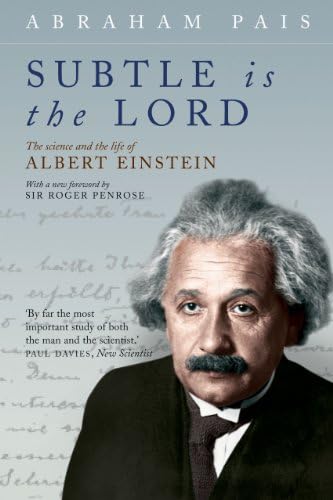
Subtle is the Lord by Abraham Pais reveals how the real history differs from simplified scientific method narratives about falsification and theory replacement.
Long Verification Loops and Scientific Progress
Scientific communities often adopt correct theories before experimental verification - heliocentrism was accepted centuries before stellar parallax was measured in 1838.
The Methodology of Scientific Research Programmes by Imre Lakatos documents how Prout's 1815 hypothesis about atomic weights faced 85 years of hostile verification loops before isotopes were discovered.
The 1940s muon experiments provided the first decisive evidence for time dilation, decades after the scientific community had adopted special relativity over Lorentz's ether interpretation.
Darwin's Origin of Species required extensive evidence compilation rather than a single decisive experiment, unlike Newton's Principia Mathematica which could be validated through orbital mechanics and tides.
Why Darwin Took So Long When Newton Seemed Easier
Natural selection required specific historical conditions: Charles Lyell's 1830s discovery of deep geological time, paleontology showing ancient life, and biogeography from colonial voyages.
The simultaneous independent discovery by Alfred Wallace and Darwin suggests the necessary building blocks had finally converged in the 1850s-60s.
Newton benefited from tight verification loops - his gravity theory explained terrestrial motion, planetary orbits, and tides as 'three very different disconnected phenomena all being explained by this one set of ideas.'
Newton the Last of the Magicians by Keynes reveals Newton applied the same methodical approach to alchemy and theology as to physics, suggesting aesthetic biases drove his scientific breakthroughs.
AI, AlphaFold, and the Limits of Automated Science
AlphaFold's success is 'principally a story of data acquisition' - billions spent on X-ray diffraction, NMR, and CryoEM to obtain 180,000 protein structures, with AI being 'a tiny fraction of the entire investment.'
AlphaFold represents a new type of scientific object - not a simple explanatory theory like general relativity, but a 100-million parameter model that might contain 'lots of little explanations inside it.'
The challenge for AI in science is that 'definitionally, there's no crank you can turn' when existing methods don't apply - progress requires 'a lot of people trying different ideas.'
Even in coding, where AI shows dramatic progress, programmers report being 'bottlenecked on having interesting design ideas' rather than code production, suggesting verification loops alone are insufficient.
The Quantum Computing Origin Story
Quantum Computation and Quantum Information emerged from the convergence of two historically contingent factors around 1980: personal computers making computation salient and ion traps enabling single quantum state manipulation.
Von Neumann could have invented quantum computing in the 1950s but lacked these contextual conditions - 'there's just no conditions don't exist for it.'
Nielsen discovered the field through his professor Jared Milburn's curated paper stack including Deutsch and Feynman's foundational works, illustrating how 'taste' and mentorship shape scientific careers.
Deutsch's 1985 paper contained 'very provocative ideas' about universal quantum simulation and connections to the meaning of the wave function - fundamental questions 'still not agreed upon amongst physicists.'
The Infinite Tech Tree and Alien Civilizations
Different alien civilizations would likely develop completely different technology stacks because 'the tech tree is probably much larger than we realize' with most branches never explored.
Computer science began in the 1930s with Church and Turing establishing 'what the theory of everything was,' yet 90 years later we're still discovering fundamental ideas like public key cryptography.
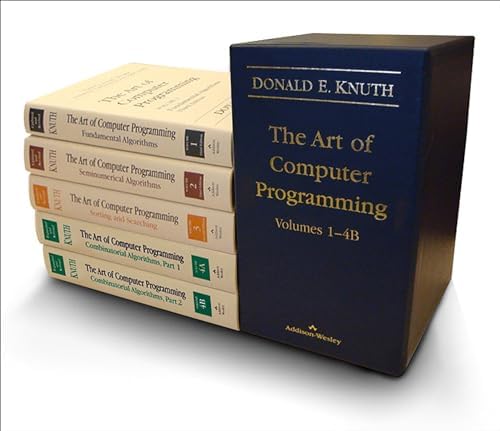
The Art of Computer Programming by Knuth illustrates this growth - when he started, a mathematician dismissed computer science for lacking 'a thousand deep theorems,' but decades later clearly has them.
This tech tree diversity creates 'humongous gains to trade from adjacent colonies' and makes 'friendliness much more rewarding' between civilizations, fundamentally altering cooperation dynamics.
Learning, Creativity, and the Problem of Depth
Nielsen advocates balancing 'routine stuff' that should be done quickly with 'high variance stuff where you actually need to be willing to take a lot of time' and explore uncertain outcomes.
The key insight about learning is that 'spending time stuck is incredibly important' - essays that took three months are remembered 15 years later, while those written in days are quickly forgotten.
AI tools can be seductive because 'instead of doing some intermediate thinking, there's always a next question you can ask a chatbot,' potentially substituting for the demanding work that creates real understanding.
The challenge is distinguishing between learning systems versus understanding fundamentals - like Alan Kay's critique that Linux is 'just a great big ball of mud' rather than transferable computer science knowledge.



These notes may contain occasional inaccuracies. Learn how podbrain notes are made
More in Science & Tech

The 5-Minute AI Weekly Recap: Realignment Week
Jun 20, 2026
Why Kalshi's John Wang Says Perps Are 'the Most Pure Trading Instrument'
Jun 19, 2026Your Company Doesn’t Need an AI Strategy
Jun 19, 2026
The data black hole at the center of AI
Jun 19, 2026
The New Rules of Media | Marc Andreessen & Ben Horowitz
Jun 19, 2026
.svg)