
How cosplaying Ancient Rome led to the scientific revolution
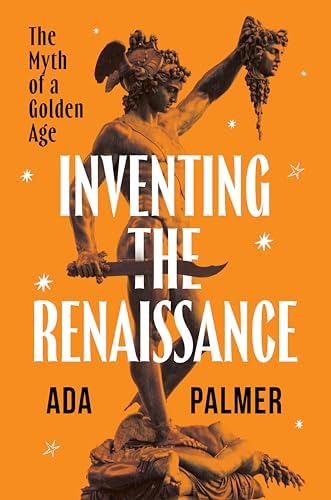
Ada Palmer, Renaissance historian, novelist, and composer at the University of Chicago, discusses her book Inventing the Renaissance, which examines how 14th-century humanists deliberately created their era through a systematic campaign to rediscover and revive ancient Roman...


- 01
Inventing the Renaissance reveals how Petrarch's plan to revive Roman virtues through classical education ultimately failed but created unintended consequences leading to modern science
- 02
Florence eliminated its nobility through massacre and established a unique merchant republic ruled by nine randomly selected guild members locked in a tower for consensus governance
- 03
The printing press took 40 years to become economically sustainable, requiring distribution networks like Venice's hub system and book fairs to reach markets
- 04
Machiavelli wrote The Prince in exile, dedicating it to the very Medici family that banished him because he would only serve Florence regardless of regime
- 05
Paper technology existed in Europe for 400 years before the first state document was written on it, showing how slowly new technologies gain institutional trust
- 06
The Inquisition executed only one person for science-related ideas while conducting hundreds of thousands of trials for religious and ethnic persecution
- 07
Renaissance libraries grew from 600 books at the University of Paris to 30,000 people reading Lucretius by 1600, enabling mass intellectual discourse
- 08
Cosimo de' Medici controlled Florence's lottery system by employing a third of the city, statistically guaranteeing his supporters would form governing pluralities
Get the latest ideas from Dwarkesh Patel.
Plus the best new takeaways from other top podcasts — read in minutes, not hours.
By continuing, you agree to podbrain's Terms and Privacy Policy.
These notes may contain occasional inaccuracies. Learn how podbrain notes are made
Ada Palmer, Renaissance historian, novelist, and composer at the University of Chicago, discusses her book Inventing the Renaissance, which examines how 14th-century humanists deliberately created their era through a systematic campaign to rediscover and revive ancient Roman culture.
The conversation explores how Italian city-republics like Florence, Venice, and Genoa emerged after Rome's fall, with Florence uniquely eliminating its nobility to create a merchant-ruled republic. Palmer traces the intellectual journey from Petrarch's idealistic vision of reviving Roman virtues through classical education to Machiavelli's empirical political science.
The discussion covers the technological revolution of printing, from Gutenberg's initial bankruptcy to the development of distribution networks that enabled rapid information spread. Palmer connects these changes to broader patterns of how information revolutions unfold over decades, drawing parallels between the printing press era and today's digital transformation.
The conversation concludes with insights about censorship patterns throughout history, showing how authorities consistently focus on the wrong targets while missing truly revolutionary ideas, and examines why Italy, despite technological advantages, didn't experience the Industrial Revolution.
Italian City-Republics: Survival Through Self-Governance
When the Roman Empire dissolved, larger, wealthier towns with good agricultural land could support themselves and establish republican governments, while weaker towns either fell to local strongmen or emptied out as people sought protection from noble villas.
Italy's superior agriculture enabled more cities to sustain themselves as independent republics compared to other regions of Europe.
Florence uniquely eliminated its nobility through massacre, forcing surviving noble families to renounce their titles and become commoners, creating a merchant-ruled republic unprecedented in diplomatic circles.
Petrarch's Vision: Reviving Roman Virtue Through Education
Petrarch, surviving the Black Death and witnessing Italy's civil wars, believed the solution was recreating the educational environment that produced virtuous Roman leaders like Brutus, who executed his own sons for treason against the state.
The plan involved building libraries filled with what ancient Romans read - Plato, Homer, Cicero - and surrounding young princes with these values through tutors like Marsilio Ficino.
Upstart rulers embraced this for propaganda, using classical trappings to legitimize their power: "if I can have Latin and Greek and quote Cicero and seem like the ancients, people will take us seriously and respect us" - Ada
The Medici transformed from "extra scummy merchant scum" into diplomatic powerhouses by creating spaces that awed foreign ambassadors with bronze statues, Roman architecture, and children reciting Greek poetry about Plato's three parts of the soul.
Machiavelli's Empirical Turn: From Virtue to Political Science
After watching princes raised on Cicero and Plato create worse wars than ever before, Machiavelli observed that virtuous rulers like Guidobaldo de Montefeltro lost everything while terrible people like Cesare Borgia succeeded.
The Prince represents Machiavelli's proposal to use history as a casebook of examples rather than absorbing virtue osmotically: "We observe historical examples... put those examples side by side and see what decisions the commanders made to try to figure out which one worked better" - Ada
Machiavelli wrote The Prince in exile, dedicating it to the Medici family that had banished him because "he will only work for Florence" and believed regime stability prevented civil violence that "sheds blood."
His famous letter describes entering his library in court robes "to hold commerce with the ancients," showing his deep love for classical learning despite proposing its different application.
Florence's Unique Government: Lottery-Based Merchant Rule
Florence operated through sortition, randomly selecting nine guild members for two-month terms, locked in a tower to prevent bribery, requiring consensus rather than majority votes for all decisions.
The system was "tyrant-proof because you need consensus of nine randomly selected guys to decide to do anything," but proved vulnerable to economic manipulation.
Cosimo de' Medici controlled the system by employing a third of the city: "if you tell all your guys, I want this policy... when the plurality on a random council all have a plan and it's your plan, you effectively control the city."
When bad lottery luck led to his arrest in 1432, Cosimo bribed guards with $300,000 and $700,000 respectively, later writing they were "the two most foolish men he'd ever met" because he would have paid tens of millions.
The Printing Revolution: From Bankruptcy to Information Networks
Gutenberg and his apprentices went bankrupt because printed books were "mass-produced commodities in a world that does not have distribution networks for mass-produced commodities."
Success came when Gutenberg's bankrupt apprentices reached Venice, the "airport hub of the Mediterranean," where ship captains could distribute books to 30 different cities.
Book fairs like Frankfurt developed as distribution mechanisms where "printers will spend all year printing a book... trade and then they go home to their town with five copies each of 200 books instead of a thousand copies of one book."
The printing revolution unfolded over 150 years with successive applications - pamphlets in the 1510s enabling the Reformation, newspapers, then magazines as fact-checking responses to "fake news" problems.
The Economics of Knowledge: From Parchment to Paper
Medieval books cost "as much as a house" because parchment required dead sheep - "if you think of the price of a head of lettuce and the price of a leather jacket, you're understanding the difference between a sheet of papyrus and writing on a dead sheep."
Europe lost access to cheap papyrus when Rome fell, forcing a 400-year "famine of cheap writing surface" that created an unintentional censorship as monks could only save 100 books out of 1,000 crumbling papyri.
Paper technology existed in Europe for 400 years before the first state document was written on it, showing extreme institutional conservatism about new technologies.
Florence had 90% male literacy rates by the 12th century for merchant calculations, but "the difference between being literate and being book literate is different" - most had never read an actual book.
Scientific Revolution: From Libraries to Systematic Method
De Rerum Natura by Lucretius, rediscovered by Poggio, took 160 years to influence medicine: "When Poggio found it, there were two dozen people in the world who could read it. 100 years later, 30,000 people can read it."
Francis Bacon's "honeybee" metaphor distinguished true scientists from encyclopedists (ants) and theorists (spiders), defining scientists as those who gather from nature to "produce something sweet and useful for humankind."
Leonardo da Vinci "was not a scientist" because he wrote discoveries "in coded mirror writing so that nobody but him can possibly use it" - unlike scientists who share discoveries to advance civilization.
The systematic scientific method around 1600 created "deliberate anthropogenic progress" rather than random discovery, with Bacon promising "every human generation lives in a better condition than the past."
Censorship Patterns: Always Wrong About What Matters
The Inquisition executed only one person for science-related ideas while conducting "hundreds of thousands of trials for Judaizing" and religious persecution, showing consistent misplaced priorities.
During the Enlightenment, authorities worried more about "Jansenist treatises about the nature of the Trinity" than Voltaire or the Encyclopédie, even ceremonially burning Jansenist works instead of the banned encyclopedia.
Paradise Lost passed censorship despite Satan spouting "anti-monarchal rhetoric copied from revolutionary pamphlets," but censors demanded changes to "one line about astrology."
Pamphlets proved uncensorable because printers "worked in the information distribution industry" and "would find out before the Inquisition could possibly get there to arrest them," paralleling modern social media's resistance to control.




These notes may contain occasional inaccuracies. Learn how podbrain notes are made
More in Science & Tech

Is Reality Really Real? With Donald Hoffman
Jun 26, 2026
CEO-Led AI Gets 3X the ROI
Jun 25, 2026
Leslie Lamport on the Science of Distributed Systems
Jun 25, 2026
The Chopping Block: Is Strategy the Luna for Suits?, ETH Labs Shakeup & CME vs Perps
Jun 25, 2026
Marc Andreessen on AI, Technology, and the Future of Humanity
Jun 25, 2026.svg)