
Paul Gillingham on Why Mexico Stays Together
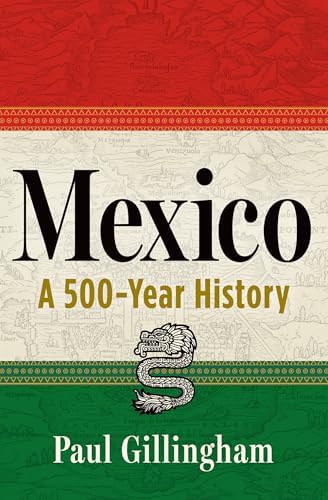
Tyler Cowen interviews Paul Gillingham, author of the new book Mexico A 500-Year History, which Cowen calls 'the single best introduction to the history of Mexico' and predicts will be one of the best nonfiction books of 2026. Gillingham is a British historian who grew up in...


- 01
Mexico A 500-Year History by Paul Gillingham is described as 'the single best introduction to the history of Mexico' and will be one of the best nonfiction books of 2026
- 02
Mexico's survival as a unified state after independence stems from 'a remarkable degree of hands-off government' and federalism built into the country's soul due to mountainous geography
- 03
The Mexican Revolution killed one in 10 Mexicans, creating immense war weariness that kept the army out of politics and maintained relative peace through the 20th century
- 04
Mexico achieved the world's steepest demographic transition, with population increasing 700% between 1910 and 2000, faster than anywhere else globally
- 05
Oaxaca produces disproportionate political leaders because mountains create 'fiercely independent, small cities' that train people to be good at politics through local autonomy
- 06
Modern violence in states like Michoacán combines production (meth, heroin), transshipment through ports like Lázaro Cárdenas, and mountains perfect for guerrilla warfare
- 07
Mexico's total fertility rate now sits below that of the United States due to successful 1970s-80s population control that kept Catholicism out of political life
- 08
The recent judicial reforms allowing elected judges are 'disastrous' because drug organizations can more easily get sympathetic judges elected than threaten appointed ones
Get the latest ideas from Conversations with Tyler.
Plus the best new takeaways about reading from other top podcasts — read in minutes, not hours.
By continuing, you agree to Podbrain's Terms and Privacy Policy.
These notes may contain occasional inaccuracies. Learn how Podbrain notes are made
Tyler Cowen interviews Paul Gillingham, author of the new book Mexico A 500-Year History, which Cowen calls 'the single best introduction to the history of Mexico' and predicts will be one of the best nonfiction books of 2026. Gillingham is a British historian who grew up in Ireland and specializes in Mexican political and social history.
The conversation spans Mexico's political geography from independence through the present, examining why Mexico held together as a territorial unit when other post-colonial superstates fragmented. They discuss the violence and pacification of various states, from Yucatan's caste wars to modern drug cartel territories.
Gillingham explains Mexico's unique demographic transition, economic development patterns, and the complex relationship between federalism and central authority. The discussion covers everything from the cargo system in indigenous villages to why certain states like Oaxaca produce exceptional political leaders.
They conclude with rapid-fire questions about Mexican culture, literature, and Gillingham's recommendations for understanding contemporary Mexico, including his praise for novels like La Muerte de Artemio Cruz and The Savage Detectives.
Why Mexico Survived When Other Post-Colonial States Fragmented
Mexico stands out among post-independence Americas because 'superstates' like Gran Colombia and United Provinces of Rio Plate 'fail within a decade,' while Mexico holds together despite losing Central America
The key factor is 'a remarkable degree of hands-off government' imposed by Mexico's mountainous geography, making 'federalism built into Mexico's soul' - Paul
Yucatan nearly split off during the 1840s caste wars but lacked 'an alternative capital' due to racial divisions between the white plantocracy in Merida and Maya populations
The Oaxaca Political Machine and Regional Autonomy
Both Benito Juarez and Porfirio Diaz came from Oaxaca, and 'at one stage under Diaz, something like two-thirds of the congressmen are actually effectively from Oaxaca' - Paul
Oaxaqueños excel at politics because Spanish rule 'flows around them' in the mountains, creating 'fiercely independent, small cities, counties' like 'New England democracy'
After independence, 'every village in Oaxaca says, We are now a county' with their own governments and elections, creating 'extraordinary democratic urge' that trains political talent
The cargo system, where indigenous leaders 'assume political office with absolutely zero payoff and at quite considerable cost,' brings 'the sort of brightest and best into office over and over again'
Mexico's Demographic Revolution and Population Control Success
Mexico had 'the greatest demographic transition in history' with population increasing '700%' between 1910 and 2000, 'steeper than anywhere in the world'
By the 1970s, Mexico implemented 'non-coercive population control' that became 'a global model' - the country 'hosted the global conference on this' and 'got a prize from the UN'
Success came from 'keeping Catholicism out of political life more than almost anywhere else' - unlike other Latin American countries where 'priests inveigh against the evils of contraception'
Women's education was crucial: by the end of the 1960s, '73%' of women were 'getting through the doors for those first three years' of primary school, enabling contraception uptake
The Mexican Revolution's Long Shadow and Stability
The revolution 'kills one in 10 Mexicans' creating 'immense war weariness' that gave leaders 'the absolute pragmatic imperative: whatever you do, keep the lid on'
Despite radical inequality, Mexico avoided military rule through 'unconventional but effective route to popular representation' where local groups could 'make enough of a fuss' to get their people elected
Cardenas's land redistribution in the 1930s gave peasants psychological benefits even when economically unsuccessful: 'every communal farm, ejido, has a medical office' providing healthcare access
Modern Violence and Drug Cartel Geography
Yucatan remains exceptionally peaceful because 'foreigners in Mexico have carte blanche' and tourism makes 'killing them bad business,' plus it's no longer a major 'trans-shipment route'
Michoacán became violent due to 'combination of production and transshipment' - the port of Lazaro Cardenas for precursors, highland production of heroin and meth, plus 'mountains made for guerrilla warfare'
Guerrero's violence stems from 'long tradition of drive for political independence' plus 'large Afro-Mexican population on the coast' and proximity to Mexico City making it 'threatening'
The recent judicial reforms allowing elected judges are 'disastrous' because 'it's a lot lower cost to get them elected than to threaten them' for drug organizations
Mexican Literature and Cultural Recommendations
La Muerte de Artemio Cruz (The Death of Artemio Cruz) is 'the great classic Mexican novel' for its 'real human complexity' showing a revolutionary's rise to wealth and spiritual emptiness
The Savage Detectives by Roberto Bolaño, though written by a Chilean, is 'very much a Mexican novel' with 'spot on' mockery of UNAM's faculty
Recent novels by Álvaro Enrigue stand out: Decencia as a modern version of Artemio Cruz, and Your Empires Have Been Dreams retelling the conquest 'as this glorified heist by a bunch of unfortunate thugs'
For the ideal Mexico education trip: 'Tijuana, Zacatecas' for baroque architecture, 'Aguas Calientes' during the annual feria, 'Jalapa in Veracruz' for untouristed quality, and 'San Cristobal las Casas' in Chiapas


These notes may contain occasional inaccuracies. Learn how Podbrain notes are made
More in Philosophy

It’s So Hard To Find | Stop Looking For This
Jul 13, 2026
12 Stoic Rules For A Better Life
Jul 12, 2026
Men Are Reading Less Fiction. That’s A Problem. | Steven Pressfield
Jul 11, 2026
Spielberg Just Revealed The Truth About Aliens (He Knows!)
Jun 25, 2026Which Of These Are You? | What's In Your Way Is The Way
Jun 25, 2026.svg)