
Donald S. Lopez Jr. on Buddhism
Tyler Cowen interviews Donald S. Lopez Jr., professor at the University of Michigan and widely regarded as the West's leading expert on Buddhism. Lopez is author of many books on Buddhism, co-editor of the Princeton Dictionary of Buddhism, and has a new book...


- 01
The Buddha is considered omniscient in Buddhist theology, knowing all past, present, and future, including that the next Buddha Maitreya won't appear for six billion years
- 02
Buddhism has no creator deity or God - karma operates as a natural ethical law where virtuous deeds lead to happiness and negative deeds to suffering
- 03
The Buddha had 32 physical marks including webbed fingers, a retractable penis, arms extending below his knees, and a tongue that could lick behind his ears
- 04
Buddhist monks are beggars (bhikshu means beggar) who cannot touch money or till soil, making Buddhism dependent on royal patronage that has largely disappeared
- 05
The Dalai Lama succession system is highly inefficient - after death, there's a 25-year interregnum while searching for and educating the reborn child
- 06
The Tibetan Book of the Dead was randomly named by American theosophist Walter Evans-Wentz, who never studied Buddhism seriously but influenced Western perceptions
- 07
Buddhism is declining globally due to loss of monarchical patronage, with monks predicting their own disappearance when yellow robes turn white
- 08
Thailand remains the wealthiest Buddhist nation because it avoided colonization while maintaining trade relationships and royal support for monasteries
Get the latest ideas from Conversations with Tyler.
Plus the best new takeaways from other top podcasts — read in minutes, not hours.
By continuing, you agree to Podbrain's Terms and Privacy Policy.
These notes may contain occasional inaccuracies. Learn how Podbrain notes are made
Tyler Cowen interviews Donald S. Lopez Jr., professor at the University of Michigan and widely regarded as the West's leading expert on Buddhism. Lopez is author of many books on Buddhism, co-editor of the Princeton Dictionary of Buddhism, and has a new book The Buddha, Biography of a Myth published in 2024.
The conversation explores fundamental questions about Buddhist theology, including the Buddha's omniscience, the nature of karma and reincarnation, and the absence of a creator deity. Lopez explains how Buddhism spread globally and why it's now declining in many traditional Buddhist countries.
They discuss the historical construction of Western understanding of Buddhism, from 19th-century European scholars to theosophical distortions like The Tibetan Book of the Dead. Lopez also covers the unique Tibetan institution of incarnate lamas, the succession of Dalai Lamas, and practical aspects of Buddhist monasticism.
The interview concludes with Lopez's personal journey from 1960s counterculture, influenced by works like Be Here Now, to becoming a serious Buddhist scholar through Sanskrit and Tibetan language study and a transformative year in an Indian monastery.
The Buddha's Omniscience and Six Billion Year Timeline
In Buddhist theology, the Buddha is completely omniscient, knowing all past, present, and future, able to read every being's mind and knowing all future Buddhas by name.
The next Buddha, Maitreya, will not appear for approximately six billion years according to Buddhist calculations using kalpas and aeons from both Pali and Sanskrit canons.
Buddhist time measures from the Buddha's death rather than birth, with different traditions placing his death anywhere from 544 BCE to 368 BCE - "an incredibly large range of time" - Lopez.
The Buddha's 32 Physical Marks and Death
The Buddha possessed 32 specific physical marks including webbed fingers and toes, a retractable penis, arms extending below his knees, and "a tongue that could lick behind his ears" - Lopez.
The Buddha likely died of dysentery after eating a meal from a low-caste blacksmith, though he had predicted his death three months earlier after relinquishing his life force.
Before dying, the Buddha told his attendant Ananda three times that "a Buddha can live for an Aeon or till the end of an Aeon if asked to do so," but Ananda failed to make the request.
Buddhism Without God: Karma as Natural Law
Buddhism has no creator deity - karma operates as a natural ethical law where "virtuous deeds lead to happiness in the future, either tomorrow or 100 lifetimes from now" - Lopez.
The cycle of rebirth has no beginning and continues forever until beings find the path out, with specific realms including gods, demigods, humans, animals, and elaborate hell systems.
Nirvana is not a place but "a state of extinction" - like a flame going out when the wood is consumed, with the Buddha's death representing complete cessation.
Western Construction of Buddhism and Theosophical Distortions
Until the 19th century, Europeans categorized world religions as just Christians, Jews, Muslims, and "idolaters" - Buddhism only became a separate religion through European academic study.
The Tibetan Book of the Dead was randomly named by American theosophist Walter Evans-Wentz from Trenton, New Jersey, who "changed his name to Walter Evans-Wentz to sound more British" - Lopez.
Theosophists claimed enlightened masters from Atlantis moved to Tibet, with Madame Blavatsky falsely claiming to have studied with the Panchen Lama and discovered texts in the nonexistent language "Senzar."
The romanticization of Tibet as Shangri-La, popularized in Lost Horizon, emerged because Tibet was the one Asian place not under European control until 1959.
The Dalai Lama System and Its Inefficiencies
The Dalai Lama institution began when a Mongol Khan gave the title ("Dalai" means ocean in Mongolian) to a Tibetan lama, with the 5th Dalai Lama becoming Tibet's ruler in 1642.
The succession system is "very inefficient" - after a Dalai Lama dies, there's a 25-year interregnum while searching for and educating the reborn child, during which regents rule.
"Several Dalai Lamas were actually poisoned by their regents" who wanted to continue ruling, while the 6th Dalai Lama refused celibacy vows and "died mysteriously after writing some very beautiful love poetry" - Lopez.
The current 14th Dalai Lama is exceptional - "when we look back at the Dalai Lamas, we'll look at the fifth and the 14th as two of the greatest" - Lopez.
Buddhism's Global Decline and Royal Patronage
Buddhist monks are beggars (bhikshu means beggar) who "may not touch money" and "may not till the soil," making Buddhism dependent on royal patronage that has largely disappeared.
Buddhism has declined in Java, India, Japan, and Korea primarily due to political changes - "it's really the decline of monarchies that has been the primary reason for the decline of Buddhism" - Lopez.
Thailand remains the wealthiest Buddhist nation because it "never became" colonized while maintaining trade relationships, with kings serving time as Buddhist monks and strongly supporting the Sangha.
Buddhists predict their own decline - they "talk about a time in the future when the yellow robes of the monks will turn white," meaning monasticism will disappear.
Lopez's Personal Journey and Scholarly Path
Lopez's interest began during the 1960s cultural upheaval when "we kind of thought Western civilization is dead" and sought wisdom in works like Be Here Now by Ram Dass.
He spent a transformative year in an Indian Tibetan monastery in 1978-79 as "the only person there who wasn't Tibetan" where "no one spoke English," receiving private teachings from the greatest abbots.
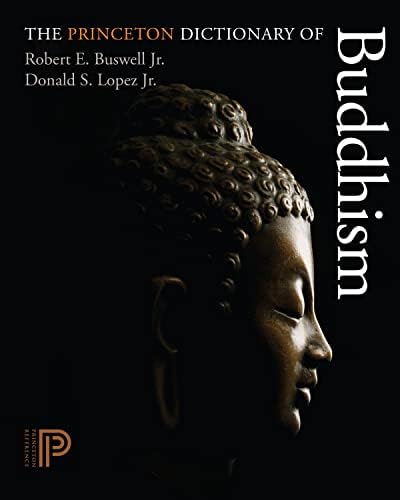
The Princeton Dictionary of Buddhism took Lopez and co-author Robert Buswell "about a decade" to complete, with both authors writing every entry themselves across over 1,000 pages.
His comprehensive Buddhism, A Journey Through History published in January 2024 is described by Cowen as "the single best place to go for a comprehensive look at all of Buddhism."



These notes may contain occasional inaccuracies. Learn how Podbrain notes are made
More in Philosophy

It’s So Hard To Find | Stop Looking For This
Jul 13, 2026
12 Stoic Rules For A Better Life
Jul 12, 2026
Men Are Reading Less Fiction. That’s A Problem. | Steven Pressfield
Jul 11, 2026
Spielberg Just Revealed The Truth About Aliens (He Knows!)
Jun 25, 2026Which Of These Are You? | What's In Your Way Is The Way
Jun 25, 2026.svg)