
Will AI Displace Financial Advisors? (EP. 455)
Michael Batnick and Ben Carlson host a live Animal Spirits podcast from Miami's Future Proof conference, featuring guest interviews and a comedic roast segment. The show opens with market commentary on crude oil futures spiking 27% overnight before flattening, and S&P futures declining then recovering.

Episode


- 01
Michael Kitsis argues AI won't replace advisors: 'Wealthy people aren't going to trust robots' and technology historically hasn't changed industry margins or fees
- 02
Phil Huber defends private credit: defaults are 'below average still' despite headlines, with historical 2% default rates across 10,000+ borrowers
- 03
Advisory firms today have same 1% fees and 40% overhead ratios as 25 years ago, but serve fewer clients with deeper services
- 04
Private credit's worst year (2008) saw only 6.5% index decline with 60 basis points of credit losses, followed by double-digit gains in 2009-2010
- 05
Software represents 'a little over 20%' of private credit index, historically the lowest default sector despite current transition period
- 06
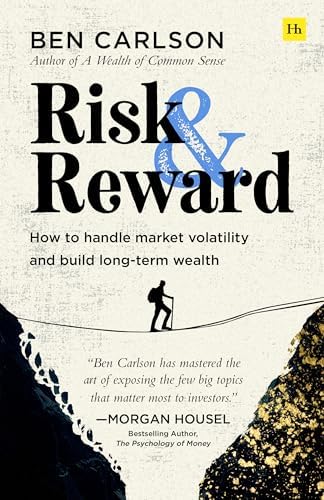
Ben Carlson's Risk and Reward book represents his 'fifth book about doing nothing' in investment strategy, focusing on index fund principles
Get the latest ideas from Animal Spirits Podcast.
Plus the best new takeaways from other top podcasts — read in minutes, not hours.
By continuing, you agree to podbrain's Terms and Privacy Policy.
These notes may contain occasional inaccuracies. Learn how podbrain notes are made
Michael Batnick and Ben Carlson host a live Animal Spirits podcast from Miami's Future Proof conference, featuring guest interviews and a comedic roast segment. The show opens with market commentary on crude oil futures spiking 27% overnight before flattening, and S&P futures declining then recovering.
The episode features Michael Kitsis, head of portfolio solutions, discussing AI's impact on financial advisors, and Phil Huber from Cliffwater addressing private credit concerns. Kitsis argues that technology historically hasn't disrupted advisor economics, while Huber defends private credit against media criticism of an alleged bubble.
The show concludes with Batnick and Carlson roasting each other with jokes written partly by Carlson's eight-year-old twins, and an announcement about Carlson writing monthly reports for Batnick's software company Exhibit A. The discussion covers market volatility, industry disruption fears, and the evolution of financial advisory services.
AI Won't Replace Financial Advisors, Says Industry Veteran
Michael Kitsis dismisses AI disruption fears: 'There have always been do-it-yourselfers' who import documents and analyze everything themselves, but 'people who value their time' will continue paying advisors.
Historical technology adoption shows no economic disruption: advisory firms charged 1% fees with 40% overhead ratios 25 years ago, and 'today they charge 1% fees' with identical margins despite internet, smartphones, and robo-advisors.
Technology reduces client loads rather than costs: average advisor client count dropped from 200-300+ clients decades ago to much lower numbers today as advisors 'go deeper' with existing relationships.
Advisors will expand into life coaching and adjacent services as AI handles routine tasks, with one-in-six firms already bringing tax preparation in-house for clients.
Private Credit Bubble Claims Are Overblown, Cliffwater Says
Phil Huber argues private credit criticism is 'conflating a variety of different issues' with steady negative coverage for six years, now 'turned up to 11' for clicks and attention.
Default rates remain below historical averages despite headlines: with 10,000+ middle market borrowers and 2% historical default rate, 'you should probably expect over 200 defaults in a given year.'
Software exposure concerns are overblown: technology represents 'a little over 20%' of the index and 'historically has been the sector with the lowest default rates.'
2008 financial crisis performance validates the asset class: index declined only 6.5% with 60 basis points credit losses, then posted 'meaningful double digits' returns in 2009-2010.
Liquidity management prevents forced selling: well-run funds use 'significant revolver capacity' and credit facilities rather than fire-selling illiquid loans to meet redemptions.
Market Volatility and the Resilience of Buyer Demand
Crude oil futures spiked 27% overnight before flattening, with S&P futures down 2.2% then recovering to flat, prompting Batnick to observe 'Bitcoin's flat' as a market stability indicator.
Repeated 1% intraday bullish reversals signal potential market fragility: 'the more of those you start to stack up, eventually the market breaks' despite current buyer resilience.
Market shows unusual after-hours volatility pattern: 'all the movement is happening after hours when there's no liquidity and then the market opens and things are fine.'
Comedy Roast Reveals Industry Personalities and Book Announcement
Carlson's twins contributed roast material including 'Your bald head is so shiny, it looks kind of like the sun' and 'your stories are so bad, not even chat GPT can understand it.'
Batnick jokes about Carlson's upcoming Risk and Reward book: 'This is his fifth book about doing nothing. I just saved you $30 and 200 pages.'
Exhibit A software company announces Carlson will write monthly white-label reports for advisors, expanding beyond their chart library to include commentary and analysis.
These notes may contain occasional inaccuracies. Learn how podbrain notes are made
More in Finance & Business

The Biggest Pivot In AI History Is Happening Right Now | Jordi Visser
Jun 20, 2026
How Substack Creators Are Covering This Strange Markets Era
Jun 20, 2026
#422 Joseph Pulitzer
Jun 20, 2026
World's First Trillionaire, Anthropic Fable Banned, The New Oligarchs, Iran Peace Deal
Jun 19, 2026Anthropic's Co-Founder and Top Economist on Doing Research at the AI Frontier
Jun 19, 2026
.svg)