
This Won't End Well (EP. 464)
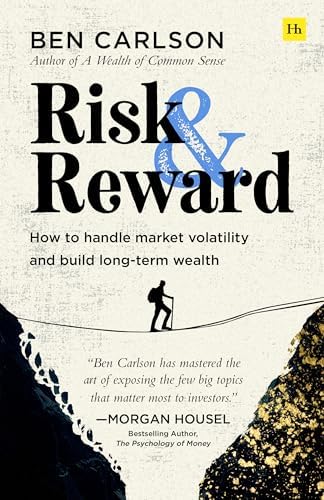
Ben Carlson and Michael Batnick discuss Ben's new book Risk and Reward, which he describes as his best work after A Wealth of Common Sense, Organizational Alpha, and...


- 01
Ben Carlson released Risk and Reward, calling it his best work distilling 12+ years of investing wisdom into one comprehensive guide
- 02
The S&P 500 gained 16% in six weeks, the largest rally since the Global Financial Crisis, driven by semiconductor stocks
- 03
Micron trades at only 9.7 times 2026 earnings despite being up 800% over the past year, showing fundamentals supporting price moves
- 04
Semiconductors now represent 22% of S&P 500 market cap, up from just 6% in April 2023, marking a historic sector rotation
- 05
AI is eliminating entry-level positions at major tech companies, with hiring down 50% from pre-pandemic levels, creating training gaps
- 06
12.4% of Americans now use GLP-1 drugs like Ozempic, up from 5.8% a year ago, disrupting alcohol and food industries
- 07
Ritholtz Wealth Management launched Porterhouse, an in-house momentum strategy for clients only, partnering with Franklin Templeton
- 08
South Korea's stock market overtook Canada and the UK to become the world's seventh largest, driven by AI semiconductor plays
Get the latest ideas from Animal Spirits Podcast.
Plus the best new takeaways from other top podcasts — read in minutes, not hours.
By continuing, you agree to Podbrain's Terms and Privacy Policy.
These notes may contain occasional inaccuracies. Learn how Podbrain notes are made
Ben Carlson and Michael Batnick discuss Ben's new book Risk and Reward, which he describes as his best work after A Wealth of Common Sense, Organizational Alpha, and Don't Fall for It. The book distills 12+ years of writing about the four pillars Bill Bernstein identified for successful investing: process interest, math skills, financial history, and behavioral psychology.
The conversation covers the current market melt-up, with the S&P 500 up 16% in six weeks driven by semiconductor stocks rather than the traditional Magnificent 7. They analyze whether this represents a bubble or fundamental-driven rally, noting that many AI stocks trade at surprisingly low valuations despite massive price gains.
They explore AI's broader economic impact, from disrupting traditional career paths and eliminating entry-level jobs to transforming industries through automation. The discussion includes the rise of GLP-1 drugs, portfolio management strategies, and cultural observations about technology's effect on daily life.
Ben Carlson's New Book Launch and Investment Philosophy
Risk and Reward represents Ben's attempt to address every possible market criticism upfront, similar to Eminem's strategy in 8 Mile where he acknowledges all potential attacks before opponents can use them.
The book covers Bill Bernstein's four requirements for successful investing: interest in the process, math horsepower, deep understanding of financial history, and behavioral psychology.
Ben recorded the audiobook himself after initially considering a British narrator, spending nearly two full days in a London-based studio to complete the 200-page work.
Historic Semiconductor Rally Drives Market Melt-Up
The S&P 500's 16% gain in six weeks represents the largest rally since the Global Financial Crisis, but this time driven by semiconductors rather than traditional tech giants.
Semiconductor market cap in the SOX index now comprises 22% of S&P 500 market cap, up from just 6% in April 2023, marking an unprecedented sector rotation.
Micron exemplifies the paradox: up 800% over the past year yet trading at only 9.7 times 2026 earnings, with 2027 estimates at just 7 times earnings.
SanDisk has gained 4,000% in the last year, while Western Digital and other memory stocks show similar explosive growth driven by AI compute demand.
Valuation Paradox: Expensive Prices, Cheap Fundamentals
The forward P/E for the S&P 500 sits at 21 times, below January 2025 levels despite the market rising 30% since then, as earnings growth outpaces price appreciation.
Memory stocks trade at historically low multiples because investors recognize their extreme cyclicality, with the market discounting potential future earnings volatility.
NVIDIA has gotten cheaper on a forward P/E basis as earnings scale prevents premium multiples - 'you can't trade at a premium multiple with numbers that big' - Michael
AI's Disruption of Traditional Career Paths
Entry-level hiring at major technology companies has fallen more than 50% below pre-pandemic levels as AI automates traditional junior roles.
The Bailey Gifford research highlights how AI breaks the apprenticeship model: 'You develop judgment by doing the thing badly at first with someone more experienced correcting you.'
Shopify's CEO told teams they must demonstrate why AI cannot do work before requesting additional headcount, exemplifying the new efficiency-first approach.
Uber's CFO admitted: 'When we set up budgets for 2026 in November, we underestimated the amount of impact the AI tools could have.'
Global Market Rotation and Emerging Market Revival
South Korea overtook Canada and the United Kingdom to become the world's seventh largest stock market, driven by SK Hynix and Samsung's AI positioning.
Emerging markets posted their best rally in 17 years, up 23% in six weeks, as they transformed from energy-focused to technology-focused indexes.
South Korean forward earnings per share charts resemble 'meme stock' patterns, tracking stock prices exactly as AI fundamentals drive both metrics vertical.
GLP-1 Drugs Reshape Consumer Industries
12.4% of Americans now use GLP-1 drugs like Ozempic, up from 5.8% a year ago, with the number guaranteed to never be lower than current levels.
Shares of the world's top beer, wine, and spirits makers have shed more than $830 billion since 2021 as weight loss drugs reduce alcohol consumption.
Roughly 50% of Weight Watchers members who drink alcohol decrease consumption after starting GLP-1 drugs, threatening traditional weight loss companies.
Wealth Transfer Timing and Longevity Concerns
A 65-year-old couple has a 64% chance that at least one partner will live beyond 90, creating outliving-savings anxiety that prevents spending.
Most inheritances for millennials won't occur until the 2030s or 2040s as parents live longer, delaying the great wealth transfer timeline.
The first wealth transfer will be from husbands to wives as women typically outlive men by 5-10 years, concentrating asset control among women.



These notes may contain occasional inaccuracies. Learn how Podbrain notes are made
More in Finance & Business

Jamie Dimon succession race narrows
Jun 26, 2026
HIGHLIGHTS: Miljan Gutovic - CEO of Holcim
Jun 26, 2026
Will The K-Shaped Economy Destroy America? | Darius Dale
Jun 25, 2026
Is DePIN Entering Its Next Growth Phase?
Jun 25, 2026
Gretchen Rubin - How Curiosity Becomes a Calling (Ep. 320)
Jun 25, 2026
.svg)