
The Stock Market Is Doing Something We’ve Never Seen Before (EP. 463)
Michael Batnick and Ben Carlson discuss Paul Tudor Jones's appearance on Invest Like the Best, where the legendary hedge fund manager shared bearish market predictions and revealed his trading personality versus Warren Buffett's long-term approach.

Episode


- 01
Paul Tudor Jones predicts negative 10-year forward returns when buying S&P at 22 PE, citing 252% stock market cap to GDP versus 65% in 1929
- 02
Mag 7 companies beat earnings expectations by 61% with revenue growth defying size constraints that 'shouldn't exist' according to analysts
- 03
Big Four tech companies plan 77% more CapEx spending than last year's record $410 billion, with Meta alone jumping from $6.4B to $19B quarterly
- 04
67% of Polymarket profits go to just 0.1% of accounts, with bots netting $131 million at expense of retail traders
- 05
TLT long-term Treasury bonds show negative returns over 11 years, still in 40% drawdown from 2020 highs despite being 'easiest hedge ever'
- 06
Millennial dads do four times more childcare than boomer dads, with each generation increasing involvement but health declining after first child
- 07
AI job displacement fears may be overblown as The History of Money shows automation typically creates more demand than it destroys
- 08
Stock ownership concentration in US hits 55% versus India's 6% and China's 7%, explaining higher market cap to GDP ratios
Get the latest ideas from Animal Spirits Podcast.
Plus the best new takeaways about history from other top podcasts — read in minutes, not hours.
By continuing, you agree to podbrain's Terms and Privacy Policy.
These notes may contain occasional inaccuracies. Learn how podbrain notes are made
Michael Batnick and Ben Carlson discuss Paul Tudor Jones's appearance on Invest Like the Best, where the legendary hedge fund manager shared bearish market predictions and revealed his trading personality versus Warren Buffett's long-term approach.
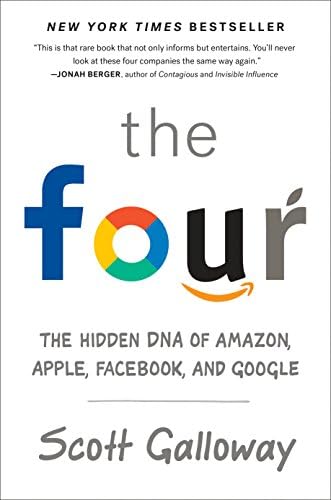
The conversation covers the unprecedented earnings growth from Mag 7 companies, with revenue increases that defy historical precedent for companies of their size. As Scott Galloway noted in The Four, these tech giants continue accelerating growth despite massive scale.
They examine wealth inequality through the lens of Wall Street A History, comparing current concentration to early 1900s levels, while discussing prediction market dynamics, AI's impact on employment, and the ongoing debate about market valuations versus fundamentals.
Paul Tudor Jones Reveals Trading Psychology Behind Market Pessimism
Jones admitted being a 'Warren Buffett hater' who believed Buffett 'got lucky' riding long-term trends, explaining 'my personality won't allow me to do that. I'm a trader.'
His bearish predictions stem from personality-driven thinking rather than forecasting ability, similar to Ray Dalio's 1982 depression prediction at the start of the greatest bull market.
Current market metrics show 252% stock market cap to GDP versus 65% in 1929, with forward PE of 22 historically indicating negative 10-year returns.
Higher US stock ownership (55% versus global averages of 6-15%) explains elevated market cap ratios as a natural result of broader participation, not overvaluation.
Mag 7 Earnings Defy Physics of Corporate Growth at Scale
The 'quadrant that shouldn't exist' shows Meta, Microsoft, Alphabet, Apple, and Amazon growing 25-50% annually at $80-100+ billion revenue scale.
Mag 7 companies beat earnings expectations by 61%, with Alphabet exceeding by 90%, Amazon by 70%, and Meta by 56% in Q1 2025.
S&P 500 earnings growth increased from 15% to 27% during earnings week, marking the highest year-over-year growth since Q4 2021.
Big Four tech companies plan $725 billion CapEx spending, 77% more than last year's $410 billion, with hyperscaler CapEx reaching 90% of operating cash flow.
Meta's quarterly property and equipment purchases jumped from $6.4 billion to $19 billion in two years while maintaining $12+ billion free cash flow.
Anthropic's revenue growth exceeds Zoom during pandemic and Google in early 2000s, potentially becoming world's highest revenue company by early next year if trajectory continues.
Prediction Markets Expose Massive Information Asymmetries
Bloomberg and Wall Street Journal investigations revealed 67% of Polymarket profits flow to just 0.1% of accounts, totaling nearly $500 million.
Bots netted $131 million at expense of retail traders, while insider trading dominates markets where outcomes can be known in advance.
Kalshi's defense that 'only 75% of traders lose money' compared to 80% in day trading and 95% in sportsbooks represents absurd victory lap mentality.
Robin Hood generated more revenue from event contracts and cryptocurrencies than traditional trading in most recent quarter.
AI Displacement Fears Meet Historical Automation Patterns
Sam Altman shifted messaging to 'we want to build tools to augment and elevate people, not entities to replace them' after apparent PR intervention.
Historical precedent from The History of Money shows VisiCalc spreadsheet software led to quadrupling of accountants over 40 years despite automation fears.
Jevons' paradox demonstrates that automation typically increases demand for human services, as seen with 2 million Philippine call center workers despite AI boom.
Stripe Atlas hit 100,000 incorporations with AI-enabled startups showing faster revenue growth, suggesting AI creates more firms than destroys jobs.
Bond Market Carnage and Energy Price Surge Create New Risks
TLT 20-year Treasury bonds show negative returns over 11 years, remaining in 40% drawdown from 2020 highs as rates rose from 1% to 5%.
Gasoline prices hit $5+ per gallon representing 'the most telegraphed risk ever seen' with 2025 oil supply disruptions exceeding 1973 Arab embargo.
Adjusted for wages and fuel efficiency, current gas prices remain comparable to 1990 and 2004 levels despite nominal increases.
Wealth Concentration Reaches Historical Extremes
Elon Musk's $800 billion wealth represents 2.7% of US GDP, matching John D. Rockefeller's 1913 concentration after a century gap.
Current top 10% holds 67% of US wealth, significantly lower than early 1900s when top 5% controlled 90% according to Wall Street A History.
Steve Eisman's observation that 'deficit is Wall Street's virtue signaling' explains why debt predictions never materialize given treasuries underpin global financial system.



These notes may contain occasional inaccuracies. Learn how podbrain notes are made
More in Finance & Business

The Biggest Pivot In AI History Is Happening Right Now | Jordi Visser
Jun 20, 2026
How Substack Creators Are Covering This Strange Markets Era
Jun 20, 2026
#422 Joseph Pulitzer
Jun 20, 2026
World's First Trillionaire, Anthropic Fable Banned, The New Oligarchs, Iran Peace Deal
Jun 19, 2026Anthropic's Co-Founder and Top Economist on Doing Research at the AI Frontier
Jun 19, 2026
.svg)