
The Perfect Price of Oil (EP. 456)
Michael Batnick and Ben Carlson host Animal Spirits, discussing markets, life, and investing with their characteristic blend of analysis and commentary. Ben recently returned from the Future Proof conference in Miami, which focused heavily on AI implementation and featured 4,500 attendees.

Episode


- 01
Oil analyst Roy Johnson predicts $200 barrel oil if current Middle East conflicts continue due to supply-demand dynamics
- 02
Billy Bob Thornton's Landman explains optimal oil pricing: 'You want oil to live above 60 but below 90' - $78 is perfect
- 03
Private credit fund Cliffwater sees 14% redemptions with advisors caught between client panic and long-term strategy
- 04
Taiwan's GDP surged 23.6% annualized in Q4 2024, growing 12% annually - fastest growth in 50 years due to AI chip demand
- 05
Anthropic revenue growth is 'staggering' according to Aura from Ramp, going from $1B to $14-19B as new business default
- 06
Housing affordability hits four-year best at 27.4% of median income due to wage growth outpacing stagnant prices
- 07
Energy stocks up 500% from COVID lows versus 300% for S&P, yet only represent 3.7% of index allocation
- 08
Americans 60+ have median net worth of $450K in 2022, more than double the $210K from 1989 inflation-adjusted
Get the latest ideas from Animal Spirits Podcast.
Plus the best new takeaways about energy from other top podcasts — read in minutes, not hours.
By continuing, you agree to podbrain's Terms and Privacy Policy.
These notes may contain occasional inaccuracies. Learn how podbrain notes are made
Michael Batnick and Ben Carlson host Animal Spirits, discussing markets, life, and investing with their characteristic blend of analysis and commentary. Ben recently returned from the Future Proof conference in Miami, which focused heavily on AI implementation and featured 4,500 attendees.
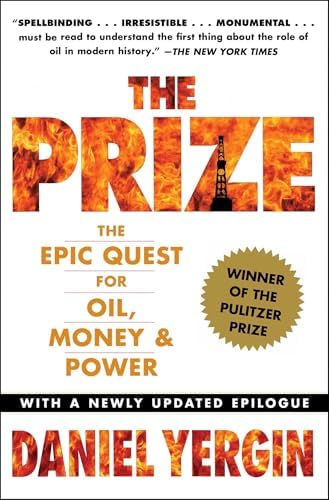
The conversation spans current geopolitical tensions and oil markets, with Michael diving deep into energy analysis through The Prize by Daniel Yergin, while Ben explores semiconductor dynamics via Chip Wars by Chris Miller. They examine whether current market conditions resemble February 2020 complacency or Liberation Day resilience.
The hosts analyze private credit redemptions, AI adoption challenges, housing affordability improvements, and the surprising strength of older Americans' retirement savings. Ben concludes with a recommendation for The Gales of November by John Bacon, which chronicles the Edmund Fitzgerald disaster and Great Lakes business history.
Oil Markets: $200 Barrel Predictions vs Market Complacency
Michael started reading The Prize by Daniel Yergin, a 26-hour audiobook about oil, money, and power, to understand current energy dynamics during geopolitical tensions.
Billy Bob Thornton's character in Landman delivers perfect oil economics: 'You want oil to live above 60 but below 90. $78 a barrel. That's about perfect. It brings enough profit to keep exploring, but it doesn't sting as much at the pump.'
Energy analyst Roy Johnson argues oil must hit $200 per barrel if current Middle East conflicts continue, given that crude exports from the region represent 20% of global supply.
Despite geopolitical tensions, oil prices remain surprisingly low at $3.99 per gallon, leading to debate whether markets are whistling past the graveyard or correctly pricing in resolution probabilities.
AI Revolution: From Upholstery Calls to Taiwan's GDP Surge
A local upholstery business uses AI agents that perfectly handle customer calls, price quotes, scheduling, and follow-up communications - demonstrating real-world AI implementation beyond hype.
Ben Thompson argues AI is no longer a bubble because compute costs are so high that even limited adoption by businesses will generate massive demand and revenue.
Taiwan's economy exploded with 23.6% annualized GDP growth in Q4 2024, the fastest in 50 years, driven entirely by AI chip manufacturing demand as detailed in Chip Wars by Chris Miller.
Anthropic emerges as the new business default according to Aura from Ramp, with revenue growth described as 'staggering' - jumping from $1 billion to $14-19 billion range.
Private Credit Redemption Crisis and Advisor Dilemmas
Cliffwater's $33 billion private credit fund faces 14% redemptions, with Michael calling for a public 'naughty list' of advisors who put clients in illiquid investments then pulled them out within 18 months.
Advisors face impossible choice: tell panicked clients to exit and face questions about why they invested 18 months ago, or stay the course while headlines worsen and risk further client anger.
25% of private credit loans are to SaaS companies, while high-yield spreads remain tight - creating a disconnect where one asset class must be mispriced relative to the other.
Michael notes that maturity walls have 'never, ever mattered once' in his career, despite constant warnings about upcoming debt refinancing challenges.
Housing Affordability and Retirement Wealth Surprises
Housing affordability reached its best level in four years at 27.4% of median income, achieved through wage growth while home prices stagnated rather than crashed.
Existing home sales hit floor levels at 4.1 million annually versus 5.2 million historical average, yet anecdotal evidence shows homes selling immediately when listed.
Americans aged 60+ have median net worth of $450,000 in 2022, more than doubling from $210,000 in 1989 on an inflation-adjusted basis, contradicting retirement crisis narratives.
The transition from defined benefit to defined contribution retirement plans 'worked' according to Allison Schraeger, with older Americans in much better financial shape than previous generations.
Market Leadership Shifts and Energy Stock Performance
Energy stocks surged 500% from COVID lows versus 300% for the S&P 500, yet energy represents only 3.7% of index allocation, down from previous highs.
The Magnificent 7 stocks entered a 12% drawdown while market leadership broadened to energy, materials, and industrials, creating career risk questions for portfolio managers.
Financial stocks like Ally and Capital One face 25-30% drawdowns, which Michael uses as gauges for 'the lower shape of the K' economic recovery.
Retail trading volume for crude oil futures exploded 1,100% month-over-month on Webull, with gasoline futures up 1,200%, as oil becomes the new meme stock category.
Book Recommendations and Maritime Business History
Ben recommends The Gales of November by John Bacon, an audiobook about the Edmund Fitzgerald that combines maritime disaster with Great Lakes business history.
The book reveals how Northwestern Mutual's president created the Edmund Fitzgerald, initially reluctant to name it after himself in case it sank - which it eventually did.
Ship captains built vessels exactly to Soo Locks dimensions to maximize cargo capacity, leaving only six inches clearance on each side, which compromised storm handling and contributed to the disaster.
The Soo Locks, originally designed by Da Vinci, even out the 20-foot water level difference between Lake Superior and connecting rivers, enabling massive Great Lakes shipping commerce.


These notes may contain occasional inaccuracies. Learn how podbrain notes are made
More in Finance & Business

The Biggest Pivot In AI History Is Happening Right Now | Jordi Visser
Jun 20, 2026
How Substack Creators Are Covering This Strange Markets Era
Jun 20, 2026
#422 Joseph Pulitzer
Jun 20, 2026
World's First Trillionaire, Anthropic Fable Banned, The New Oligarchs, Iran Peace Deal
Jun 19, 2026Anthropic's Co-Founder and Top Economist on Doing Research at the AI Frontier
Jun 19, 2026
.svg)