
Talk You Book: How to Fix the Plumbing of the Financial System
Michael Batnick and Ben Carlson host Ryan Lavelle, Director of Capital Markets at Chainlink Labs and former Vanguard employee, to discuss blockchain technology's potential to revolutionize financial market infrastructure.

Episode


- 01
ACH transfers take 3-5 days because there's no positive confirmation between institutions - the system just sends money without receiving confirmation it arrived
- 02
Chainlink has processed over $27 trillion in transactions and works with Swift, DTCC, JP Morgan, and UBS as blockchain connective tissue
- 03
Stablecoins currently represent $300 billion compared to quadrillions in traditional assets that could potentially move on-chain
- 04
The largest wealth transfer in history is coming in 5-10 years as average Vanguard/BlackRock investors age 65-75 transition assets
- 05
Tokenized assets offer programmability - a treasury bill could simultaneously serve as collateral, earn yield, and be fractionalized through smart contracts
- 06
New York Stock Exchange announced 24/7 trading for tokenized securities, signaling major institutional adoption of blockchain infrastructure
- 07
Regulatory clarity has only emerged in recent months, removing the previous risk of building applications that might need to be torn down
Get the latest ideas from Animal Spirits Podcast.
Plus the best new takeaways from other top podcasts — read in minutes, not hours.
By continuing, you agree to podbrain's Terms and Privacy Policy.
These notes may contain occasional inaccuracies. Learn how podbrain notes are made
Michael Batnick and Ben Carlson host Ryan Lavelle, Director of Capital Markets at Chainlink Labs and former Vanguard employee, to discuss blockchain technology's potential to revolutionize financial market infrastructure.
The conversation explores how traditional finance professionals are recognizing blockchain's value proposition in improving the 'plumbing' of financial systems - the settlement, clearing, and custody systems that operate behind the scenes of everyday trading.
Ryan brings a unique perspective having worked at Vanguard managing custom financial products before transitioning to crypto, providing insight into both legacy financial infrastructure limitations and blockchain solutions.
The discussion covers Chainlink's role as blockchain-agnostic infrastructure, recent regulatory developments, and the practical timeline for institutional adoption of tokenized securities and programmable financial assets.
From Vanguard to Crypto: Understanding Financial Plumbing
Ryan's transition from Vanguard to Chainlink was driven by curiosity about market infrastructure: 'There's this iceberg under the ocean, which is the plumbing' - the settlement, clearing, and custody systems most investors never see.
At Vanguard, Ryan managed custom products like stable value funds and separately managed accounts, giving him deep exposure to how financial systems actually operate beneath the user interface.
The shift to crypto happened during COVID when institutions began seriously exploring the space: 'It was almost like it was safe now. Like, this is not going away' - Ryan.
The ACH Problem: Why Money Transfers Take Forever
ACH transfers take 3-5 business days because the system lacks positive confirmation - 'Michael's institution never tells Ryan's institution that you've gotten the money' - Ryan explains.
The ACH system is simply a file of instructions telling institutions to send money, with no automated confirmation that the recipient received it, requiring timing lags to resolve potential issues.
Wire transfers solve this problem instantly but cost $25, while blockchain-based systems could provide instant settlement with confirmation at much lower costs.
Chainlink's Blockchain-Agnostic Strategy
Rather than betting on a single blockchain winner, Chainlink positioned itself as 'completely neutral and agnostic' connective tissue between different blockchain networks.
The blockchain landscape became fragmented rather than consolidated: 'The opposite has happened' from the 2017-2019 belief that only 1-2 blockchains would dominate - Ryan.
Chainlink has processed over $27 trillion in transactions and works with traditional finance giants including Swift, DTCC, JP Morgan, and UBS.
The company serves as infrastructure for both blockchains needing data and cross-chain connectivity, and traditional institutions wanting to add blockchain capabilities without replacing existing systems.
Tokenized Securities and Programmable Assets
The New York Stock Exchange announced 24/7 trading for tokenized securities, signaling major institutional adoption of blockchain-based financial infrastructure.
Tokenized assets offer programmability and composability - 'A tokenized treasury bill could simultaneously serve as collateral for a loan, earn yield, be fractionalized, all through smart contracts' - Ryan.
Ryan compares the transformation to Spotify: before, music was trapped in static CD containers; after, individual tracks became composable into playlists and algorithmic mixes.
Fund managers could benefit most, as faster, more flexible infrastructure would allow custom funds for individual investors rather than products designed for 50,000+ people.
Regulatory Clarity and Institutional Adoption Timeline
Regulatory clarity has only emerged in recent months, removing previous risks where institutions 'may have had run the risk of just tearing the whole thing down' - Ryan.
The next 12-18 months will focus on foundational infrastructure for getting equities on-chain and ensuring on-chain applications comply with existing securities laws.
Major custodians like Bank of New York Mellon (with $40-50 trillion in assets), State Street, and JP Morgan are expected to offer blockchain custody solutions.
Currently $300 billion exists in stablecoins compared to quadrillions in traditional assets that could potentially move on-chain over the next 3-4 years.
The Coming Wealth Transfer and User Experience
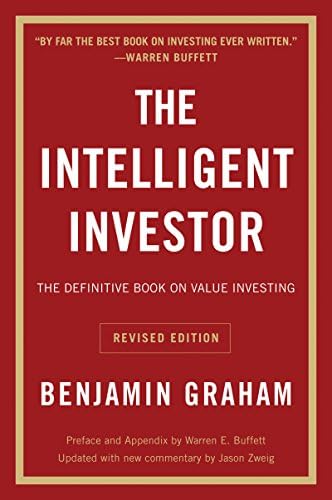
The largest wealth transfer in history is approaching as average investors at Vanguard, BlackRock, and Fidelity (ages 65-75) transition from static The Intelligent Investor approaches to more dynamic strategies.
Most users won't notice they're using blockchain technology - 'The Robinhood UX, we're not going to disrupt that. That is extremely mature and very good' - Ryan.
In zero interest rate environments, platforms could offer yield sliders allowing users to deploy capital across approved DeFi protocols without managing wallets or private keys.
Advanced users will have options for self-custody, with stablecoins becoming 'the new kind of like money under the mattress' - Ryan.
These notes may contain occasional inaccuracies. Learn how podbrain notes are made
More in Finance & Business
The Biggest Pivot In AI History Is Happening Right Now | Jordi Visser
Jun 20, 2026
How Substack Creators Are Covering This Strange Markets Era
Jun 20, 2026
#422 Joseph Pulitzer
Jun 20, 2026
World's First Trillionaire, Anthropic Fable Banned, The New Oligarchs, Iran Peace Deal
Jun 19, 2026Anthropic's Co-Founder and Top Economist on Doing Research at the AI Frontier
Jun 19, 2026
.svg)