
Charles & Chase Koch on How They Quietly Built a $150B Empire
Charles Koch, Chairman and CEO of Koch Industries, and his son Chase Koch, Executive Vice President, discuss the evolution of one of America's largest private companies from a 300-employee crude oil business in the 1960s to a diversified enterprise spanning energy, chemicals, agriculture, consumer products, and...


- 01
Koch Industries has grown 9,000x in value since the 1960s with 130,000+ employees across 60 countries by being capability-bounded, not industry-bounded
- 02
"We reinvest 90% of our profits in new businesses and growth" - Charles, emphasizing their experimental discovery approach over dividend distribution
- 03
"If you're not failing at everything, you're not doing anything new" - Charles on the necessity of creative destruction and learning from failures
- 04
The gas-to-bread strategy in the late 1990s nearly wiped out all Koch earnings due to violating core principles of hiring values-first leadership
- 05
Georgia Pacific acquisition for $20 billion in 2005 required complete cultural transformation from top-down bureaucracy to bottom-up empowerment
- 06
Stand Together has helped create over 5,000 new schools post-COVID as families' openness to education transformation jumped from 20% to 70-80%
- 07
"The problem today is ever more people have the means to live and no meaning to live for" - Viktor Frankl insight driving Koch's social change philosophy
- 08
Koch's talent philosophy prioritizes values first, skills second, credentials last - exemplified by their CIO who started striping parking lots without a college degree
Get the latest ideas from All-In Podcast.
Plus the best new takeaways about education from other top podcasts — read in minutes, not hours.
By continuing, you agree to podbrain's Terms and Privacy Policy.
These notes may contain occasional inaccuracies. Learn how podbrain notes are made
Charles Koch, Chairman and CEO of Koch Industries, and his son Chase Koch, Executive Vice President, discuss the evolution of one of America's largest private companies from a 300-employee crude oil business in the 1960s to a diversified enterprise spanning energy, chemicals, agriculture, consumer products, and technology investments.
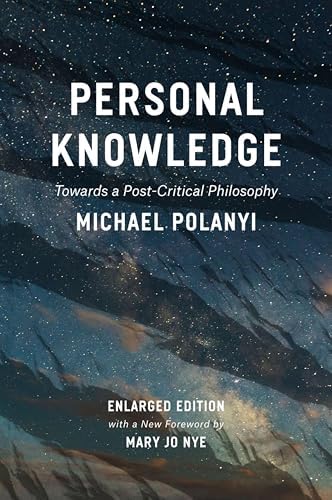
The conversation explores Koch Industries' unique operating philosophy based on market-based management principles, including capability-bounded growth, experimental discovery, and creative destruction. Charles shares insights from his extensive reading of works like Personal Knowledge by Michael Polanyi and Man's Search for Meaning by Viktor Frankl, which shaped his approach to business and social change.
The discussion covers major business transformations including the $20 billion Georgia Pacific acquisition, significant failures like the late-1990s 'gas-to-bread' strategy, and the family's social change work through Stand Together. Chase reflects on his journey from a rebellious teenager to co-authoring Believe in People with his father, while both emphasize the importance of bottom-up empowerment over top-down control in business and society.
From Engineering Failure to Entrepreneurial Success
Charles joined Koch Industries in 1961 at age 25 after his father threatened to sell the struggling 300-employee company, despite Charles initially declining because "I sucked as an engineer" despite three MIT degrees.
The company's first transformation involved changing from a protectionist, top-down culture to one focused on "creating value for our customers" and empowering employees, leading to profitability in their fractionating tray business.
Charles developed the principle of being "capability-bounded, not industry-bounded," applying divisional labor by comparative advantage rather than trying to be an integrated oil company across all value chains.
The Philosophy of Creative Destruction and Learning from Failures
Koch's biggest failures stemmed from "violating the principle of hiring people first on values and second on talent," particularly when promoting destructively motivated leaders who sought power over contribution.
The late-1990s "gas-to-bread spread" strategy nearly bankrupted the company by attempting to control the entire value chain from natural gas to grocery shelves, violating multiple core principles including experimental discovery and knowing capabilities.
"A good experiment is where the value what you learn from this failure is higher value than the cost of the experiment" - Charles on distinguishing between reckless betting and principled experimentation.
Drawing from Personal Knowledge by Michael Polanyi, Charles explains that changing organizational culture requires "rewiring your brain to have it work differently" through intensive practice over time, not just training seminars.
Transforming Acquisitions Through Principle-Based Management
The 2005 Georgia Pacific acquisition for $20 billion represented a massive bet for the much smaller Koch Industries, requiring complete cultural transformation from a 51-story bureaucratic headquarters to bottom-up empowerment.
"Joe immediately kicked them all out" - Charles describing how their new CEO fired bureaucratic managers and moved remaining leadership to work directly with their teams on regular floors, turning executive floors into open meeting rooms.
The Minnesota refinery transformation required overcoming violent union strikes and nine months of helicopter-accessed operations, ultimately creating "one of the best refineries in the country" with 10x capacity increase.
Molex acquisition in 2013 required shifting from "top-line thinking versus bottom-line thinking" and changing leadership paradigms from public company revenue focus to private company value creation.
Talent Development and Comparative Advantage
Koch's talent philosophy follows "values first, skills second, credentials last," exemplified by their current CIO Jared Benson who started by striping parking lots without a college degree and built cybersecurity capabilities.
Chase's self-firing as president of Koch Fertilizer demonstrated the principle of comparative advantage: "I realized that I was not the guy for the job" and found someone with better operational capabilities while focusing on innovation and building.
"What if everyone like deeply understood comparative advantage and redesigned their role to where they are truly like in their power alley" - Chase on the potential of 130,000 employees optimizing their contributions.
The company's 20,000+ supervisors have the primary responsibility of ensuring each employee is in the right role rather than forcing improvement in areas where they lack natural capability.
Stand Together and Educational Transformation
Stand Together, founded in 2003, operates as a community of nearly 1,000 business leaders focused on removing barriers that prevent people from realizing their potential and pursuing the American dream.
COVID-19 dramatically shifted public opinion on education reform, with families open to new education models jumping from 20% pre-COVID to 70-80% post-COVID as parents witnessed the system's failures firsthand.
The Vela Fund partnership with the Walton family has helped create over 5,000 new schools by supporting "thousands of pissed off parents and teachers" who started micro schools and project-based learning environments.
Success stories like Scott Strode's Phoenix program demonstrate the "show versus tell" approach: combining community and exercise to achieve sub-10% addiction relapse rates, scaling from a few Colorado gyms to impacting one million people.
Social Change Philosophy and Political Engagement
Charles's social change approach evolved from working only with ideological purists to following Frederick Douglass's principle: "I'll work with anyone to do right, no one to do wrong."
Drawing from Man's Search for Meaning by Viktor Frankl, Charles argues that "the problem today is ever more people have the means to live and no meaning to live for," leading to destructive pursuits of power or pleasure.
"If God is just, I despair for the future of our country" - Charles echoing Thomas Jefferson's concerns about current political leadership across both parties prioritizing power over principles.
The co-authored book Believe in People with Brian Hooks, featuring a foreword by Martin Luther King III, emphasizes that "people aren't the problems to be solved" but rather the source of solutions through bottom-up empowerment.
Technology, AI, and Future Challenges
Koch's approach to AI follows "permissionless innovation" principles, focusing on making AI accessible to everyone to "combine that with their gifts to unlock their potential and learn 10, 100x faster."
The Principal Companion app applies Socratic method questioning powered by ChatGPT and Claude, helping users solve business and personal problems using the 41 principles from their latest book rather than providing direct answers.
Addressing economic inequality requires "removing the barriers" including occupational licensing restrictions, immigration policies that harass contributing workers, and tariffs that undermine comparative advantage.
"Once you create these entitlements, you almost can never get rid of them" - Charles on the challenge of economic reform, citing Argentina's current experiment as a potential model for necessary but difficult changes.



These notes may contain occasional inaccuracies. Learn how podbrain notes are made
More in Finance & Business

Jamie Dimon succession race narrows
Jun 26, 2026
HIGHLIGHTS: Miljan Gutovic - CEO of Holcim
Jun 26, 2026
Will The K-Shaped Economy Destroy America? | Darius Dale
Jun 25, 2026
Is DePIN Entering Its Next Growth Phase?
Jun 25, 2026
Gretchen Rubin - How Curiosity Becomes a Calling (Ep. 320)
Jun 25, 2026
.svg)