
Google: The Origin of Search
Ben Gilbert and David Rosenthal explore the founding and early growth of Google, from Stanford research project to the most profitable company in America. The episode features insights from early Google employees including Craig Silverstein (employee #1), Paul Buchheit (Gmail creator), and others who built the...

Episode


- 01
Google generates more net income than any other U.S. company, including Apple, Microsoft, and ExxonMobil, making it the most profitable business in America
- 02
PageRank was born from Larry Page's insight that web links function like academic citations, creating a ranking system based on authority rather than keyword frequency
- 03
Google's infrastructure innovation using commodity hardware and distributed computing enabled 87% gross margins while competitors used expensive enterprise systems
- 04
The AdWords auction system creates increasing returns to scale - more advertisers drive higher keyword prices, generating more revenue per search as Google grows
- 05
Google's aggressive distribution strategy included paying up to 100% revenue share to partners and bundling toolbar with software downloads to capture users
- 06
The 2002 AOL deal was a bet-the-company moment requiring a $100 million revenue guarantee when Google didn't have that much cash available
- 07
Gmail's original prototype by Paul Buchheit led directly to AdSense - testing contextual ads in email became the foundation for advertising across the web
- 08
Google pioneered dual-class share structures in tech, inspired by media companies, allowing founders to retain control while going public
Get the latest ideas from Acquired.
Plus the best new takeaways from other top podcasts — read in minutes, not hours.
By continuing, you agree to podbrain's Terms and Privacy Policy.
These notes may contain occasional inaccuracies. Learn how podbrain notes are made
Ben Gilbert and David Rosenthal explore the founding and early growth of Google, from Stanford research project to the most profitable company in America. The episode features insights from early Google employees including Craig Silverstein (employee #1), Paul Buchheit (Gmail creator), and others who built the technical and business foundations.
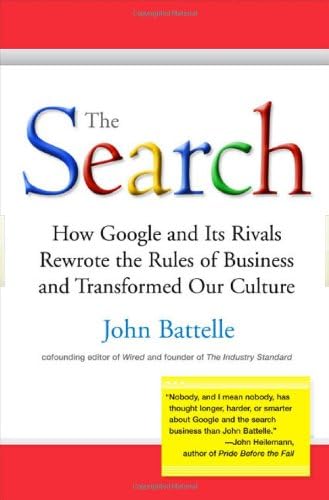
The story begins in 1995 when Larry Page arrives at Stanford and meets Sergey Brin, leading to their collaboration on what would become PageRank. Drawing from academic citation analysis and The Search by John Battelle, the hosts detail how the web's explosive growth from 130 sites to 600,000 sites created the perfect window for Google's emergence.
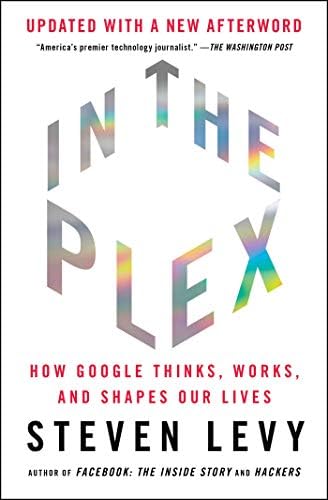
The narrative covers Google's evolution from BackRub to the company that would revolutionize search through superior algorithms, innovative infrastructure, and aggressive distribution strategies. Key sources include In the Plex by Steven Levy and Googled by Ken Auletta, providing insider perspectives on crucial decisions and near-miss acquisitions.
The Stanford Origins: PageRank and Academic Inspiration
Larry Page was born in 1973 to two computer science professors at Michigan State, growing up immersed in computing during the PC era's emergence, with his family spending a sabbatical year at Stanford when Larry was six.
Sergey Brin emigrated from Moscow at age four when his mathematician father escaped the Soviet Union, eventually becoming a math professor at University of Maryland while his mother worked at NASA's Goddard Space Flight Center.
The PageRank breakthrough came from Larry's realization that web links function exactly like academic citations - a hyperlink represents an endorsement, with anchor text providing metadata about the linked page's content.
Google could only be built at this specific moment in internet history because the web was small enough to crawl entirely (600,000 sites) but large enough to need algorithmic ranking rather than human curation.
Infrastructure Innovation: Commodity Hardware Revolution
Google recruited legendary engineers Urs Hölzle (employee #8) and Jeff Dean from academia and DEC, who built distributed computing systems using cheap commodity components instead of expensive enterprise hardware.
The distributed file system broke Google's massive index into 64MB chunks across multiple servers, enabling parallel processing while accepting 10%+ annual hardware failure rates versus industry standard 3-4%.
Early Google servers were motherboards mounted on corkboard and stuffed into data center racks without cases, optimizing for density within co-location space constraints at facilities like Exodus in Santa Clara.
This infrastructure approach enabled Google to achieve 87% gross margins on search while competitors using enterprise hardware struggled with much higher costs and lower scalability.
Business Model Evolution: From Portal Deals to AdWords
Google's original business plan for the Series A focused on enterprise search licensing, with search advertising as a reluctant secondary revenue stream and portal deals as the third pillar.
The breakthrough came from studying Overture (originally GoTo.com), founded by Bill Gross, which pioneered cost-per-click advertising and keyword auctions starting in 1998 with full price transparency.
Google's AdWords v2 improved on Overture by incorporating click-through rates into ad ranking, creating a system where bid price × CTR determined placement - mathematically optimal for maximizing Google's revenue.
The second-price auction mechanism meant winners only paid one penny above the second-highest bid, building advertiser trust while storing potential energy in the system like Costco's pricing philosophy.
The AOL Deal: Betting the Company on Scale
In summer 2002, Google signed a deal with AOL's 34 million users, guaranteeing $100 million in revenue when Google didn't have that much cash - literally betting the company on their advertising model.
The deal structure gave AOL 85% revenue share plus warrants to buy 7.4 million Google shares at $3, while Google gained access to massive search inventory to deepen their advertising marketplace.
Larry Page defended the risk: 'We should be able to monetize the pages. If not, we deserve to go out of business' - reflecting their confidence in the fundamental business model.
AOL made $35 million in the first half-year alone and $200 million in 2003, validating Google's bet while taking significant inventory away from competitor Overture.
Distribution Strategy: Toolbar and Traffic Acquisition
Google Toolbar, launched December 2000, increased user search frequency by 7x, making each user worth $10+ annually versus $2 for regular users, creating massive budget for user acquisition.
Google paid software companies like Adobe, Real Networks, and WinZip to bundle Toolbar with their installers, essentially paying for Trojan horse distribution that users actually loved.
The strategy extended to hardware deals with Dell for pre-installation, Firefox default search partnerships, and even bundling Toolbar with Google Earth downloads to maximize user stickiness.
This aggressive distribution was strategic defense against Microsoft's Internet Explorer dominance, ensuring Google could reach users even if Microsoft tried to redirect search traffic.
IPO and Gmail: Setting the Stage for Expansion
Google's 2004 IPO used a Dutch auction mechanism and dual-class share structure, pioneering founder control methods later adopted by Facebook, Airbnb, and others in the tech industry.
Despite the innovative IPO process, Google still experienced an 18% first-day pop to $100 from the $85 offering price, suggesting the Dutch auction didn't achieve perfect price discovery.
Gmail launched on April Fool's Day 2004 with 1GB of free storage (20x competitors) and Google search functionality, creating compelling reasons for users to log into Google accounts.
Paul Buchheit's Gmail prototype originally tested contextual advertising by displaying ads alongside email content, directly leading to the development of AdSense for web publishers.


These notes may contain occasional inaccuracies. Learn how podbrain notes are made
More in Finance & Business

The Biggest Pivot In AI History Is Happening Right Now | Jordi Visser
Jun 20, 2026
How Substack Creators Are Covering This Strange Markets Era
Jun 20, 2026
#422 Joseph Pulitzer
Jun 20, 2026
World's First Trillionaire, Anthropic Fable Banned, The New Oligarchs, Iran Peace Deal
Jun 19, 2026Anthropic's Co-Founder and Top Economist on Doing Research at the AI Frontier
Jun 19, 2026
.svg)