
Ferrari
This episode explores Ferrari, featuring hosts Ben Gilbert and David Rosenthal examining one of the most paradoxical companies in business history. The story begins with Enzo Anselmo Giuseppe Maria Ferrari, born in 1898 in Modena, Italy, who would build a company that ships very few cars yet commands extraordinary...

Episode


- 01
Ferrari delivers only 14,000 cars annually - the same number Toyota sells every 10 hours, yet maintains higher market cap than Ford
- 02
80% of new Ferraris are sold to existing owners, with less than 3,000 new customers annually creating an incredibly exclusive funnel
- 03
Ferrari's F80 supercar generates 15% of annual revenue and potentially 30% of profits from just 799 units at $4 million each
- 04
The company maintains 50% gross margins versus 7-16% for traditional automakers by operating as a luxury brand, not a car company
- 05
Ferrari's manufacturing is entirely bespoke - every car is unique with no shared platforms, built from raw aluminum ingots in Maranello
- 06
Over 90% of all Ferraris ever made since 1947 are still on the road, creating a thriving secondary market worth billions
- 07
Enzo Ferrari was a natural entrepreneur and marketer, not just a racing enthusiast - 'I am an agitator of men' - Enzo
- 08
The company successfully balances exclusivity of luxury brands with inclusivity of sports teams, serving 400 million global fans
Get the latest ideas from Acquired.
Plus the best new takeaways about military & strategy from other top podcasts — read in minutes, not hours.
By continuing, you agree to podbrain's Terms and Privacy Policy.
These notes may contain occasional inaccuracies. Learn how podbrain notes are made
This episode explores Ferrari, featuring hosts Ben Gilbert and David Rosenthal examining one of the most paradoxical companies in business history. The story begins with Enzo Anselmo Giuseppe Maria Ferrari, born in 1898 in Modena, Italy, who would build a company that ships very few cars yet commands extraordinary global recognition and market value.
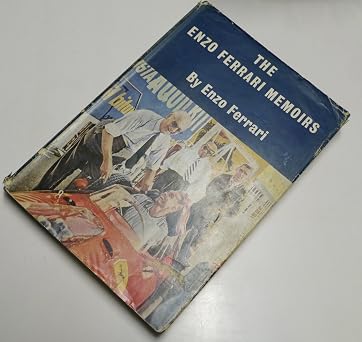
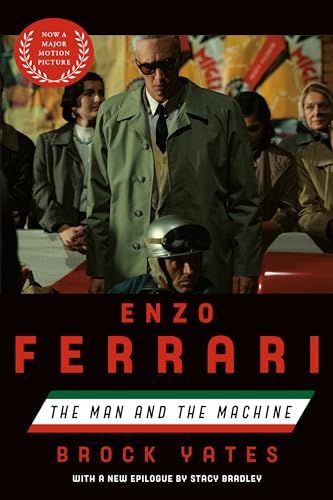
The narrative traces Ferrari's evolution from Enzo's early racing dreams through personal tragedies including the deaths of his father, brother, and later his son Dino. Key sources include Enzo Ferrari by Luca Del Monte, described as the definitive biography, and Enzo's own memoirs My Terrible Joys, which capture the operatic nature of his life.
The episode covers Ferrari's unique business model combining racing team, car constructor, and luxury services under one roof in Maranello. It examines how Luca de Montezemolo transformed Ferrari into a modern luxury company, the 2015 IPO orchestrated by Sergio Marchionne, and today's strategy under CEO Benedetto Vigna including the upcoming electric Luce designed with Johnny Ive.
Enzo's Origins and Early Racing Dreams
Enzo Ferrari was born in 1898 as the second son in a middle-class metalworking family, with his father's advice shaping his business philosophy: 'A company is perfect when the number of partners in it is odd and less than three.'
World War I brought tragedy as both his father Alfredo and golden child brother Dino died of pneumonia, leaving Enzo alone to support his mother with no discernible skills.
After being rejected by Fiat, Enzo joined startup CMN in 1919, pledging his future salary to buy a sports car and pursue his teenage dream of becoming a racing driver.
Birth of the Scuderia and the Prancing Horse
Enzo's racing career ended when he realized he lacked the final ingredient separating champions from everyone else - he was 'too afraid to die' after watching mentors die at the wheel.
In 1929, Enzo proposed taking over Alfa Romeo's racing operations as an outsourced team, creating Scuderia Ferrari - the 'stables' that would become Ferrari's racing division.
The famous prancing horse logo came from Countess Baracca, whose son Francesco was Italy's top WWI fighter pilot, who told Enzo: 'Paint the black horse on your car. It will bring you luck.'
Enzo placed the prancing horse within a yellow shield (Modena's color) topped with Italian flag colors, creating a genius marketing symbol linking to national heroism and racing ambitions.
World War II and the First Ferrari Cars
After being fired by Alfa Romeo in 1939, Enzo was forbidden from using the Ferrari name for four years, creating Auto Avio Costruzione to supply the Italian war effort.
Luigi Canetti, an Italian mechanic who spent the war in America, convinced Enzo about American market potential, describing wealthy Americans' 'naive colonial lust' for European luxury machines.
The first Ferrari sold to customers was the 166 Barchetta in 1948, with Luca Del Monte writing it was 'a declaration of intent, a sports car with a sensual shape, as fast and powerful as it was beautiful.'
Ferrari's business model combined three elements under one roof: professional racing team, world-class racing car construction, and comprehensive support services for private clients.
The Beautiful Death Machines of the 1950s
The Ferrari 250 series launched in 1952 became the first real production Ferrari, designed by Batista 'Pinin' Farina in a 61-year partnership lasting until 2013.
Italian luxury differs from French luxury - while French luxury sells dreams of royal connection, Italian luxury emphasizes craftsmanship and the designer's passion, with personalities like Pinin Farina central to the brand.
Tragedy struck repeatedly: Alberto Ascari died in 1955, then Enzo's son Dino died of muscular dystrophy in 1956, shattering Enzo's hopes for family succession.
The 1957 Mille Miglia race ended with a Ferrari killing the driver and nine spectators including five children, leading to manslaughter charges against Enzo and Vatican condemnation as 'Industrial Saturn.'
Ford vs Ferrari and the Sale to Fiat
Henry Ford II's 1963 attempt to buy Ferrari for $10 million failed when Enzo realized Ford would control racing decisions, leading to Ford's famous declaration: 'We will go to Le Mans and beat his ass.'
The Ford vs Ferrari saga, detailed in Go Like Hell, was actually Enzo's marketing masterstroke to signal willingness to sell while building the Ferrari myth of Italian independence.
Facing kidney disease in 1968, Enzo sold 50% of Ferrari to Fiat for $3.5 million, with a secret agreement giving Fiat 90% upon his death and 10% to his illegitimate son Piero.
Enzo miraculously recovered and lived another 19 years until 1988, during which the false legend emerged that he 'only cared about racing' because he truly thought he was dying.
Luca's Renaissance and Modern Ferrari Strategy
Luca de Montezemolo returned as Ferrari chairman in 1991, finding the 348 was 'a shit car' that 'was getting beaten off the line by Volkswagen Golfs.'
Luca's turnaround strategy focused on three priorities: fixing the Formula One team, advancing technology, and protecting the myth through luxury strategy management.
The dream team of John Todd, Ross Braun, and Michael Schumacher delivered five consecutive championships from 2000-2004, with Luca achieving 19 total championships - more than Enzo.
Luca instituted luxury practices like waitlists, delivery ceremonies, and custom luggage, understanding Ferrari as a luxury company rather than just a racing company that sold cars.
The IPO and Financial Engineering
Sergio Marchionne fired Luca in 2014 to clear the path for Ferrari's 2015 IPO, needed to pay down Fiat Chrysler's $11 billion debt from acquiring Chrysler.
The IPO raised $1 billion by floating 10% of Ferrari at a $9.8 billion valuation, while transferring an additional $3.2 billion in debt to Ferrari for total debt reduction of $4 billion.
Ferrari's value exploded from the $9.8 billion IPO valuation to peaks near $90 billion, proving the 'value unlock' thesis as investors recognized it as a luxury brand, not an automaker.
Sergio Marchionne died unexpectedly in 2018, the same year he had promised to eliminate Fiat Chrysler's debt, throwing the empire into chaos once again.
Ferrari's Luxury Business Model Today
Ferrari's model range includes 85% 'range' cars, 10% 'special series,' plus Icona series at $2.3 million and supercars at $3-5 million, with four new models launching annually.
The Purosangue 'Ferrari Utility Vehicle' is capped at 20% of production to protect brand perception, ensuring Ferrari sightings remain special events.
Ferrari maintains 50% gross margins versus 7-16% for traditional automakers, with average profit per car exceeding $170,000 - more than most luxury sedans' entire retail price.
The company operates with a two-year waitlist, knowing exactly what sales will be through 2027, while 90% of all Ferraris ever made since 1947 remain on the road.



These notes may contain occasional inaccuracies. Learn how podbrain notes are made
More in Finance & Business

The Biggest Pivot In AI History Is Happening Right Now | Jordi Visser
Jun 20, 2026
How Substack Creators Are Covering This Strange Markets Era
Jun 20, 2026
#422 Joseph Pulitzer
Jun 20, 2026
World's First Trillionaire, Anthropic Fable Banned, The New Oligarchs, Iran Peace Deal
Jun 19, 2026Anthropic's Co-Founder and Top Economist on Doing Research at the AI Frontier
Jun 19, 2026
.svg)