
Coca-Cola
Ben Gilbert and David Rosenthal explore the 140-year history of The Coca-Cola Company, examining how a patent medicine created by Confederate veteran Dr. John Pemberton evolved into a $300 billion global beverage empire. The episode traces Coca-Cola's journey from its cocaine-laced origins in 1886 Atlanta through its...

Episode


- 01
Coca-Cola started as a patent medicine containing cocaine and four times today's caffeine content, serving Civil War veterans with 'army disease' (morphine addiction)
- 02
The $1 perpetual bottling contract in 1899 created the franchise system that enabled global scale without capital investment - 'the best and worst business deal in history'
- 03
World War II served as 'the greatest sampling program in history' with 5+ billion bottles distributed to troops, opening international markets worth 25 years of investment
- 04
The Pepsi Challenge (1975-1985) revealed consumers preferred Pepsi's taste, leading to New Coke's 79-day disaster that ultimately strengthened brand loyalty
- 05
Seven Powers framework shows Coca-Cola's dominance through scale economies - they can amortize massive advertising spend over global volume competitors cannot match
- 06
Despite $300 billion market cap, growth has been anemic at 3-4% annually since 1998, missing opportunities in energy drinks (Monster now worth $70 billion) and sports drinks (Gatorade to Pepsi)
- 07
The company serves 2.2 billion beverages daily from a 65 billion daily global beverage market, with 69% of revenue still from sparkling soft drinks
- 08
Warren Buffett's famous Coca-Cola investment has underperformed the S&P 500 over 40 years, generating only 10% IRR versus 11% for the index
Get the latest ideas from Acquired.
Plus the best new takeaways from other top podcasts — read in minutes, not hours.
By continuing, you agree to podbrain's Terms and Privacy Policy.
These notes may contain occasional inaccuracies. Learn how podbrain notes are made
Ben Gilbert and David Rosenthal explore the 140-year history of The Coca-Cola Company, examining how a patent medicine created by Confederate veteran Dr. John Pemberton evolved into a $300 billion global beverage empire. The episode traces Coca-Cola's journey from its cocaine-laced origins in 1886 Atlanta through its transformation into America's most recognizable brand.
The discussion covers key figures including Asa Candler (who built the early company), Robert Woodruff (who ran it for 60+ years), and Roberto Goizueta (who launched Diet Coke and New Coke). The hosts examine how Coca-Cola's franchise bottling system, created through an accidental $1 contract, enabled unprecedented global expansion without capital investment.
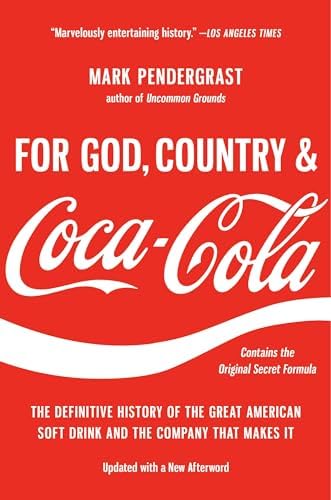
Drawing insights from For God, Country, and Coca-Cola by Mark Pendergrast and Secret Formula by Frederick Allen, the episode analyzes how Coca-Cola became intertwined with American culture through World War II, survived the Pepsi Challenge, and navigated the New Coke crisis. The analysis applies Hamilton Helmer's Seven Powers framework and references Charlie Munger's beverage company thought experiment from Poor Charlie's Almanack to understand the business model's enduring strengths and recent challenges.
Patent Medicine Origins and the Cocaine Connection
Dr. John Pemberton created Coca-Cola in 1886 as a patent medicine to treat 'army disease' - morphine addiction affecting Civil War veterans, initially containing cocaine and four times today's caffeine content.
Secret Formula describes Pemberton's basement laboratory process: melting sugar and synthetic caffeine from Merck, adding caramel coloring, lime juice, vanilla, and exotic oils including Chinese cinnamon and neroli from orange flowers.
The patent medicine industry created America's first national consumer brands and advertising industry, with products like Luden's cough drops, Vicks Vapor Rub, Graham crackers, and Dr. Pepper all starting as medicines.
Frank Robinson, Pemberton's bookkeeper and business partner, created both the name 'Coca-Cola' and the Spenserian script logo still used today, while also developing the first manufacturer's coupon strategy.
The $1 Bottling Contract That Built an Empire
In 1899, Asa Candler signed a perpetual contract selling bottling rights for $1 to Benjamin Thomas and Joseph Whitehead, creating the franchise system that enabled global expansion without capital investment.
The contract locked in $1 per gallon syrup pricing forever, forcing Coca-Cola to achieve massive scale to outpace inflation - 'either the best or worst business deal in history' depending on perspective.
Thomas and Whitehead became 'parent bottlers,' sublicensing territories to local entrepreneurs, creating 400 bottling operations by 1910 and 1,200 by 1925 across America.
This system created the 'Coca-Cola system' - today 70,000 Coca-Cola employees generate $47 billion revenue while 700,000 total system employees generate $175 billion, demonstrating incredible leverage.
Robert Woodruff's 60-Year Dynasty and Brand Building
Robert Woodruff took control in 1923 at age 33, demanding his father Ernest exit completely, then ran the company for 32 years as president and controlled it until his death in 1985.
Woodruff partnered with ad man Archie Lee to revolutionize advertising, moving from descriptive copy to lifestyle marketing with slogans like 'The Pause That Refreshes' (1929) and 'The Real Thing' (1968).
The 1916 contour bottle design became so distinctive that 99% of Americans could identify it by 1949, earning trademark protection as packaging - highly unusual for product containers.
Coca-Cola's 1931 Santa Claus campaign with artist Haddon Sunbloom standardized the modern Santa image in Coca-Cola red, associating Christmas permanently with the brand through 33 years of illustrations.
World War II: The Greatest Sampling Program in History
Woodruff pledged in 1941 that every American soldier worldwide would get Coca-Cola for five cents, leading to 64 portable bottling plants and 5+ billion bottles distributed during the war.
The military granted Coca-Cola employees technical observer status, exempting them from sugar rationing while competitors like Pepsi received no such benefits, cementing Coke as quintessentially American.
For God, Country, and Coca-Cola quotes American GIs: 'If anyone were to ask us what we are fighting for, we think half of us would answer the right to buy Coca-Cola again.'
By 1950, one-third of Coca-Cola's profits came from international markets opened during the war, markets that would have taken '25 years and untold millions' to develop otherwise.
The Pepsi Challenge and Taste Test Revelations
John Sculley (future Apple CEO) discovered that consumers preferred Pepsi in blind taste tests and launched the grassroots Pepsi Challenge campaign in 1975 using camcorders and local TV spots.
McCann Erickson had secretly discovered the same preference in the late 1950s, but Robert Woodruff ordered them to 'never share this with anyone and never run this test again.'
Pepsi's market share grew from low 20s to 35% by 1955 through targeting Black Americans (ignored by segregationist-supporting Woodruff), embracing television, and positioning as the 'lighter' drink.
The Challenge campaign worked because it was authentic grassroots marketing with real people, not actors, taking taste tests at malls and supermarkets nationwide - pioneering reality television advertising.
New Coke: 79 Days of Brand Crisis and Recovery
After 15 years of losing share to Pepsi, Roberto Goizueta replaced the 99-year-old formula with New Coke in April 1985, despite 200,000 taste testers preferring it to both Pepsi and original Coke.
The backlash was immediate and intense - thousands of angry letters daily, with one reading: 'You have betrayed me... last week, I tasted betrayal on your lips... You had the smooth, seductive, sweet taste of a lie.'
Don Keogh's famous admission: 'Some critics will say Coca-Cola made a marketing mistake. Some cynics will say we planned the whole thing. The truth is, we are not that dumb and we are not that smart.'
Coca-Cola Classic returned after just 79 days and surged past pre-New Coke market share within a year, proving the 'you don't know what you got till it's gone' principle and ending the Pepsi Challenge era.
Modern Challenges and the Total Beverage Strategy
Since 1998, Coca-Cola has grown only 3-4% annually as the beverage market shifted away from colas toward sports drinks, energy drinks, and healthier options amid obesity concerns.
Major missed opportunities include declining to buy Monster Energy at $11 billion in 2012 (now worth $70 billion) and losing Gatorade to Pepsi after announcing a $16 billion Quaker Oats deal without board approval.
A 12-ounce Coca-Cola contains 39 grams of sugar - exceeding the American Heart Association's recommended daily limit of 36 grams for men and 25 grams for women.
Despite diversification efforts, 69% of revenue still comes from sparkling soft drinks, with 47% from the core Coca-Cola trademark family (Coke, Diet Coke, Coke Zero), highlighting dependence on the original formula.
Business Model Analysis Through Seven Powers Framework
Applying Seven Powers framework, Coca-Cola's dominance stems from scale economies - they can amortize massive advertising spend over global volume that competitors cannot match.
The secret formula represents cornered resource power through meaning, not ingredients - as Secret Formula notes, competitors can't replicate the brand equity and distribution system even with the recipe.
Warren Buffett's famous $1.3 billion Coca-Cola investment has generated only 10% IRR over 40 years versus 11% for the S&P 500, challenging the 'ham sandwich could run it' thesis.
Charlie Munger's thought experiment from Poor Charlie's Almanack about building a beverage empire from scratch perfectly describes Coca-Cola's actual strategy: global brand, ubiquitous availability, and associating with happiness.


These notes may contain occasional inaccuracies. Learn how podbrain notes are made
More in Finance & Business
The Biggest Pivot In AI History Is Happening Right Now | Jordi Visser
Jun 20, 2026
How Substack Creators Are Covering This Strange Markets Era
Jun 20, 2026
#422 Joseph Pulitzer
Jun 20, 2026
World's First Trillionaire, Anthropic Fable Banned, The New Oligarchs, Iran Peace Deal
Jun 19, 2026Anthropic's Co-Founder and Top Economist on Doing Research at the AI Frontier
Jun 19, 2026
.svg)