
Balaji on Why AI Raises the Cost of Verification
Balaji Srinivasan, angel investor and entrepreneur, discusses the economic and social implications of AI adoption, arguing that artificial intelligence fundamentally changes the cost structure of creation versus verification across industries.

Episode


- 01
"AI doesn't take your job, AI makes you the CEO" - Balaji argues AI transforms workers into managers who prompt, verify, and direct AI systems
- 02
"Every tool that makes creation cheaper makes verification more expensive" - AI collapses generation costs but dramatically increases the need for human verification
- 03
AI works best for "visuals over verbal" because humans can instantly verify images/video with built-in pattern recognition, unlike text blocks
- 04
"Humans are the sensor, AI is the actuator" - humans sense market conditions and politics while AI executes based on prompts
- 05
Zcash represents "30 years of cryptography" fulfilling Milton Friedman's prediction of reliable e-cash for anonymous internet transactions
- 06
Bitcoin has evolved into "provable, global, institutional collateral" rather than individual currency due to institutional adoption and transparency
- 07
"AI within the trusted tribe increases productivity. Between trusted tribes decreases productivity" due to verification costs and spam
- 08
Physical world AI will succeed faster than digital AI because verification is easier - "there's only one physical world" versus infinite digital realities
Get the latest ideas from a16z.
Plus the best new takeaways about artificial intelligence from other top podcasts — read in minutes, not hours.
By continuing, you agree to podbrain's Terms and Privacy Policy.
These notes may contain occasional inaccuracies. Learn how podbrain notes are made
Balaji Srinivasan, angel investor and entrepreneur, discusses the economic and social implications of AI adoption, arguing that artificial intelligence fundamentally changes the cost structure of creation versus verification across industries.
The conversation explores how AI will reshape the economy through a lens informed by AI Superpowers and other frameworks, examining whether value will accrue to infrastructure providers or application layers, and how distillation attacks may democratize AI capabilities.
Srinivasan introduces his thesis that AI increases productivity within trusted groups while creating verification overhead between groups, leading to a more fragmented digital landscape where crypto serves inter-tribal commerce and AI optimizes intra-tribal workflows.
The discussion concludes with Srinivasan's vision for Zcash as digital cash complementing Bitcoin's role as institutional collateral, drawing on decades of cryptographic research including early work like The Integrome that demonstrated comprehensive biological monitoring capabilities.
AI Economy: Distillation vs Centralization
Distillation attacks work on large AI models, allowing relatively few API queries to compress knowledge into smaller, cheaper models that are "98% cheaper than building from scratch"
"It's very hard to stop that because what do they do? They copy the whole internet and put it into their thing" - Balaji argues stopping distillation is morally difficult given how AI companies trained on public data
The future will be "personal, private, programmable" AI because powerful AI creates security through obscurity problems - information once secure becomes searchable across vast datasets
The Verification Cost Explosion
"AI is lorem ipsum, but it's lorem AI ipsum" - generic AI output is instantly recognizable, making recipients think senders are "lazy, stupid, or evil"
Resume verification costs have "gone up into the right" while generation became trivial, forcing employers to use proctored exams and in-person interviews
"AI is going to create tons of jobs in proctoring and verification" as the cost structure inverts from expensive creation to expensive confirmation
Chinese Tech Model as AI's Future
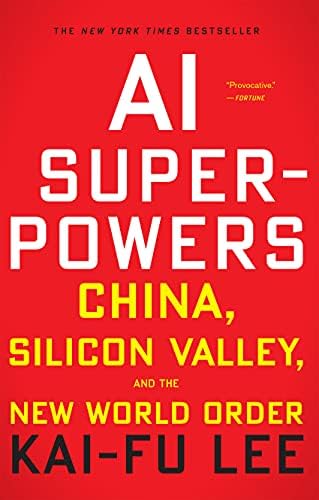
AI Superpowers by Kai-Fu Lee explains how Chinese companies arose in a "low trust society" without SaaS, assuming "the other guy is going to look at their stuff"
Chinese companies "code their own stuff" due to trust issues, creating "digital autarky" with high barriers to outside world - a model AI enables for Western companies
AI makes the internet "a lot more like the Chinese internet" where companies build internal tools rather than sharing data with external SaaS providers
AI as Shortcut: The Expert Advantage
"The problem is AI is a shortcut. And a shortcut is good, except when it's bad" - shortcuts only work when you know the long way around
"If you don't know how to go the long way around, then you can't debug the AI" - pre-AI generations learned fundamentals offline and can effectively use shortcuts
AI works best for "visuals over verbal" because "we have built-in GPUs" to instantly verify images, unlike complex text where verification is harder
Physical vs Digital AI Capabilities
"There's only one physical world" so sensor data converges on verifiable outcomes, making physical AI like self-driving cars achievable at "100% reliability"
Digital world has "all these people who live in their own constructed environments" - Harry Potter fan fiction, Star Wars worlds - making boundaries fuzzier than physical tasks
"How do you know when you're done with your to-do list?" versus moving 100 boxes - physical tasks have clearer completion criteria enabling better reinforcement learning
Human-AI Synthesis Model
"Humans are the sensor, AI is the actuator" - humans sense market and political conditions while AI executes based on prompts and instructions
"What's taste? Taste the sense" - human taste and agency represent sensing capabilities that AI cannot replicate, requiring human direction
"AI doesn't take your job, AI makes you the CEO" because using AI resembles CEO work: writing clear instructions, sensing markets, and verifying outputs
Bio-AI and Body Data Streams
The Integrome by Mike Snyder demonstrated measuring "every test" to detect illness before symptoms - "he could see the antibodies, white blood cells moving before he had any symptoms"
"Your body is creating all kinds of sensor data" - gene expression, clinical labs create "time versus tissue versus molecule" data cubes for AI analysis
"I'm not sure whether AI will be able to read your mind, but it can read your body" - biological telemetry could prompt AI without verbal input
Bitcoin as Institutional Collateral
"Bitcoin has become provable, global, institutional collateral" rather than individual currency due to BlackRock, MicroStrategy adoption and centralization
"Videos of gold audits can now be faked with AI" but Bitcoin allows cryptographic proof of reserves through public addresses and message signing
Bitcoin's transparency becomes valuable for institutions but problematic for individuals as "everybody can do blockchain analytics" with AI-powered chainalysis
Zcash as Digital Cash Solution
Zcash fulfills Milton Friedman's 30-year-old prediction: "a reliable e-cash, a method whereby on the internet you can transfer funds from A to B without A knowing B"
Zcash is "fungible, private, scalable with tachyon, quantum safe" and intentionally avoids smart contracts to maintain simplicity and security
"Simple, scalable, billion-person digital private cash has been the dream for 30 years and we're finally there" with the Zotal mobile wallet implementation
These notes may contain occasional inaccuracies. Learn how podbrain notes are made
More in Science & Tech

The 5-Minute AI Weekly Recap: Realignment Week
Jun 20, 2026
Why Kalshi's John Wang Says Perps Are 'the Most Pure Trading Instrument'
Jun 19, 2026Your Company Doesn’t Need an AI Strategy
Jun 19, 2026
The data black hole at the center of AI
Jun 19, 2026
The New Rules of Media | Marc Andreessen & Ben Horowitz
Jun 19, 2026
.svg)