
Should You Invest In SpaceX IPO, Elon Musk, Bitcoin or AI? | Jordi Visser
Jordy Visser, venture capitalist and AI infrastructure expert, joins to discuss SpaceX's IPO, AI model economics, and the intersection of physical constraints with technological advancement.



- 01
SpaceX built Colossus data center in 122 days, making it the 4th largest hyperscaler with deals from Anthropic and Google
- 02
Elon Musk secured 20% of all Vera Rubin chips, positioning SpaceX advantageously in the AI infrastructure race
- 03
Orbital data centers could cost $5 billion versus $25 billion for terrestrial equivalents, dramatically improving compute margins
- 04
AI model companies are heavily subsidizing token costs, selling below production cost while demand increases exponentially
- 05
China controls critical minerals like indium phosphate essential for all data centers, creating supply chain vulnerabilities
- 06
Deepseek's comparable model at dramatically lower prices threatens Western AI companies with commoditization pressure
- 07
Physical commodities like copper and silver face unprecedented demand - next 10 years require equivalent of last 10,000 years of copper mining
- 08
NFTs and blockchain verification become critical as AI deepfakes make distinguishing real from fake increasingly impossible
Get the latest ideas from The Pomp Podcast.
Plus the best new takeaways about artificial intelligence from other top podcasts — read in minutes, not hours.
By continuing, you agree to Podbrain's Terms and Privacy Policy.
These notes may contain occasional inaccuracies. Learn how Podbrain notes are made
Jordy Visser, venture capitalist and AI infrastructure expert, joins to discuss SpaceX's IPO, AI model economics, and the intersection of physical constraints with technological advancement.
The conversation covers SpaceX's rapid data center construction, orbital computing possibilities, and the bottlenecks facing AI infrastructure development. Visser analyzes the competitive dynamics between OpenAI and Anthropic, token subsidization economics, and supply chain vulnerabilities in critical materials.
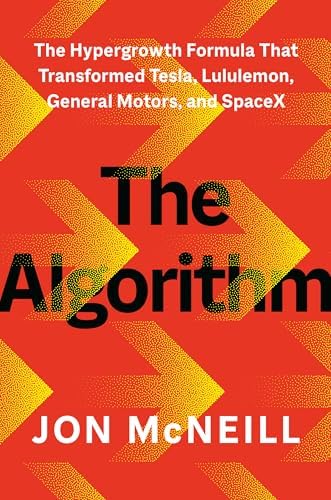
Drawing insights from The Algorithm, the discussion explores Elon Musk's systematic approach to eliminating bottlenecks, from Tesla's sales process to SpaceX's infrastructure challenges. The conversation concludes with perspectives on physical AI, manufacturing innovation, and the authentic experiences that blockchain technology can preserve in an AI-dominated world.
SpaceX IPO: Space Infrastructure Meets AI Computing
SpaceX achieved 4th largest hyperscaler status in 30-45 days, securing deals with Anthropic and Google after building Colossus in just 122 days versus the typical years-long timeline
Elon Musk secured 20% of all Vera Rubin chip allocations, leveraging his proven ability to build data centers in challenging environments
Orbital data centers could cost $5 billion versus $25 billion for terrestrial equivalents, with chips remaining the same $35 billion cost but infrastructure dropping dramatically
SpaceX represents two companies: current revenue streams from Starlink and Colossus, plus a massive call option on space-based infrastructure and rocket reusability
AI Model Economics Under Pressure
Semi Analysis research revealed AI companies heavily subsidize token costs, selling subscriptions below actual production costs while token production costs increased 4x year-over-year
Deepseek released comparable models at dramatically lower prices, creating deflationary pressure on Chinese AI stocks and threatening Western model pricing
Corporate mandate shifted from 'everyone use AI' to 'use AI efficiently' as bills became unsustainable, driving demand for cheaper alternatives
User query volume increased from 6 to 15 questions per week as models improved, creating exponential demand growth that supply cannot match
Physical Bottlenecks in AI Infrastructure
Next 10 years require copper equivalent to all mining over the last 10,000 years, creating unprecedented commodity demand for AI infrastructure
China controls critical minerals like indium phosphate essential for all data centers, creating supply chain vulnerabilities as US-China tensions persist
Building data centers on land may be more complex than space due to cooling requirements, energy sourcing, land acquisition, and regulatory bottlenecks
Silver demand will increase 10x from current levels due to battery storage and orbital infrastructure requirements, making it a key investment thesis
Elon's Algorithm for Eliminating Bottlenecks
The Algorithm describes Elon's systematic approach: identify bottlenecks by finding where physical products pile up, then eliminate constraints through subtraction rather than addition
Tesla's sales process breakthrough came from eliminating test drive incentives and requiring follow-up calls, instantly exploding conversion rates
Orbital data centers apply the algorithm perfectly: eliminate energy bottlenecks with solar power, remove cooling requirements in space, and bypass land acquisition challenges
SpaceX's rocket reusability creates an unassailable moat - competitors lack rocket ships to deploy satellites at scale, while SpaceX controls most satellites in space
Authenticity and Blockchain in an AI World
Knicks Game 4 commemorative tickets already selling for $300-450 on eBay, but physical items face inevitable counterfeiting without blockchain verification
Experiential events become more valuable as AI creates infinite content slop - the community feeling and authentic moments cannot be replicated digitally
NFTs provide proof of attendance and permanent ownership in digital wallets, solving both authenticity and permanence problems that physical commemoratives cannot
As deepfakes proliferate, blockchain verification becomes essential infrastructure for distinguishing real experiences from AI-generated content
Physical AI and Manufacturing Revolution
Jeff Bezos raised $12 billion at $40 billion valuation for Prometheus, targeting 90% work reduction through AI-powered manufacturing optimization
Claude demonstrated real-time software building during customer calls - transcribing requirements and building working products within 15 minutes of feature requests
Pharmaceutical companies now hide Phase 1 results due to AI's ability to rapidly replicate drug development, fundamentally changing competitive dynamics
Children must become AI natives through daily usage - traditional career silos are disappearing as AI enables cross-functional capabilities
These notes may contain occasional inaccuracies. Learn how Podbrain notes are made
More in Finance & Business

YouTube Video
Jan 1, 1970
The $2B AI Startup Simulating Human Behavior with 85% Accuracy
Oct 26, 2026
AI Agents Could Drive 10,000x More Web Activity | Former Twitter CEO
Oct 24, 2026Jake Paul's Business Partner on Bitcoin, AI & the Next Trillion-Dollar Trade | Geoff Woo
Jul 13, 2026
Talk Your Book: Do We Need the Federal Reserve?
Jul 13, 2026
.svg)