
WW3 Threat Assessment: "Trump Bombing Iran Just Increased Nuclear War Threat" The Terrifying Reality
Benjamin Schwartz, a Middle East expert whose family fled Iran in 1979, joins former CIA operative Andrew Bustamante and investigative journalist Annie Jacobsen to analyze the recent decapitation of Iran's leadership. Benjamin brings personal and academic insight into Iranian history, while Andrew offers intelligence...

Episode


- 01
Iran's leadership was decapitated in a strike that Benjamin calls 'beyond remarkable' in terms of intelligence gathering and execution
- 02
Andrew warns 'Americans are less secure now than they were four days ago' due to increased targeting from Iranian proxies
- 03
The attack violates international law by targeting a head of state, potentially validating similar actions by China and Russia globally
- 04
Iran can wage a 'war of attrition' for weeks using remaining missile stockpiles before complete depletion, according to Israeli assessments
- 05
Annie notes this administration operates 'president down' with unprecedented focus on personal legacy over institutional norms
- 06
Benjamin estimates only 20% of Iranians support the regime, with 80% born after 1979 wanting 'anything other than what this is'
- 07
Andrew predicts 'one of the darkest decades ever' as the world transitions from unipolar to multipolar strongman diplomacy
- 08
Taiwan's chip production represents a critical vulnerability - 90% of US microprocessors come from that single island nation
Get the latest ideas from The Diary Of A CEO.
Plus the best new takeaways about military & strategy from other top podcasts — read in minutes, not hours.
By continuing, you agree to podbrain's Terms and Privacy Policy.
These notes may contain occasional inaccuracies. Learn how podbrain notes are made
Benjamin Schwartz, a Middle East expert whose family fled Iran in 1979, joins former CIA operative Andrew Bustamante and investigative journalist Annie Jacobsen to analyze the recent decapitation of Iran's leadership. Benjamin brings personal and academic insight into Iranian history, while Andrew offers intelligence analysis from his decade undercover, and Annie contributes expertise from her books on nuclear war scenarios and CIA operations.
The conversation explores the historical context from the Shah's overthrow in 1979 through Khomeini's rise, examining how decades of US-Iranian tensions culminated in this unprecedented strike. They analyze the intelligence capabilities that enabled such precise targeting, drawing from Annie's work in Surprise, Kill, Vanish on CIA covert operations and her expertise in Nuclear War A Scenario regarding escalation risks.
The discussion reveals deep disagreements about motivations, consequences, and the future of American foreign policy. While Benjamin sees opportunity in regime weakness, Andrew warns of dangerous precedents and unintended consequences. Annie frames the action within broader patterns of presidential authority and surveillance expansion, referencing philosopher Eric Hoffer's insights from The True Believer about how movements transform into rackets.
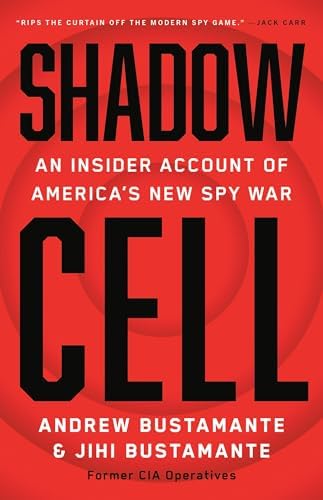
The experts examine regional implications as Iranian missiles struck Dubai, Saudi Arabia, and other Gulf states, implementing what the Pentagon calls 'burden sharing' strategy. They debate whether this represents effective deterrence or dangerous escalation, with Andrew's forthcoming analysis in Shadow Sell informing his skepticism about intelligence assessments and decision-making processes.
Iran's Historical Context: From Shah to Supreme Leader
Benjamin's family fled Iran in March 1979 when he was two, just after the Shah left and Khomeini arrived to establish the Islamic Republic
The Shah ruled from 1941-1979 as an authoritarian modernizer, using oil wealth to westernize Iran while suppressing civil liberties and religious freedoms
Khomeini led a populist revolution unifying 'the red' (Marxist-socialists) and 'the black' (Islamists) against what he portrayed as a US puppet regime
The CIA and State Department failed to see the Islamist threat, focusing only on Soviet communist expansion while missing the revolutionary movement
The Intelligence Behind the Decapitation Strike
Annie argues the strike relied heavily on Israeli intelligence, noting 'Israel could be directing the activities of the U.S. military by the intelligence they select to give to the president'
The operation required precise 'find, fix, and finish' targeting of 20+ individuals, demonstrating unprecedented intelligence penetration of Iran's leadership
Andrew questions CIA capabilities, noting 65% of their intelligence now comes from foreign allies due to budget cuts and personnel attrition since Trump's first term
Benjamin calls the intelligence gathering 'beyond remarkable' given Iran's status as a 'black box' with minimal Western access since 1979
Presidential Motivations and the Trump Doctrine
Andrew identifies this as the first president 'more focused on personal legacy than professional or political legacy,' prioritizing the Trump brand over country
The timing follows Trump's stated belief that 'the Ayatollah tried to kill him,' suggesting personal vendetta motivations alongside strategic calculations
Annie describes a 'completely top-down situation' where Trump saw 'a moment of intense weakness' and executed the ultimate 'decapitation strike'
The action contradicts the ODNI's 2025 threat assessment, DOD's 2026 defense strategy, and the White House's own national security strategy priorities
International Law Violations and Dangerous Precedents
Andrew warns the assassination of a head of state 'opens the door for all sorts of other countries to just unilaterally choose when they're going to take action against another sovereign'
The strike potentially validates similar actions by China against Taiwan's leadership or Russia against Ukraine's Zelensky, breaking longstanding taboos
Benjamin counters that Khomeini was a legitimate military target since he 'directed Hezbollah to join the war' after October 7th, making him a combatant
The action represents 'victor's justice' where dominant powers exercise will regardless of international law, according to Benjamin's analysis
Iran's Military Capabilities and War Duration
Iran possesses 'the largest stockpile in the Middle East of missiles, drones, and air defenses, possessing thousands of ballistic cruise missiles and kamikaze drones'
Israel claims to have eliminated half of Iran's capabilities in June 2024, leaving Iran able to sustain current attack rates for only 'two to three weeks'
The interceptor-to-missile ratio runs 25-to-1, with Western interceptors costing '10, 15 times more expensive' than Iranian drones and missiles
Iran can wage a 'war of attrition' - 'death by a thousand cuts' - even after depleting major weapons systems through proxy networks and sleeper cells
Regional Burden Sharing and Escalation Patterns
The Pentagon's new 'burden sharing' doctrine forces allies to absorb conflict costs, with Iran striking Dubai, Saudi Arabia, Qatar, and Bahrain in response
Iran's deputy foreign minister stated 'we can't strike Americans in America' but can target 'Americans at their bases' and states hosting US forces
The attacks aim to 'lower the pain threshold' and pressure the US to end the conflict by making regional allies demand cessation
Benjamin notes this strategy backfired, producing 'some of the strongest' condemnation statements from Gulf states, shattering any pretense of rapprochement
Nuclear Escalation Risks and AI Weapons Integration
Annie warns we're '100%' closer to nuclear war, citing France's deployment of 'air-launch nuclear warheads' across Europe following the Iran strike
Research by King's College London found AI models recommended nuclear strikes in 64% of war game simulations, with Claude showing the highest escalation rates
The Pentagon demanded Anthropic drop safety restrictions on AI military use after Claude was used in the Venezuela raid, threatening to cancel their $200 million contract
Andrew argues the US must pursue AI aggressively since 'China is already 10x more aggressive' and already uses autonomous weapons and mass surveillance
Regime Change Prospects and Iranian Public Opinion
Benjamin estimates 'roughly 20% of the population are staunch ideological supporters' while 80% born after 1979 'want anything other than what this is'
Drawing from The True Believer, Benjamin explains how Iran's revolution evolved from Khomeini's movement to 'a business, then a racket' with only racketeering leaders remaining
The regime killed 'upwards of 30,000 people' in January 2025 protests, reaching its 'lowest, lowest point' in domestic credibility and regional influence
Andrew warns against optimism, noting failed regime changes in Iraq and Afghanistan: 'when you change a government from the top down, that doesn't do anything for the people'
Information Warfare and Social Media Manipulation
The host experienced unprecedented bot activity after posting about Iran, receiving 'thousands and thousands' of nearly identical DMs pushing specific narratives
Andrew emphasizes the danger of 'circular reporting' where single sources get multiplied, especially from Iran as a 'black box' with limited information access
Annie warns about 'memetics or popularity' influence, noting social media amplifies echo chambers through algorithms that 'give people more of what they already prefer'
The experts agree on healthy skepticism: 'You can't trust anything that you're hearing right now. You can't trust anything that you're reading right now'
Future Scenarios and Strategic Vulnerabilities
Benjamin warns about Taiwan's critical vulnerability: '90% of our microprocessors' come from that single island, making a Chinese blockade catastrophic
Andrew predicts 'one of the darkest decades ever' as the world transitions from unipolar US dominance to multipolar strongman diplomacy
The experts expect 3-4 weeks of active conflict followed by years of proxy warfare from Hezbollah, Hamas, and other Iranian-aligned groups
Andrew is relocating his family from the US, seeking to raise children as 'global citizens' away from a country that 'puts capitalism before all other things'


These notes may contain occasional inaccuracies. Learn how podbrain notes are made
.svg)