
World-Renowned Physicist: The Truth About Aliens! UFOs Are Definitely Robotic - Michio Kaku
Dr. Michio Kaku is a theoretical physicist who has spent 71 years studying the universe and working on string theory - what he calls "the theory that eluded Einstein for the last 30 years of his life." As co-founder of string field theory, Kaku seeks the "theory of everything" - an equation perhaps one inch long that...


- 01
String theory proposes that all subatomic particles are vibrations of a single string - "When the string vibrates in this direction, we call it an electron" - Michio
- 02
Immortality is "tantalizing close" through telomeres and telomerase, but cancer also uses these mechanisms to live forever
- 03
Quantum computers could break all digital codes including Bitcoin by 2029, potentially causing capitalism to "vanish" and society to "come to a halt"
- 04
95% of UFO sightings can be explained by known physics, but 5% remain unexplained and could be evidence of visitation
- 05
A mysterious star reduces its light output by 20% periodically, possibly indicating an advanced civilization harvesting energy
- 06
We live in only four dimensions but string theory suggests 11 dimensions exist, with our universe as one bubble in a "bubble bath" of universes
- 07
If extraterrestrial visitors exist, they're likely robotic because UFO maneuvers would "crush the bones of any living creature"
- 08
The universe is expanding into "hyperspace" from a Big Bang that may have been a bounce rather than an explosion
Get the latest ideas from The Diary Of A CEO.
Plus the best new takeaways from other top podcasts — read in minutes, not hours.
By continuing, you agree to Podbrain's Terms and Privacy Policy.
These notes may contain occasional inaccuracies. Learn how Podbrain notes are made
Dr. Michio Kaku is a theoretical physicist who has spent 71 years studying the universe and working on string theory - what he calls "the theory that eluded Einstein for the last 30 years of his life." As co-founder of string field theory, Kaku seeks the "theory of everything" - an equation perhaps one inch long that could explain the Big Bang, formation of stars, galaxies, and life itself.
The conversation explores fundamental questions about human existence, from the nature of reality and consciousness to the possibility of extraterrestrial life. Kaku discusses recent UFO declassifications by President Trump, analyzing 160 encounters while maintaining scientific skepticism about close encounters.
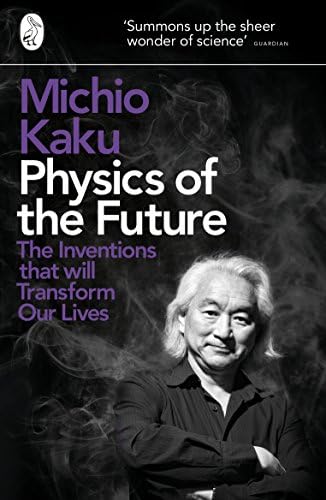
Drawing from his book The Physics of the Future, Kaku predicts how science will reshape human destiny by 2100, including potential immortality through telomere research, quantum computing threats to digital security, and the merger of humans with artificial intelligence. He examines whether we're alone in the universe, the possibility of living in a simulation, and what consciousness means in a cosmos with potentially infinite parallel universes.
String Theory and the Quest for Everything
String theory proposes that all subatomic particles are vibrations of a single string, with each vibration mode corresponding to different particles like electrons, protons, and neutrons.
"We used to think there was an electron, a proton, and a neutron, and that's it. Nope. We've seen hundreds of subatomic particles" - Michio explains why atom smashers exist.
The theory of everything would be "an equation perhaps no more than one inch long that will allow us to read the mind of God" - Einstein's words describing the ultimate physics goal.
Dark matter represents invisible matter surrounding the Milky Way galaxy, possibly higher vibrations of strings that don't interact with light.
UFOs and the Search for Extraterrestrial Intelligence
"95% of the sightings we can explain using the known laws of physics, 5% are either optical illusions or they are evidence of visitation" - Michio on UFO encounters.
President Trump released 160 UFO encounters, but these remain "close encounters of the first kind" - sightings without tangible evidence like wreckage or alien bodies.
A mysterious star reduces its light output by 20% periodically, potentially indicating an advanced civilization with an orbiting energy-harvesting structure.
If extraterrestrial visitors exist, they're likely robotic because UFO maneuvers would "crush the bones of any living creature that we know of."
"If the aliens really wanted to destroy us, they could have done it years ago" - Michio suggests peaceful intentions if visitation is real.
Quantum Computing and Digital Security Threats
Quantum computers compute on atoms rather than transistors, processing infinite states between zero and one instead of binary on/off switches.
"Even the CIA is worried about the fact that these could break into any known computer" including banks and Bitcoin by potentially 2029.
If quantum computers crack digital codes, "capitalism would vanish, society would come to a halt" because all digital security would be compromised.
The technology already exists - "This is not science fiction. They already exist" - but timeline for code-breaking capability remains uncertain.
The Physics of Immortality and Human Enhancement
Telomeres act as cellular clocks that shorten with each reproduction, while telomerase can stop this clock, making immortality theoretically possible.
"Cancer also uses telomers and telomerase to live forever" - the challenge is extending human lifespan without awakening dormant cancers.
The Physics of the Future predicts that by 2100, artificial intelligence will help cure cancer and many diseases while extending human longevity.
Kaku suggests humans should "eventually merge" with robots to become superhuman rather than compete with increasingly powerful AI.
Multiverse Theory and the Nature of Reality
String theory suggests 11 dimensions exist, with our four-dimensional universe as one bubble in a "bubble bath of universes."
The Big Bang may have been a bounce rather than an explosion - "there was no bang" but rather a collapse and expansion cycle.
"What you consider to be reality is really a partial fiction" - humans see only a tiny fragment of the electromagnetic spectrum and cosmic reality.
Simulation theory is "probably no" because it violates quantum theory's foundation in probabilities rather than predetermined scripts.
Consciousness, Meaning, and Human Purpose
"We create our own meaning individually. I think there's no universal meaning for life in general" - Kaku's perspective on existential purpose.
Religion serves as "glue that holds sentient beings together" when intelligence leads to tribal conflict and leadership challenges.
Human consciousness is "a time machine" that constantly thinks about the future, separating us from animals who only care about immediate survival.
"We are programmed to ask these questions. Animals are not" - explaining humanity's drive to understand existence and meaning.

These notes may contain occasional inaccuracies. Learn how Podbrain notes are made
.svg)