
Passive Income Expert: Buying A House Makes You Poorer Than Renting! Crypto Isn't A Smart Investment
J.L. Collins is a renowned financial expert and author of the bestselling book The Simple Path to Wealth, which has sold millions of copies worldwide. Originally starting as a blog to archive financial information for his daughter, Collins developed a straightforward approach...

Episode


- 01
The Simple Path to Wealth prescribes three principles: avoid debt, live on less than you earn, and invest the surplus in broad-based index funds
- 02
Collins saved 50% of his income from his first $10,000/year job, proving financial independence is achievable on modest incomes
- 03
Buying a house often dramatically inflates living costs beyond the mortgage payment through maintenance, taxes, and lifestyle inflation
- 04
VTSAX total stock market index fund owns 3,600 companies, creating a 'self-cleansing' system where successful companies automatically replace failing ones
- 05
The 4% withdrawal rule means you need 25 times your annual expenses invested to achieve financial independence
- 06
Men's portfolios are 50% more volatile and underperform women's returns due to over-trading and emotional decision-making
- 07
Compounding creates a hockey stick effect where investment growth appears flat for years before accelerating dramatically
- 08
Bitcoin remains speculation rather than investment because it lacks an underlying wealth-generating engine like businesses provide
Get the latest ideas from The Diary Of A CEO.
Plus the best new takeaways about wealth building from other top podcasts — read in minutes, not hours.
By continuing, you agree to podbrain's Terms and Privacy Policy.
These notes may contain occasional inaccuracies. Learn how podbrain notes are made
J.L. Collins is a renowned financial expert and author of the bestselling book The Simple Path to Wealth, which has sold millions of copies worldwide. Originally starting as a blog to archive financial information for his daughter, Collins developed a straightforward approach to wealth building that emphasizes avoiding debt, living below your means, and investing in broad-based index funds.
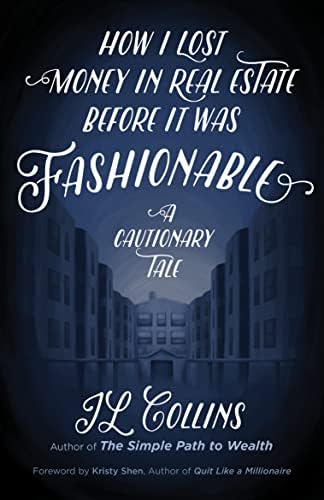
The conversation explores Collins' three-principle framework from The Simple Path to Wealth, examining why traditional advice like buying a house can be counterproductive for wealth building. Collins shares insights from Pathfinders, his second book featuring stories of people who achieved financial independence from humble beginnings, including friends who became wealthy on modest incomes while others with high incomes remained broke.
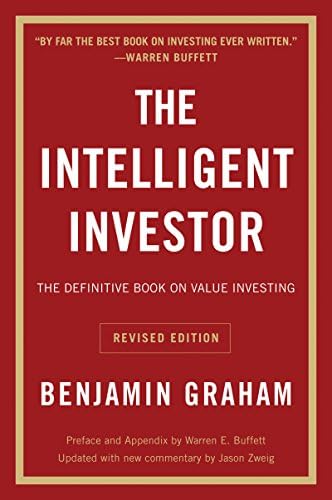
At 75 years old, Collins brings decades of perspective on money psychology, the emotional challenges of investing, and why he believes the meaning of life is simpler than most people think. The discussion covers practical investment strategies, the power of compounding, and why Collins considers The Intelligent Investor foundational reading for understanding value versus speculation in markets.
The Three Pillars of Financial Independence
The Simple Path to Wealth centers on three fundamental principles: avoid debt because 'you can never be financially independent if you're carrying around debt,' live on less than you earn, and invest the surplus in wealth-building assets.
Collins saved 50% of his income starting from his first professional job paying $10,000 annually, demonstrating that 'it's certainly possible' despite pushback from those who claim 'nobody can save 50% of their money.'
The 'tyranny of the must-haves' prevents wealth building - 'the more must-haves you have in your life, the less likely you are to become wealthy' because people prioritize consumption over freedom.
Why Buying a House Can Destroy Wealth Building
House purchases typically inflate living costs because 'people typically buy the most house they can possibly afford' following bank and realtor guidance that maximizes their profits, not the buyer's wealth.
Beyond mortgage payments, homeownership creates variable expenses like maintenance, taxes, and renovations - 'maybe your mortgage is $2,500 a month, and then you need a new roof, that's $20,000' with unpredictable timing.
Renting provides flexibility crucial for career advancement - Collins' daughter can easily relocate for opportunities, while homeowners face expensive transaction costs and potential accidental landlord situations when moving.
Index Fund Investing and the Self-Cleansing Market
VTSAX (Vanguard Total Stock Market Index) owns approximately 3,600 publicly traded companies, meaning 'everybody from the factory floor to the CEO is working to make me richer' through broad market exposure.
The market's 'self-cleansing' process automatically replaces failing companies with successful ones - when Sears declined, 'I didn't have to predict' that Walmart and Amazon would succeed because the index owned them automatically.
Collins uses the beer and foam analogy where stocks contain underlying business value (beer) and market speculation (foam) - 'if you're investing for the beer, it's an entirely different story' than short-term trading.
The Mathematics of Financial Independence
The 4% withdrawal rule provides a simple calculation: multiply annual expenses by 25 to determine required investment amount - 'if you need $100,000 to live on, you need $2.5 million invested.'
Compounding creates a hockey stick growth pattern where 'it goes along and kind of doesn't appear to be happening, and then it slowly starts to happen, and all of a sudden it's way up here.'
Starting with $500 monthly investments at 8% annual returns creates $1.043 million after 35 years, with only $200,000 in contributions and $850,000 from compound growth.
Emotional Investing and Gender Differences
Men's portfolios are '50% more volatile' and 'trade 45% more often than women, resulting in more fees and lower gains' due to emotional decision-making and overconfidence.
Collins' girlfriend exemplifies ideal investor behavior by forgetting passwords and checking investments only every two years - 'she has zero interest in this financial stuff. That is a superpower.'
Jack Bogle recommended 'invest in the S&P 500 and don't even open your statements when they come. Just let them stand. Don't even open them for 20 years.'
Bitcoin, Speculation, and Real Wealth Building
Collins views Bitcoin as speculation rather than investment because 'it's not currently, at least, a currency because it's way too volatile to serve as a currency' and lacks wealth-generating fundamentals.
While acknowledging Bitcoin's past success, Collins emphasizes 'the question isn't how is Bitcoin done in the last 10 years? It's how is it going to do in the next 10 years?'
Day trading courses exploit desperation - 'if you're doing it short term and you're playing with the foam, absolutely is no different than going to Las Vegas' compared to long-term business ownership.

These notes may contain occasional inaccuracies. Learn how podbrain notes are made
More episodes with Steven
Your Bones Break First: The Man Who Survived Being Eaten Alive!

Most Replayed Moment: The Fastest Way To Lose Fat Without Losing Muscle! - Dr Andy Galpin

Early Retirement Expert: A House Vs Stocks, Here's The Truth!

Most Replayed Moment: How To Talk About Money With Your Partner! The Mistakes Most Couples Make!

The Man Warning The West: I’m Leaving the UK in 2 Years, If This Happens!

.svg)