
No.1 Christianity Expert: The Truth About Christianity! The Case For Jesus (Historian's Proof)
Wesley Huff is a historian, theologian, and Christian apologist who studies ancient biblical manuscripts and their historical reliability. He specializes in papyrology and paleography, creating facsimiles of ancient texts to understand their transmission over millennia.

Episode


- 01
Wesley Huff argues that everyone is going to hell according to scripture, but salvation comes through Jesus taking on that punishment on our behalf
- 02
Bible sales hit a 21-year high in 2025 with 19 million units sold, while weekly Bible reading increased 12% among US adults
- 03
The New Testament was written within 40-60 years of Jesus' death, closer than most ancient biographical sources about historical figures
- 04
Huff believes in intelligent design over evolution, stating 'I don't see AI thinking. I see there being an aspect of the coding that AI will regurgitate'
- 05
Three in five American adults aged 18-25 say their life lacks meaning, with 50% linking poor mental health to not knowing their purpose
- 06
The crisis of meaning stems from worshipping the wrong things: 'It's not a matter of if we worship, it's a matter of what we worship' - Huff
- 07
AI job displacement could create massive identity crises since many people derive meaning from work, potentially driving more toward religion
- 08
Huff was paralyzed from the waist down at age 11 and walked again exactly one month later, which doctors called a miracle
Get the latest ideas from The Diary Of A CEO.
Plus the best new takeaways from other top podcasts — read in minutes, not hours.
By continuing, you agree to podbrain's Terms and Privacy Policy.
These notes may contain occasional inaccuracies. Learn how podbrain notes are made
Wesley Huff is a historian, theologian, and Christian apologist who studies ancient biblical manuscripts and their historical reliability. He specializes in papyrology and paleography, creating facsimiles of ancient texts to understand their transmission over millennia.
The conversation explores the resurgence of Christianity in America, with Bible sales hitting 21-year highs and weekly reading increasing 12% in 2024. Huff discusses the decline and fall of the New Atheism movement led by figures like Richard Dawkins and Sam Harris, arguing that their materialist worldview failed to provide sufficient meaning and purpose.
Key topics include the historical evidence for Jesus' existence and resurrection, the reliability of biblical manuscripts, the problem of evil and suffering, evolution versus intelligent design, and the modern crisis of meaning affecting young adults. Huff addresses questions about hell, salvation, prayer, and how Christianity provides answers to existential questions that secular materialism cannot satisfy.
The Rise and Fall of New Atheism's Influence
The New Atheism movement of the early 2000s, led by Richard Dawkins, Sam Harris, Christopher Hitchens, and Daniel Dennett, had significant cultural impact but failed in practical application for meaning-making.
The God Delusion and similar works were more effective in print than in providing real-life solutions to questions of identity and purpose, leaving followers with a worldview of 'time plus matter plus chance.'
Bible sales reached a 21-year high in 2025 with 19 million units sold, while Christian music streams increased 20% and weekly Bible reading rose 12% among US adults.
Young people are rebelling against their parents' secular worldview, with Gen Z showing interest in reclaiming religious foundations that previous generations abandoned.
Historical Evidence for Jesus and Biblical Reliability
The New Testament contains four biographical accounts of Jesus written 40-60 years after his death, which is remarkably close for ancient sources compared to other historical figures.
Emperor Tiberius, the most well-known person of Jesus' era, has four biographical accounts, but three were written in the second century while the Gospels come from the first century.
Paul's letters, written before the Gospels, provide the earliest source material for Jesus' life from someone who was initially hostile to Christianity but converted after a Damascus road experience.
The Bible consists of 66 books written over 1,600 years across three continents by approximately 40 authors in three languages, compiled through careful historical processes.
The Resurrection Evidence and Eyewitness Testimony
The empty tomb was discovered by women, which was an 'embarrassing fact' in ancient culture where women weren't considered reliable witnesses, suggesting authenticity rather than fabrication.
The disciples transformed from hiding in fear to boldly proclaiming Jesus' resurrection in Jerusalem, the very place where he was crucified, risking persecution and death.
Unlike other messianic movements that died with their leaders, the Jesus movement continued because 'their rabbi then shows up alive again' - transforming 11 scared disciples into bold proclaimers.
The Gospel accounts differ in details rather than being identical, which Huff argues adds credibility: 'If they were all telling the same thing, you could argue that they got together and they colluded.'
Evolution, Intelligent Design, and Scientific Questions
Huff rejects Darwinian evolution, stating 'I don't think that a belief in evolution undermines Christianity' but advocates for intelligent design over naturalistic explanations.
The Origin of Species and Darwin's 'survival of the fittest' concept raises moral questions about caring for the marginalized, which Huff argues contradicts evolutionary logic.
The complexity of nature increases as you examine smaller scales, contrary to Darwin's era assumptions, pointing to design rather than random processes according to Huff.
River Out of Eden by Dawkins argues that 'DNA neither knows nor cares. DNA just is, and we dance to its music,' which Huff sees as insufficient for explaining human consciousness and moral reasoning.
The Problem of Evil and Moral Grounding
The problem of evil is 'far more of an emotional and existential question than it is an intellectual question,' but requires objective moral standards to define evil in the first place.
The Problem of Pain by C.S. Lewis addresses this with the famous quote: 'A man does not call a line crooked unless he knows what a straight line looks like.'
Judeo-Christian ethics provide the foundation for caring about marginalized people, while other worldviews like Buddhism or Hinduism may see suffering as karmic justice.
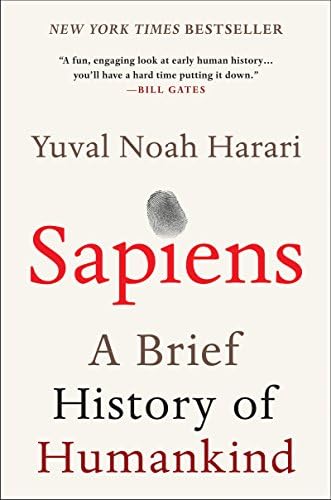
Sapiens by Harari explains human collaboration as evolutionary advantage, but Huff argues this still requires objective moral grounding beyond survival mechanisms.
Hell, Salvation, and the Narrow Path
'Everybody is going to hell' according to scripture because 'all good people go to heaven' but 'no one is good but God alone,' making salvation dependent on Jesus' sacrifice rather than human goodness.
Hell is described in scripture as 'a lake of fire,' 'unquenchable fire,' 'outer darkness where there will be weeping and gnashing of teeth,' and 'eternal punishment.'
Salvation is 'received, not achieved' - not about 'checking off' religious activities but about repentance (metanoia - 'change your mind') and submitting to Jesus as Lord and Savior.
The 'geography argument' that birthplace determines religion doesn't negate truth claims, and God's grace may work in ways beyond human understanding, including deathbed conversions.
Modern Crisis of Meaning and AI's Impact
Three in five American adults aged 18-25 say their life lacks meaning, with 50% linking poor mental health to 'not knowing what to do with my life.'
'We're chasing after things that aren't going to give us what we actually need' - money, relationships, and accolades are 'facsimiles and cheap reproductions' of true purpose.
AI job displacement threatens to create massive identity crises since 'we've bought the lie that we are the sum of our actions,' with 60% of Americans worried AI will take away their meaning.
Christianity provides 'the antidote' to meaninglessness by teaching that humans have intrinsic value as image-bearers of God, not just extrinsic value from their contributions.
Personal Transformation and Supernatural Healing
At age 11, Huff was diagnosed with acute transverse myelitis and paralyzed from the waist down, with doctors saying he'd 'probably be a paraplegic for the rest of your life.'
Exactly one month later, he woke up and walked to his wheelchair, with doctors using the word 'miracle' because they 'couldn't medically explain why there was no more damage.'
Despite this experience, Huff still investigated other worldviews as a teenager, reading the Quran, Book of Mormon, and works by Dawkins and Harris before concluding Christianity was true.
Modern perceptions of hell are largely shaped by Dante's Inferno rather than biblical descriptions, though scripture clearly depicts it as separation from God's goodness and grace.






These notes may contain occasional inaccuracies. Learn how podbrain notes are made
.svg)