
Money Expert: Buying A House Is A Mistake! Becoming Rich is Simple But You Won’t Do It!
Ben Felix is a portfolio manager and Chief Investment Officer whose firm manages money for over 3,000 clients. With a mechanical engineering background from Northeastern University, he approaches finance like an engineer, basing all advice on academic research rather than sales-driven financial services. Felix is also...

Episode


- 01
Ben Felix's engineering approach to finance prioritizes academic research over sales-driven financial advice, managing money for over 3,000 clients
- 02
The 5% rule for home buying: divide house price by 5%, then by 12 to get break-even monthly rent - if actual rent is lower, renting wins financially
- 03
Academic research shows 100% equity portfolios (one-third domestic, two-thirds international stocks) optimize retirement outcomes over traditional target-date funds
- 04
The most controversial finding: bonds are riskier than stocks for long-term investors due to inflation vulnerability during high-inflation periods
- 05
Women consistently outperform men as investors by 1.4-4% annually due to less overtrading and overconfidence, according to multiple studies
- 06
Index fund investing has been 'solved' - the challenge is psychological discipline to avoid checking portfolios and making emotional decisions
- 07
Maintenance costs for homeownership likely exceed 2% annually, far higher than the commonly cited 1% estimate most people use
Get the latest ideas from The Diary Of A CEO.
Plus the best new takeaways from other top podcasts — read in minutes, not hours.
By continuing, you agree to podbrain's Terms and Privacy Policy.
These notes may contain occasional inaccuracies. Learn how podbrain notes are made
Ben Felix is a portfolio manager and Chief Investment Officer whose firm manages money for over 3,000 clients. With a mechanical engineering background from Northeastern University, he approaches finance like an engineer, basing all advice on academic research rather than sales-driven financial services. Felix is also known for his popular YouTube channel and the Rational Reminder Podcast, where he translates complex financial research into practical guidance.
The conversation covers the biggest financial decisions most people face, from the rent-versus-buy debate to optimal investment strategies. Felix introduces frameworks like the PERMA model for goal-setting and reveals findings from controversial academic papers, including research suggesting 100% equity portfolios may be optimal for long-term investors. The discussion explores the psychology of money, common financial mistakes, and why traditional financial advice often fails to serve people's best interests.
The Academic Approach to Personal Finance
Felix's engineering background led him to approach finance through academic literature rather than the 'car dealership' sales culture prevalent in financial services.
"Investing's been solved. We're going to use index funds. That's it. The hard part is actually doing that because our brains, our psychology absolutely gets in the way of making good long-term financial decisions" - Ben
Academic research shows that people who know 'just enough' about index funds and have conviction to stick with them outperform those who know enough to hurt themselves with complex strategies.
The Hidden Psychology of Investment Success
Research demonstrates that investors who check their portfolios less frequently take more risk and earn higher returns, as daily market volatility creates false perception of danger.
Women consistently outperform men as investors: Fidelity found women beat men across 5.2 million accounts, while UC Berkeley research showed men's 45% higher trading frequency led to 1.4% lower annual returns.
The most effective investment strategy involves 'losing the password' - Felix's fiancé exemplifies ideal investor behavior by forgetting login credentials for years at a time.
The 5% Rule: Renting vs Buying Decoded
Felix's 5% rule calculation: divide home price by 5%, then by 12 to determine break-even monthly rent - if market rent is lower, renting wins financially.
Unrecoverable homeownership costs include mortgage interest, opportunity cost of equity, property taxes (0.5-1%), maintenance costs (likely over 2%), emergency repairs, and renovation spending that renters avoid.
"Having been a homeowner now for six years after renting prior to that, I'm fairly confident that maintenance costs are far higher than 1% or 2% of the property value per year" - Ben
Young people face particular disadvantages from homeownership due to limited mobility, high transaction costs, and opportunity costs when career flexibility matters most.
The Most Controversial Paper in Finance
Academic research analyzing 39 countries from 1890 onward found 100% equity portfolios (one-third domestic, two-thirds international) optimize retirement outcomes over traditional target-date funds.
The controversial finding challenges conventional wisdom that investors should shift from stocks to bonds as they age, showing bonds are riskier for long-term investors during high-inflation periods.
International diversification protects against domestic country problems - when home countries experience high inflation, both domestic stocks and retirement consumption suffer, while international stocks provide protection.
The PERMA Framework for Financial Goal Setting
Felix's three-step goal-setting process: list initial goals, double the list to force deeper thinking, then categorize using the PERMA model (Positive emotion, Engagement, Relationships, Meaning, Accomplishment).
The PERMA model from positive psychology helps identify whether financial goals actually contribute to human flourishing - many expensive purchases fail this test.
Research shows doubling your initial goal list elicits additional goals that people later identify as equally meaningful to their original ones.
Top Financial Mistakes and Marriage Money
Academic research identifies 'tightwads' and 'spendthrifts' as distinct spending profiles, with opposites more likely to marry each other than similar types, leading to increased marital conflict.
The opportunity cost of not investing $10,000 in stocks earning 7% annually equals $150,000 over 40 years - every purchase decision carries this hidden cost.
Key mistakes include not earning enough (failing to invest in human capital), taking wrong investment risks (individual stocks vs index funds), and missing tax planning opportunities.
AI, Market Cycles, and Historical Perspective
Technological Revolutions and Financial Capital by Carlotta Perez documents recurring cycles where technological revolutions create asset bubbles followed by corrections, but markets ultimately continue upward.
Historical examples like ATMs and coal efficiency (Jevons paradox) show technological disruption typically expands markets rather than shrinking them, though AI's deployment speed may differ.
A 1847 magazine article describing 'grave and deep apprehension' about global chaos reads identically to today's concerns, illustrating how crisis perception remains constant while markets advance.
Practical Wisdom from Academic Research
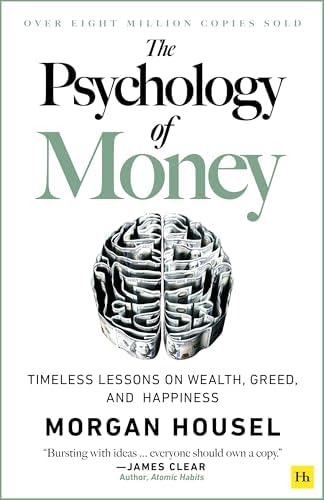
The Psychology of Money documents Warren Buffett's famous bet where his S&P 500 index fund outperformed Ted Seides' hedge fund portfolio over 10 years, proving passive investing's effectiveness.
The Slight Edge philosophy applies to finance: small daily decisions compound dramatically over time, making consistency more important than intensity in wealth building.
Efficient market theory suggests stock prices already incorporate all known information, making stock-picking futile - investors should focus on controllable factors like asset allocation and tax planning.


These notes may contain occasional inaccuracies. Learn how podbrain notes are made
.svg)